How Important is Having a Sterile Cockpit?
This question was posted to r/flying by a private pilot who wanted to know: do airline pilots ever engage in small talk about irrelevant things during taxiing, run-up, takeoff, and landing?
The sterile cockpit rule dictates that during high-workload/low-margin parts of a flight, the flight deck handles only what the operation needs. Specifically, during those critical phases of flight, such as take-off and landing, the flight crew should avoid all company admin, sightseeing, meals, idle chat and cabin-to-cockpit calls that are not about a safety issue.
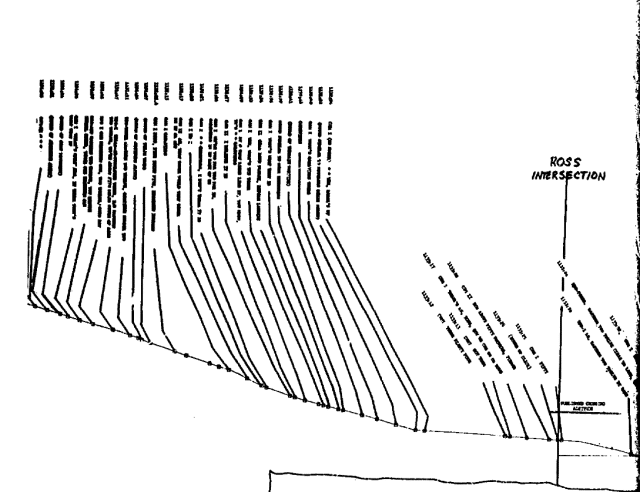
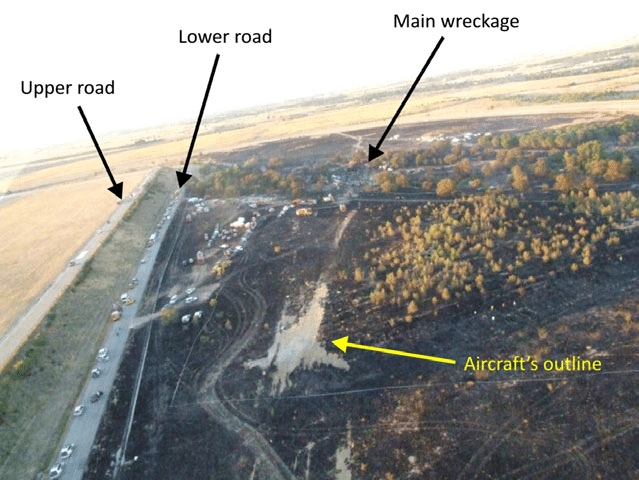
In 1974, Eastern Air Lines flight 212 crashed on approach to Charlotte airport, killing the majority of the 82 persons on board. The NTSB report concluded that the probable cause was the flightcrew’s lack of altitude awareness at critical points during the approach due to poor cockpit discipline in that the crew did not follow prescribed procedures. The crew had been discussing various subjects, quoted as “from politics to used cars” though the scanned image of that part of the report and the cockpit conversation is completely unreadable. The report directly references a 35-second conversation on approach as to whether a light in the fog was the Carowinds amusement park tower, looking out of the cockpit rather than watching their instruments, ignoring altitude alerts and terrain warnings while failing to make the required call outs.
Two safety recommendations were made to the FAA, citing another five commercial flight crashes with similar issues and describing the Charlotte crash as reflecting again “serious lapses in expected professional conduct”. In 1981, the FAA adopted 14 CFR 121.542 and 135.100, requiring airlines (Part 121) and commuter and on-demand operations (Part 135) to avoid all duties during critical phases of flight except those required for safe operation. No ordering galley supplies, confirming passenger connections, making announcements related to sightseeing or doing payroll paperwork. The flight crew are responsible for avoiding any distracting activities during taxi, take-off, landing and all other flight operations conducted below 10,000 feet except for cruise flight. Since 2014, using personal phones and laptops on the flight deck is banned throughout airline flight. You may recall the two pilots who flew 150 miles past their destination which I wrote about at the time: Northwest flight 188; this case is specifically referenced by the FAA for the ban on personal devices.
The European aviation body EASA has a similar sterile cockpit rule as Commission Regulation (EU) 2015/140, which is referred to as the sterile flight crew compartment. Their version adds that the operator (airline) may not require any crew activities in critical phases of flight beyond those needed for safe operation, restricting cabin crew and technical crew communications and access to the flight deck.
The EASA proposal for the rule references Spanair JK5022, a commercial flight that stalled directly after take-off at Madrid-Barajas on 20 August 2008. In this case, the crew were distracted by an issue with a ram air temperature probe causing over an hour’s delay. While taxiing to the runway, the crew and a third person, sitting in the jump seat, talked about the malfunction and other recent events. The aircraft flaps and slats were not configured; as the aircraft took off, the captain asked in annoyance how to turn off the stall warning while the first officer erroneously called out that they had an engine failure. Six crew and 148 passengers were killed.
All this to say, the sterile cockpit rule is a big deal and targeting airline pilots on Reddit with the question “how important is having a sterile cockpit” effectively asks if they bother to follow the rules.
during my training, I used to have a bad habit of conversing with my CFI during taxi, takeoff, and “critical” phases of flight. I became fond of the sterile cockpit rule and applied it during my checkride. But do airline pilots ever engage in small talk about irrelevant things during taxiing, run-up, takeoff, and landing?
The initial responses are suitably sarcastic.
A flight instructor sums it up:
I’m not an airline pilot but the answers you’re going to get are going to range from “not today, FAA” to “no I only fly exactly as specified in the company manual and the FARs”.
A pilot rated for the A320 and B737 agrees:
We do occasionally study the overhead panel too, but only in cruise.
For legal reasons this is a joke
An ATP on the 320 gets into more detail:
Not in the US! I continuously monitor instruments during 6 hours in cruise. Prepared. Waiting. Deliberately planning what to do in each scenario that the ECAM can present. Staring outside only to decide where my alternate is. All flight, even on redeyes.
Another poster is slightly bitter:
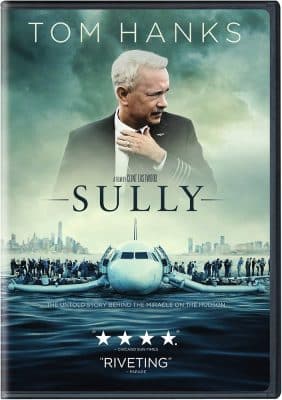
I remember watching Sully, and a little before the geese hit, one of the pilots said something to the effect “Beautiful morning.” The whole movie I was rooting for the NTSB to win, and this was their most damning piece of evidence, as they were clearly below 10. Yet, the NTSB never even brought it up in the hearings! Typical Hollywood.
Which led to this exchange:
I respond to things like beautiful morning with “sterile cockpit. Please”. You can tell me about the morning at 10,001 feet.
I appreciate the tone you set, but consider removing “Please.” It’s not germane to the safety of flight and could cause you to miss a critical radio call or some such thing. Still, thank you for fighting the good fight.
Another poster justified the beautiful view as relevant:
Discussing weather conditions is pertinent to the safety of flight! “What a view” is just a less formal way of saying that there are excellent visibility conditions.
But this comment from a B737/A320 pilot was my absolute favourite:
Depending on the other guy I’ve got no problem with sterile in cruise as well.
You have to scroll quite a ways down to find a serious response.
We are supposed to, and it is important. Everyone tends to apply it, but sometimes people make small comments here and there (“look how many boats there are,” “look at that cool airplane”). Full on conversations aren’t done 99.9% of the time, and if someone tries, I’ll ignore them, or tell them to stfu.
And still, a private pilot chimes in expressing doubts:
you guys don’t ever talk about how the weekend was? or your favorite movies? or even girls? 😂🤣
The responses range from serious to silly.
Above 10,000′ we can. Sterile cockpit is from preflight checklist to 10,000′
I don’t make it a briefing item but on the ground if I sense my FO is really careless about it I’ll say “let’s talk about that once we’re above 10k,” with varying levels of bluntness in my tone, and that gets the point across.
…typically you stay out of the weeds in bigger conversations.. like no one would be discussing Iran war politics on the downwind leg. Maybe in cruise, but maybe not if the other guy is a bit too passionate.
What’s a girl?
Not sure how serious the original poster’s question was, but they certainly got answers.
I’d love your thoughts but, please, do not post comments until you are safely established in the cruise.