An Altercation in the Cockpit
Flydubai flight FZ1073, callsign SKYDUBAI 1073, was a scheduled passenger flight from Dubai, United Arab Emirates, to Tel Aviv, Israel, also sold under the codeshare Emirates flight EK2120.
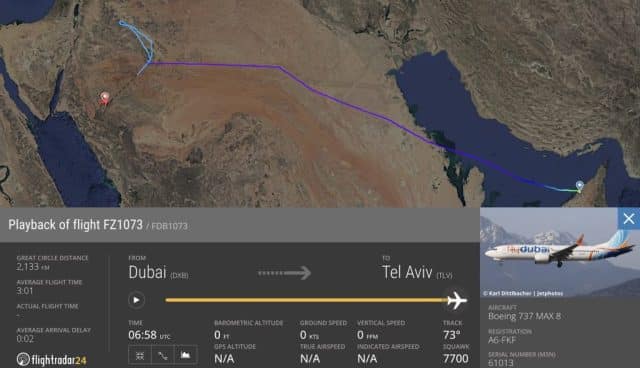
On the 30th of September, the flight was scheduled to depart Dubai International Airport at 02:45 UTC (06:45 Gulf Standard Time) for the three and a half hour flight to Ben Gurion Airport. The ADS-B data shows the flight as departing Dubai at 03:05 UTC, 20 minutes late, and climbing to a cruising altitude of 34,000 feet. There were 174 passengers and six crew on board. The aircraft was a Boeing 737 MAX 8, registered in the United Arab Emirates as A6-FKF.
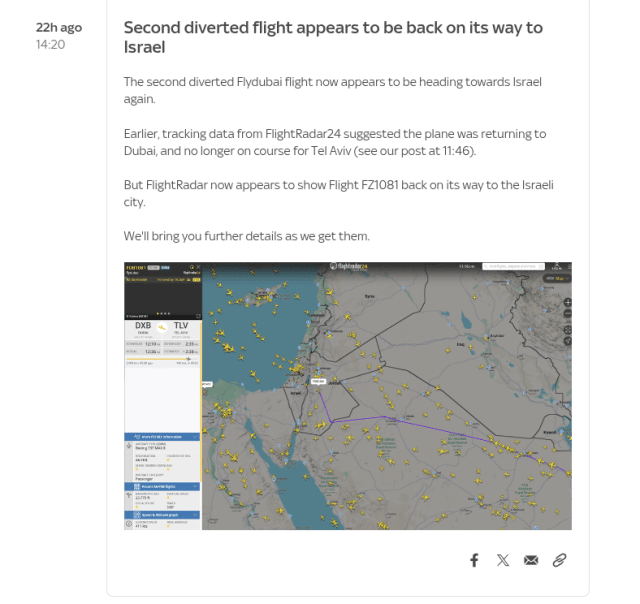
A little over two hours into the flight at 05:21 UTC, the aircraft descended (I think the media should be allowed to use “plunged” on this occasion!) rapidly in under thirty seconds. Both Flightradar24 and AirNav Radar agree that at 05:28, the aircraft squawked 7700 (EMERGENCY) while flying along the border of Saudi Arabia and Jordan and then at 05:35, the aircraft squawked 7500 (HIJACK) and turned west into Jordanian airspace before turning back towards Tabuk. Al Jazeera refers to a distress call to Tabuk air traffic control at 05:44. An anonymous source who claimed to have been monitoring the frequencies said that the flight was initially turned away by both Saudi Arabia and Jordan.
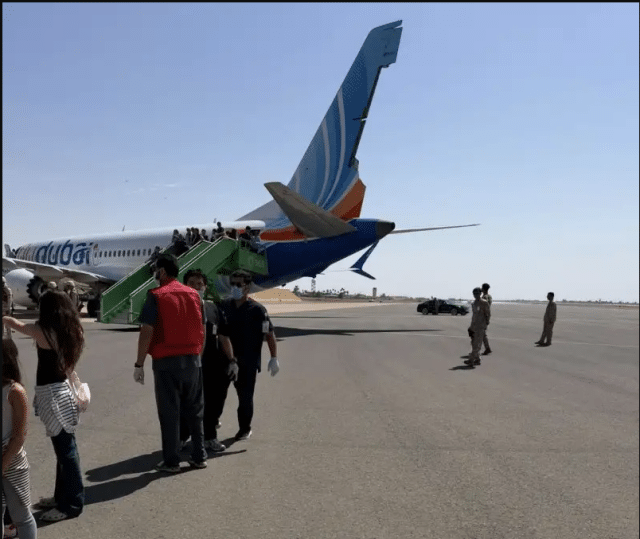
The aircraft diverted and landed at Prince Sultan Airport, Tabuk in northwestern Saudi Arabia around 06:45 UTC.
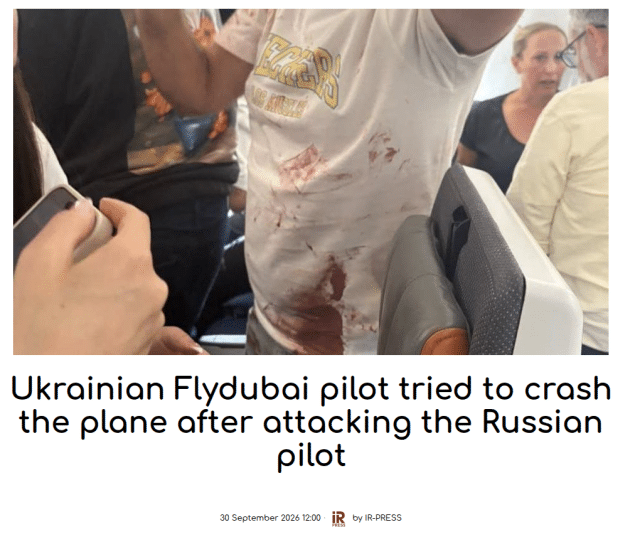
Rumours started flying and still are. I am publishing this week’s article a day early as I’m not around tomorrow. As of writing, it’s all a mess.
Initially, multiple outlets claimed that one pilot was Russian and the other Ukrainian, with multiple headlines referring to a “fight” or “brawl” in the cockpit. Then Israeli media announced that one pilot was Omani and the other Emirati, before finally settling on an Omani first officer, who attempted to take control of the aircraft, attacking the Indian captain, who saved the day. Israel’s Transport Minister was quoted saying that assigning an Omani pilot to the flight breached the UAE-Israel agreement.
Both pilots were taken to hospital. The captain is said to be in stable condition.
Photographs of the Boeing 737 MAX 8 taken at Tabuk show extensive damage to the rudder of the aircraft. Quite frankly, it’s amazing that the aircraft remained (mostly) in one piece.
The motive behind the “altercation” is equally a great source of speculation, with some sources, including the Israeli Defence Minister, claiming a terrorist attack and others, including Netanyahu (the Prime Minister of Israel) stating it looked to be a suicide/murder attempt. Deeper conspiracies include a false-flag operation in order to cancel the Israeli elections. A Saudi Embassy spokesperson said that they had not excluded a personal dispute between the pilots.
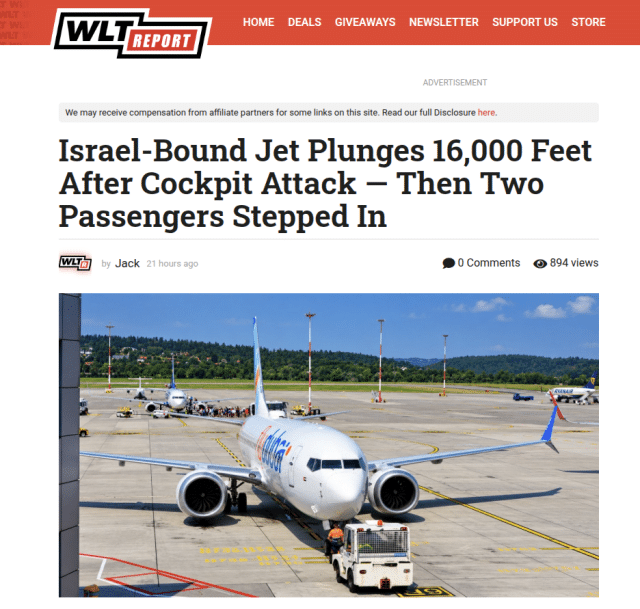
The descent has been reported as 14,000 feet in 30 seconds and 17,000 feet in 120 seconds (both of these could be true). The first officer is said to have attacked the captain with a smuggled knife or using the onboard fire axe.
The cockpit door was opened by the wounded captain or cabin crew or pilots in the cabin with the access code or passengers who rushed the cockpit.
The attacker was:
- still trying to crash the plane
- trying to jam the equipment between the two flight seats
- trying to sabotage the plane’s systems
- collapsed onto the controls
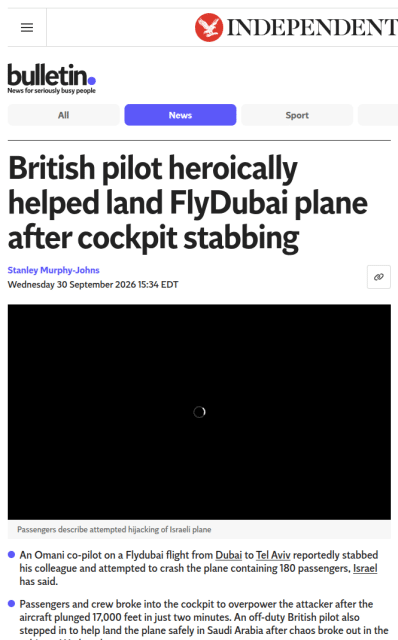
Also contested: how many people rushed the cockpit, whether a passenger (who learned from Air Crash Investigation) or a pilot recovered the aircraft from the dive, and the role and the nationalities of the two pilots who took control of the aircraft and flew to Tabuk. British press were quick to announce that the aircraft was saved by a British pilot. An anonymous Israeli official was quoted that the pilots were travelling as passengers and hailed from South Africa and New Zealand. The two pilots were possibly a reserve crew or scheduled to replace the flight crew during the flight or deadheading for the return flight or passengers who happened to be commercial pilots.
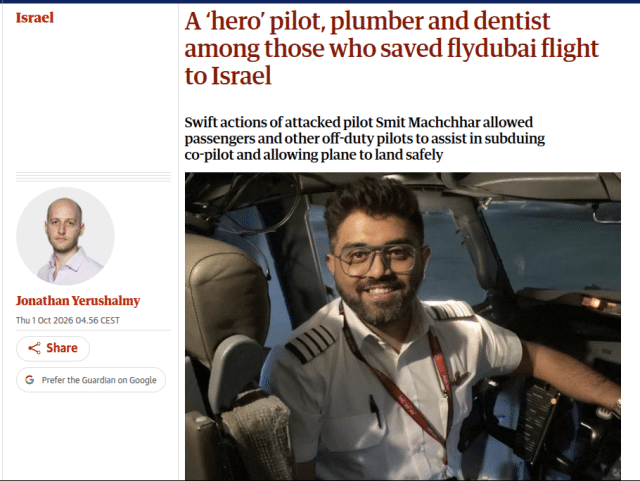
A single article attributes the rescue to a plumber, a dentist, additional crew and an off-duty British pilot.
Almost every detail has been reversed at least once. None of the officially responsible bodies (flydubai, the UAE General Civil Aviation Authority or the Saudi authorities) have published the names or nationalities of the flight crew or confirmed a motive. Flydubai have confirmed only that an altercation occurred on the flight deck and that the aircraft was secured by Flydubai crew members. All Flydubai flights to and from Israel have been suspended.
Both Saudi Arabia’s National Transport Safety Center (NTSC) and the UAE General Civil Aviation Authority (GCAA) have announced that investigations are under way.
The sudden descent and the damage to the rudder, whether it is “a section” or “most of the rudder” or “torn off”, clearly adversely affected the performance and flight characteristics of the aircraft, which means that an Annex 13 investigation is required, with a preliminary report due within 30 days. Flightradar24 reported that at 05:21, the ADS-B data shows the initial steep descent, which they said happened as the aircraft was overflying Saudi Arabian airspace, about 130 nautical miles north-east of Tabuk. (Wikipedia claims that the aircraft turned back into Saudi airspace shortly before the descent, but with no citation and no information as to where it turned back from, so I think this can safely be dismissed). Thus, the aircraft was in Saudi Arabian airspace in the cruise and the rapid descent, which means Saudi Arabia should lead the investigation.
Under ICAO Annex 13, the state of occurrence leads the investigation. In this case, the situation also falls under Annex 17 “unlawful interference” which means that the ICAO requires additional reports from the state where the aircraft landed (Saudi Arabia) and the state of registry and the state of the operator (UAE in both cases). The Annex 17 investigation will consider criminal liability, motive and security breaches. These reports are not normally made public.
Maybe by tomorrow, we’ll have a better idea of what actually happened up there. Regardless, a scary situation and a relief that it wasn’t worse.





I try to ignore all early accident and incident reports in the media, as they tend to be dead wrong. The actual facts take a day or two to show up.
Taking a bit longer this time!
I’ve been thoroughly confused by the reporting, and was waiting for your article. Looks like confusion was where we’re at for now!
I was annoyed that I had to finish it on a Thursday as I was out of town, but it turned out that Friday would not have been any better!
I had not seen post-landing pictures and am impressed they landed safely with that much rudder missing.
Same.
When did the rudder get damaged?
A few days in and it seems agreed that the Indian Captain was attacked by the Omani Co-Pilot using the cockpit axe (correct term escapes me) . The Captain just managed to open the cockpit door allowing passengers to restrain the Co-Pilot and the plane was landed by a reserve crew.
Is this the only time in history that a hijack attempt has been prevented by the passengers overcoming the hijacker?
There was the 2007 Air Mauritania Boeing 737 where the pilot realising the hijacker did not speak French warned the crew and passengers he was going to do a bumpy landing to make the hijacker fall. This worked and the hijacker was overpowered. This was on the ground though and asylum related not a 9/11 copycat attempt.
https://www.nbcnews.com/id/wbna17183946
PS If I ever need to go to Israel I will pay the extra and fly El Al.
That’s a good question. Do we count United Airlines Flight 93? The hijackers lost control. I feel like I’d never heard of passengers storming a cockpit before that day.
Eyewitness account here.
https://www.jpost.com/podcast/article-910561
His account doesn’t quite match one of the other passengers; I feel a bit sorry for the investigators trying to make sense of all the versions of events!
I am not surprised the accounts don’t match. My junior-high-school assembly (daily standing get-together) was treated to a staged mugging, after which each ?history? class that day was asked to write out individually what happened, then try to work out the facts from the many conflicting narratives covering less than half a minute of vigorous action. (I read later that this kind of staging was common in journalism classes, but I’ve never heard of it being thrown at early-teenagers.) Definitely a learning experience; if the investigators are experienced, they will be used to dealing with these fragments and conflicts to pull together an approximation of what happened.