Legacy of Liberty 2026: The 49th Wing Puts on a Show
The blue New Mexico sky goes on forever on the morning of the airshow, decorated by only a few wisps of high altitude cloud. We could not have asked for better weather. We drive around the airbase: a huge sprawling complex with a school, a library, a flying club… everything you might expect from a small town. I get the impression that a family could arrive on base and not have any reason to leave for the next four years.
Bored young men and women in camouflage stand at every junction, lazily waving us along to ensure we don’t take any wrong turns. At the last intersection, leading to an airfield, two older men sit in lawn chairs, drinking monster energy drinks. They look like they’re camped out for the show rather than directing traffic. The privileges of rank.
We park alongside hundreds of other visitors, lining up near large storage units or possibly miniature hangars. The air is dusty, despite the light breeze. I glance around to find the windsock: The wind is coming straight down runway 25. A soft haze smudges the horizon, the mountains masked by a fine layer of gypsum dust blown in from the nearby White Sands National Park.
Holloman Air Force Base is the training hub for F-16 Fighting Falcons and MQ-9 Reaper drones. Some one hundred F-16 pilots and seven hundred MQ-9 pilots and sensor operators graduate from Holloman AFB every year. The base has been at the centre of active combat deployment in Operation Epic Fury, the war against Iran (sorry, “military conflict”) which started at the end of February. The 49th Wing’s public affairs team is leaning into the airshow as community connection, offering the opportunity to witness the air power of their F-16s and MQ-9 Reapers.
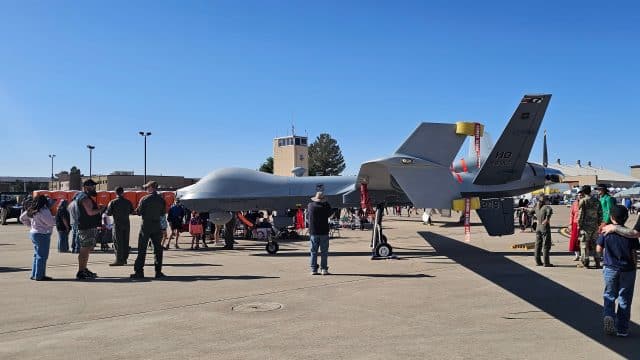
Two of the Reapers sit silently on static display for us to inspect, surrounded by stalls selling hot dogs, hamburgers, fried chicken, lemonade (fresh or frozen) and beer. I become distracted. There is a lot of beer.
I approach a friendly-looking man selling tickets for food (you tell him what you want, he takes your money and gives you the correct colour of ticket to hand to a cook, who will hand you your food and tell you to have a nice day). He looks eager to fulfil my culinary needs.
“Do you do coffee?”
He shakes his head no. No coffee. “We have beer,” he says helpfully.
In the distance, two F-16 Fighting Falcons take off with a gentle roar.
It’s 10am. Beer doesn’t seem like a good idea. “Is there any coffee here anywhere?”
“I wish I knew,” he says with a sigh. “I would really like a coffee.” He leans forward. “If you find any, will you please come back and tell me where?”
I promise.
Luckily, the proceedings start before I succumb to the temptation for 10-am beer. A group of eager looking kids in uniform gather at the show line. I am thinking perhaps it was a local school group, here to sing the national anthem. But then the Commander of the 49th Wing takes over and explains that these young men and women are dedicating their lives to defending our nation. They are new recruits, celebrating their swearing-in ceremony here, at the airshow, in front of us. They repeat the words of their commander while I try to stop thinking about how young they are.
Airshow Luke takes over the microphone, promising us an airshow to remember. He reminds us that the point of the airshow is not to celebrate war but to celebrate our freedom to aviate, a statement he will make no less than six times as the day continues. He directs our faces upwards, where the F-16s are passing overhead at 18,000 feet. We go silent as they approach Mach 1. And then we hear it, the echoed sonic booms as the aircraft fly through the sound barrier, followed by a low roar of engines reaching us a moment later.
The airshow has officially begun.
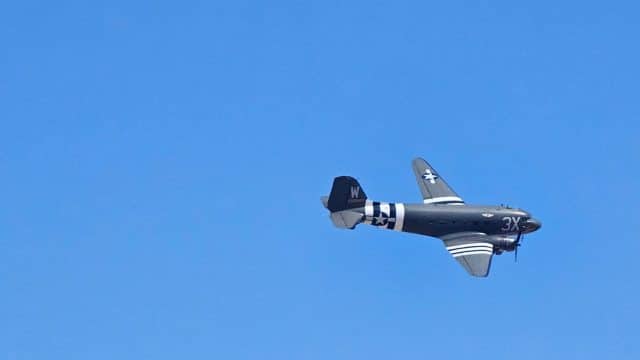
A Douglas C-47 Skytrain passes over us, a massive rounded transport plane, showing off its white striped wings. These black and white bands are D-Day stripes from Operation Overlord. These “friend or foe” stripes were painted on at the last minute with whatever was to hand, a fast way to identify aircraft on your own side without giving the enemy the chance to mimic it.
The C-47 is That’s All, Brother, the lead aircraft of a formation of over 800 aircraft which dropped over 13,000 paratroopers behind enemy lines on D-Day. The odd name was chosen deliberately as a message to Adolf Hitler. After the war, the Skytrain passed through a number of civilian owners and its history was forgotten. Someone discovered the famous aircraft in a bone yard just weeks before it was to be torn apart and in 2015, a Kickstarter raised $330,000 to repair and restore That’s All, Brother for flight, including reconstructing the “crudely hand-painted” stripes on the wings. For this day, celebrating the legacy of US aircraft, the US Air Force Academy’s jump team, the Wings of Blue, will be jumping from the historic aircraft as a tribute to that D-Day operation.
First streamers are dropped from the aircraft, weighted to match a jumper under a canopy. The jump master sits looking out of the open hatch, watching how the wind affects the streamers. The first paratrooper jumps. A small aircraft circles with smoke on, Australian aerobatic pilot Aarron Deliu in his Extra330SC, drawing our eyes to the man falling through the air. He unravels an American flag. Airshow Luke asks us to stand for the American anthem.
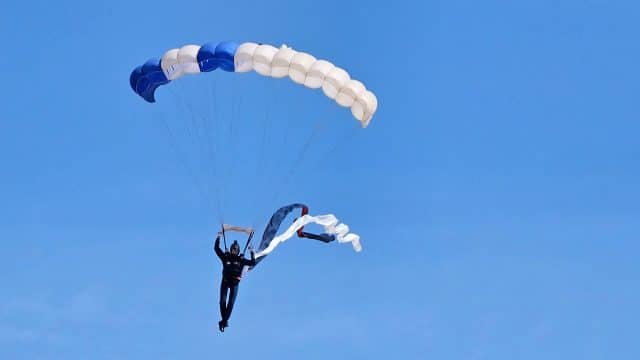
More jumpers leave the Skytrain, spiralling above us to all land on the same spot. Airshow Luke informs us that they will be packing their parachutes next to the US Air Force recruiters’ table and we can head over now to meet the Wings of Blue. That’s some very clever recruiting, I think. I shouldn’t be cynical. I would be less cynical if there was somewhere to buy coffee.
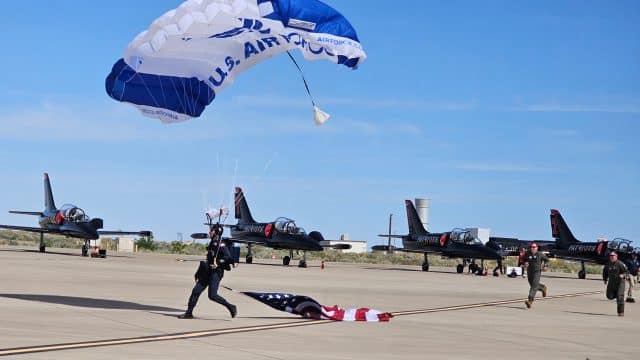
I settle for a hot dog and I have no regrets: burnt in all the best ways, with a soft and fluffy bun that does not fall to pieces (Europe, please take note) and healthy slathers of ketchup, mustard, and relish. Accompanied by a full-sugar soda. This is breakfast.
The aerobatic pilot is still in the air and now, Airshow Luke tells us, he is going to give us a preview of his show as a warm-up. I recognise Deliu because I saw him at the Baltic International Airshow in Liepāja. He was competing against two other pilots for the semi-finals of the Air Masters Champion. I remember him because he won, but also because he did exactly this, showing up at different stages of the airshow, sometimes to add a little something, like a spiral of smoke to help us to track the paratroopers, or a quick demonstration between the other performances. He seemed to take any opportunity to get his Extra into the air.
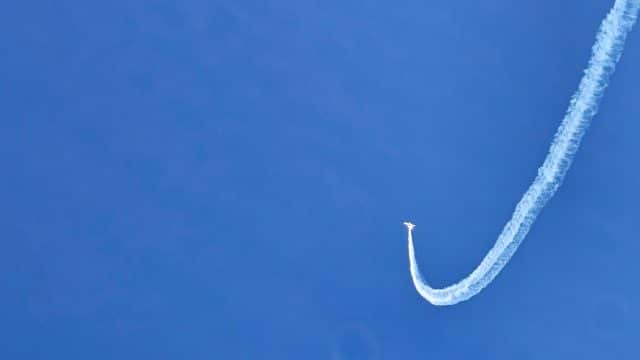
And here he is, flying a lazy circle above the line before he climbs straight up into the sky, smoke on, and then just stops. He hangs there just long enough for the crowd to stop breathing, then tumbles down in one, two, three spins before pulling out and flying away. The crowd breaks into spontaneous applause.
Airshow Luke points out that the Extra is falling out of the sky (it is actually spiralling) at over 4,000 feet per minute. “My morning warm-up consists of some aches and pains, you know how it is, but for Aarron Deliu, this is just a normal walk in the park.”
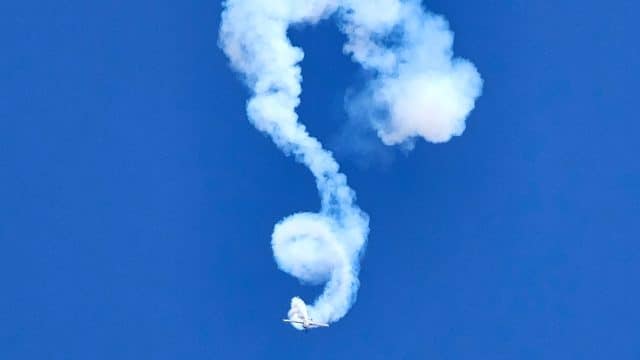
“He’s really good,” says my companion. I wonder quietly how Deliu is going to top this for his actual performance.
As the Extra lands, we see three single-engine propeller planes take off. These are Van’s RV-3s, running on pure ethanol. The three aircraft are in tight formation, at times only a few feet apart.
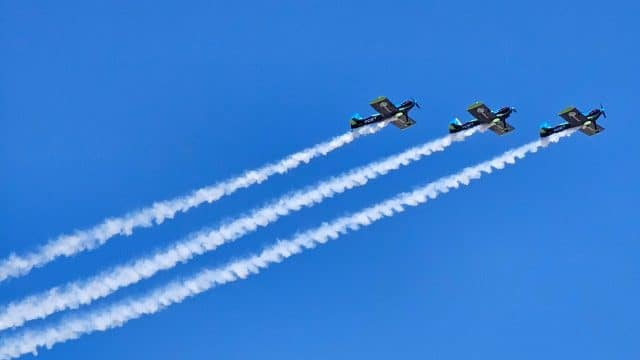
Airshow Luke explains that the RV-3s are kit planes, fully functional propeller planes that people can build themselves. He’s laughing as he tells us about a man that built a kit plane in his basement and had to use earth removal equipment to get it out for its first flight. This is the story of a man in Pennsylvania who effectively turned his basement into a hangar. He spent almost ten years piecing together a Van’s RV-7A kit plane. But when he finished the fuselage, he realised it was never going to fit through the door or up the stairs. He hired a contractor to bring in an excavator, with which to dig a massive trench in his front yard. They dug down to the foundation and then were able to knock a hole through the basement wall. At that point, he was able to use a truck and a chain to pull the kit plane out of the side of his house. (You can read the whole story, including photos, on Techeblog.com.)
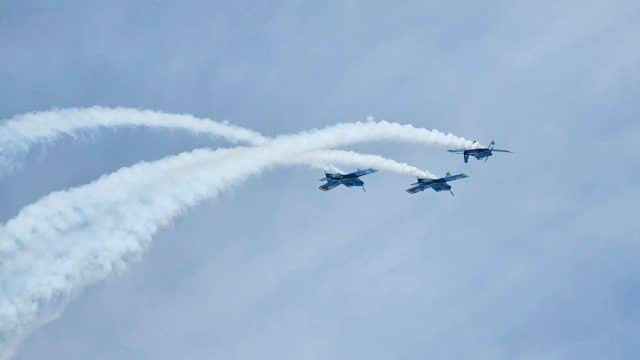
Above us, these three kit planes have the audience’s full attention as they fly, with the leader’s commands broadcast on the PA system for us to hear. They are all professionals: there are four pilots on the aerobatic team, two F-16 pilots, a former Red Baron display pilot, and a commercial pilot. I’m not sure which of the pilots was not flying that day, but the three pilots up in the air won my admiration.
Airshow Luke brings our eyes to the air boss standing next to him, who pauses for a split second to turn and wave at us before returning her focus to the voices in her headset and the airfield in front of her.
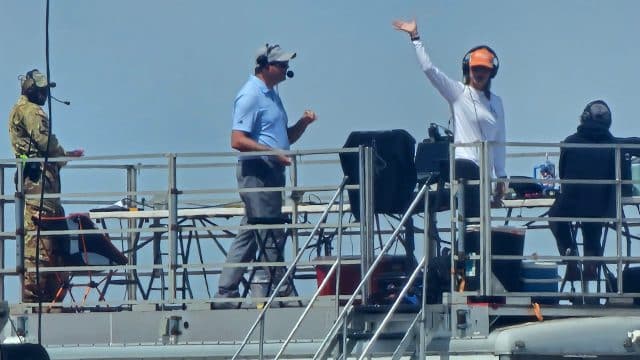
She never stops, never even seems to have a moment to take a breath, standing in the desert heat and watching every move in the air and on the apron. She’s the single coordinator for everything happening. This is Kellie Hudson from Las Vegas. She spent twenty years as an Air Force Air Traffic Controller before becoming the first accredited female air boss in the United States. When asked why she does it, she said, “I just want to be a great air boss. I want to do the best I can do and keep all my friends and family in the air show industry safe.” Airshows are inherently dangerous and someone has to be the single point of accountability for keeping every aircraft, performer, and spectator from intersecting at the wrong moment. I don’t think I’ve ever been close enough to watch an air boss before and I’m fascinated. She never stops. I am exhausted just watching her.
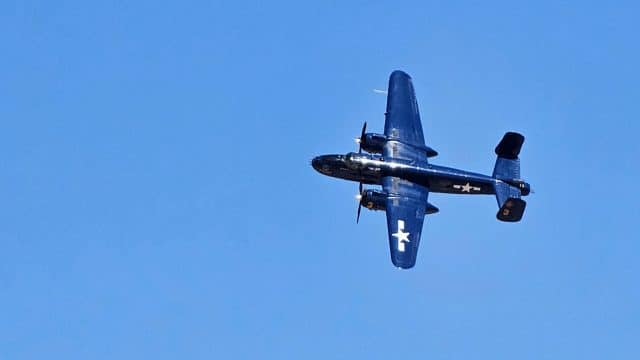
But then, a B-25 Mitchell bomber steals my attention, the deep blue twin-engine known as Devil Dog. Airshow Luke tells us that the name comes from the German nickname for Marines in World War I, “Teufelshund”, except that someone needs to help him with German pronunciation. Today, we are watching the only flying PBJ in the world, maintained by the Commemorative Air Force, actually a B-25J-30-NC representing the PBJ-1J flown by the US Marine Corps.
We’d seen the bomber at close range when we were exploring the static displays before the show. My companion had pointed out the combat stencils marked on the fuselage: dozens of little bombs alongside four and a half ship silhouettes. I wondered if you got to count bombs that you dropped that missed. But the bomb stencils don’t represent individual bombs dropped successfully, as I’d initially presumed, but instead are “mission markings”, representing combat sorties flown by the crew. The half-ship marking is a fascinating piece of military accounting: it represents a shared kill. Devil Dog‘s paint scheme is a dedicated tribute to the history of Marine Bomber Squadron 612 (VMB-612) which flew anti-shipping night missions in the final years of the Pacific war.
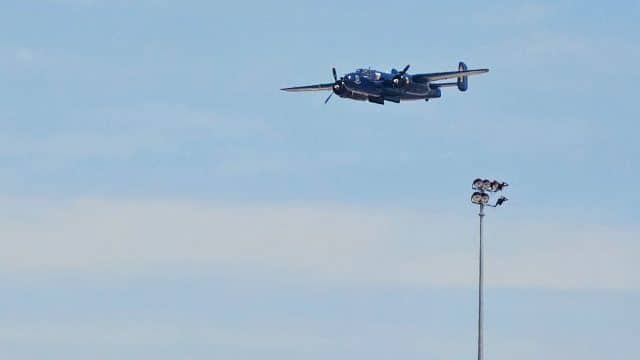
I made the mistake of visiting devildogsquadron.com to find out more, where I found this fantastic description of a flight in the historic bomber and the less useful knowledge that if I could make it to Texas for Father’s Day, I could be on the aircraft, in a jump seat, for a short flight, for a mere $425. I fill out the form for more information. A girl can dream, can’t she?
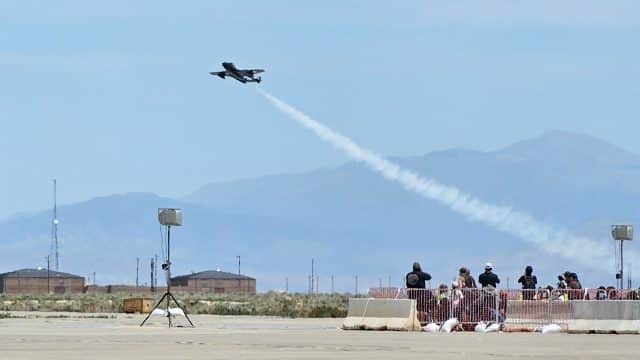
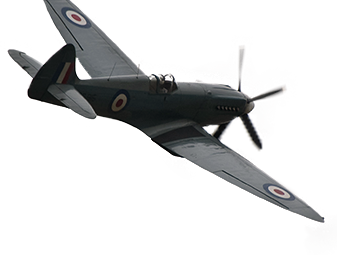
The De Havilland DH-115 trainer Vampire jet appeared in the sky with its distinctive twin boom tail and jet engine whine. Airshow Luke told us that “the Vampire was the first jet to land on a moving aircraft carrier deliberately,” which led me down a deep rabbit hole of aircraft carrier landings.
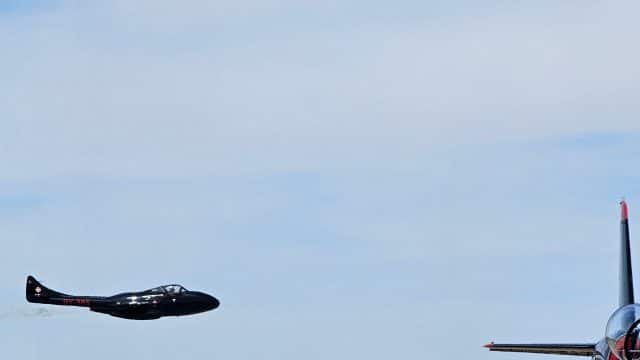
The Vampire, one of the earliest operational jet aircraft, is a remarkably small aircraft compared to modern fighters, making for a fast and incredibly nimble demonstration considering the vintage jet is old enough to be my mother.
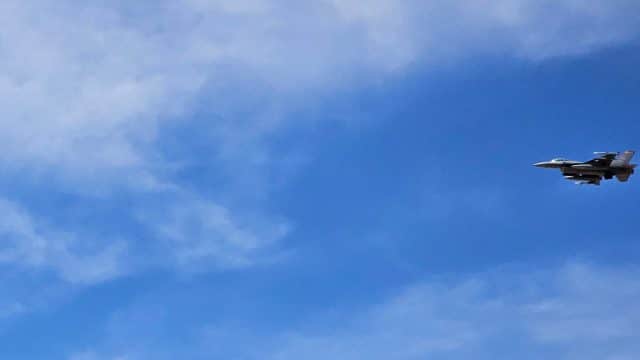
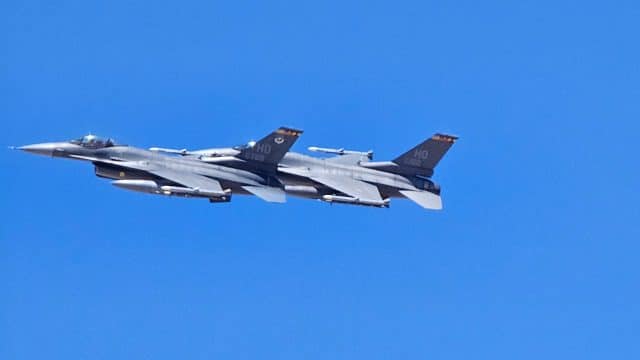
Hot on the heels of the Vampire, the 49th Wing presented a Close Air Support demonstration. The scenario, featuring the T-38 Talon and the F-16 Fighting Falcon, involved rescuing a downed pilot in hostile territory. At Holloman, the black-painted Talons are used as adversary aircraft in war games, playing the role of the “bad guys” to train combat pilots. Two F-16s swept in for low passes. Simulated explosions shook the ground. These were the shows of force, meant to suppress the enemies near the downed aircrew. I took a lot of photographs of blue sky, sometimes with the tail of a disappearing F-16 in the corner. A tinny voice shouted commands, lost in the loud roar of the engines.
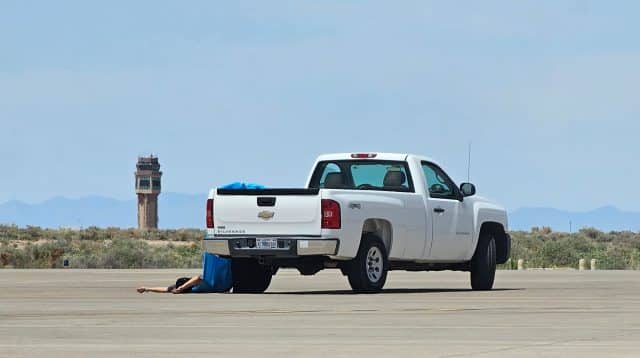
Bad men (we could tell because they were wearing black masks) parked their Chevy Silverado in front of the show line. An F-16 made another aggressive pass and killed the man holding the gun. The audience burst out cheering. The bad man spent the rest of the demo lying on the concrete, though he did get a smattering of applause after it was over, when he stood up and clambered back into the pickup truck.
The F-16s continue their display. I’m grateful for the slow pass, where I finally definitely get a clean shot. I’m sad that we didn’t see the MQ-9 Reaper, or maybe that’s as it should be. Maybe it was above us the whole time, collecting our every move.
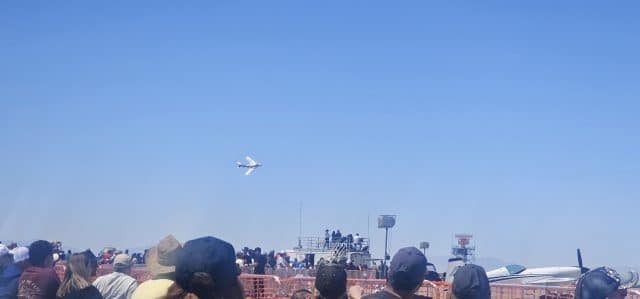
A beautifully preserved MiG-17 flies across the show line, immediately recognisable because it doesn’t have a nose. The MiG-17 has a circular nose intake which, to my eye, always makes it look like it has been in an accident, amazing that it is still flying. It is, of course, part of the design, along with the jagged metal fences running across the top of each wing to control airflow. During the Vietnam War, the small, highly-manoeuvrable MiG-17 was famously capable of turning so tightly that it drove the pilots of the much faster American F-4 Phantoms absolutely bonkers.
Airshow Luke tells us we might be asking what a MiG-17 is doing in American airspace. Taking part in an airshow, I think. This is apparently not the right answer. Airshow Luke tells us that this performance highlights the American freedom that allows us to fly, then explains, more practically, that a number of these aircraft went into civilian hands after the end of the Cold War. It’s true that it is hard to get parts, he says, making it sound like this is a local problem. The simpler version is that MiG-17 production halted in the late 1950s; parts for a 70-year-old jet are hard to get everywhere, including in modern-day Russia.
This is both my first US airshow and my first time attending an airshow on a military base. I have no idea if it is actually surprising to see a Soviet-built jet in an American airshow.
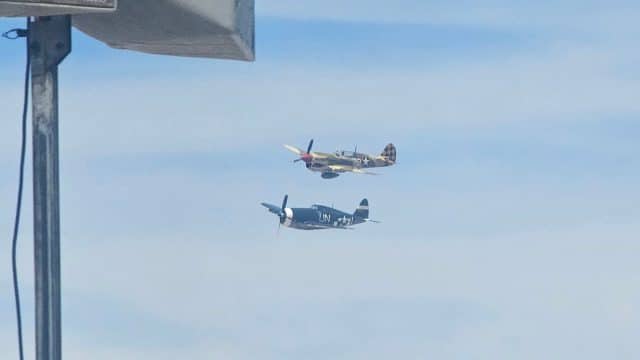
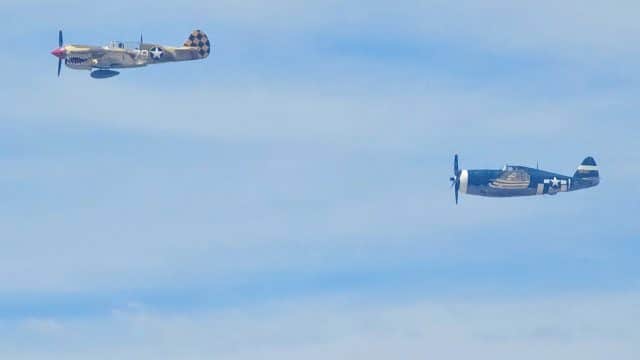
Then we return to the heavy metal of World War II with a P-40 Warhawk and a P-47 Thunderbolt. The P-40 is easy to recognise with the aggressive shark painted on its nose, a call-back to the Flying Tigers. Airshow Luke tells us that the rugged fighter could take immense damage and bring its pilot home. In contrast, the P-47 was a heavy fighter, tougher and more heavily armed than the Warhawk. They said that the P-40 would start the fight and then the P-47 would finish it.
The PA system blares. The rock music shifts to something twangy. A new set of streamers have been dropped for a jump master to analyse, and Airshow Luke has been replaced by an Army spokesperson who dials up the patriotism another notch. “We strike fear into the hearts of those who dare to oppose us,” he declares proudly, in a fascinating contrast to the Air Force’s gentler focus on the “freedom to aviate.”
He directs our attention to the unfolding canopies of the US Army Golden Knights.
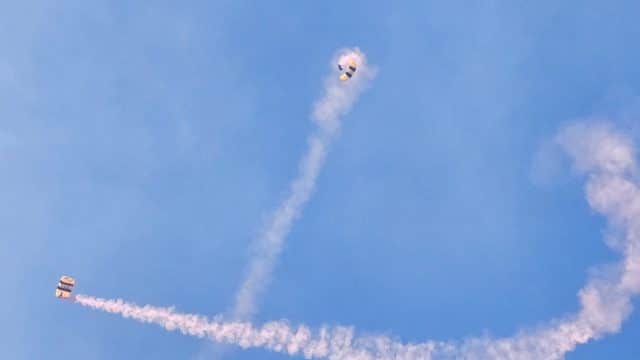
They are one of only three aerial demonstration teams sanctioned by the Department of Defense, alongside the Navy Blue Angels and the Air Force Thunderbirds.
As the men and women fall gently through the sky, the Army commentator doubles down on the patriotism.
I get a frozen lemonade and sip it too quickly, reaching a hand against the side of my head against the sudden pain, wondering how it can possibly be that I am a functional adult and still not learned to avoid brain freeze.

The paratroopers are still falling from the sky. Their manoeuvres are impressive: one jumper deals with a “broken” parachute, coming down using the reserve. Another two suffer an intentional in-air collision. They look hopelessly tangled into one another before separating safely. Two parachutists sit behind me and cheer on the US Army team, making comments about their manoeuvres and what is involved in each one, and frankly, their conversation is better than the Army announcer.
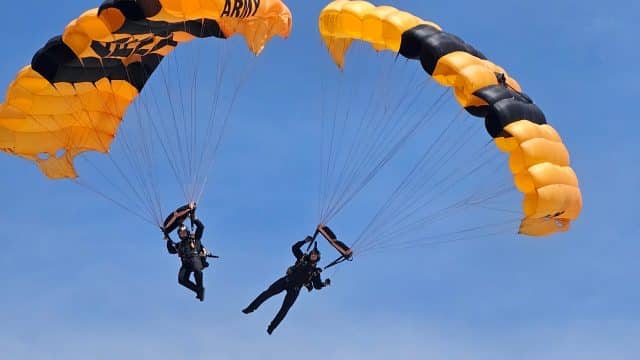
Every paratrooper lands exactly on their mark, despite the complicated manoeuvres. I’m impressed despite myself.
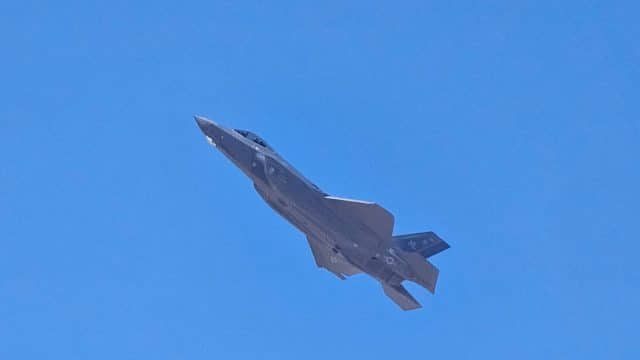
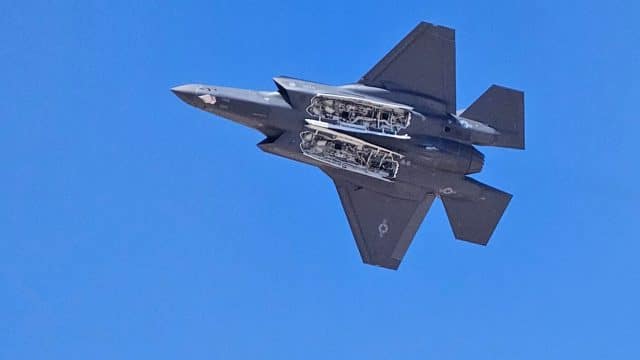
The highlight of the modern military jets is the F-35 Lightning II Demo Team, the fifth-generation stealth fighter, all jagged edges and outward angles designed to deflect radio waves. The roar of the single Pratt & Whitney jet engine is absolutely deafening, prompting a child in front of me to plaster his sticky hands over his ears while his parents scramble to find his headset. The olive grey F-35s are visibly larger and heavier than the F-16s but still somehow equally difficult to track. Airshow Luke tells us a story of testing the F-35’s advanced radar off the coast of California somewhere, tracking a ship that kept inexplicably appearing and disappearing until they finally realised that they were tracking a whale, not a ship.
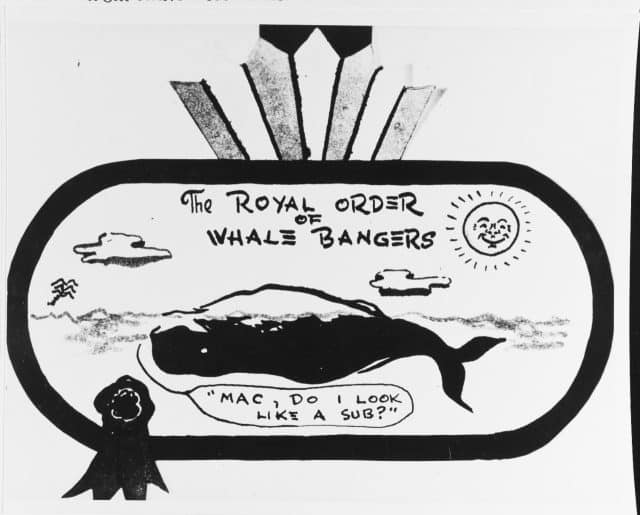
This reminded me of the possibly apocryphal story that during World War II, US pilots who bombed whales, thinking they were ships, would receive a satirical medal, the “Royal Order of the Whale Bangers”. I was delighted to discover that this did actually happen, at least once, and that there is a record of the medal on the Naval History site as presented to a patrol squadron in 1943.
Meanwhile, the F-35s are still roaring past, defying my attempts to photograph them. The pilot’s helmet, Airshow Luke tells us, is worth $400,000 and allows the pilots to look through the floor of the jet, by feeding video from cameras mounted around the fuselage directly to the visor. An F-35 does its signature pedal turn, pirouetting in the air. I get a photo. For some reason that I can’t quite follow, the F-35 demo team’s display is cut off early, and Airshow Luke quickly moves on to the next act.
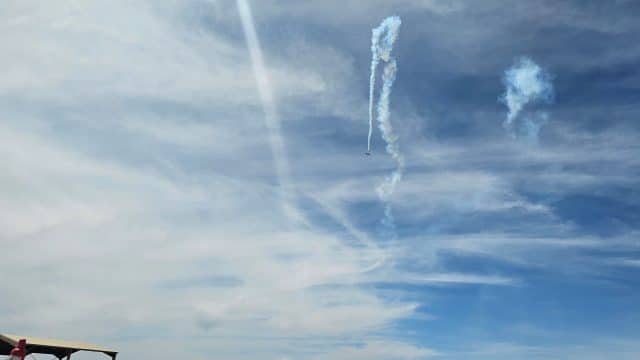
The next thing we know, Aarron Deliu is spiralling through the air in his Extra 330SC again, which Airshow Luke calls “an F1 car with wings”. As Deliu puts the Extra 330SC through a series of dizzying tumbles and vertical climbs, the announcer patches his cockpit radio directly into the public address system. It’s fascinating to hear him flying straight down, joking about his Australian accent, followed by a loud grunt against the high G-forces as he enters the turn.
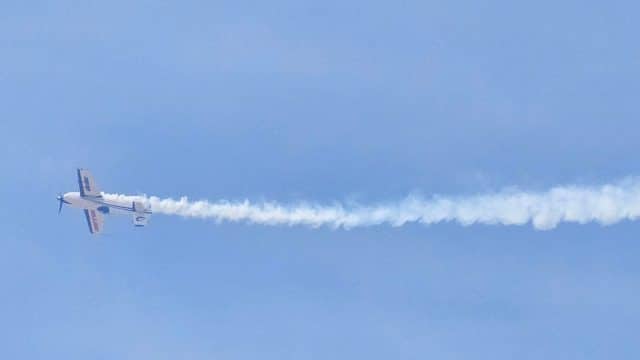
To wrap up his display, Deliu races his aircraft against a cherry red McLaren sports car which has been winning races along the taxiway all day. The Extra flies up and around every corner in order to give the McLaren a head start. It doesn’t matter: as they enter the final stretch, Deliu easily pulls ahead to claim victory.
(On the second day, Deliu will race another sports car, yellow, I have no idea, it had four wheels and no wings. Deliu will overtake the car in the final length and flip to fly inverted above it as they cross in front of the crowd. It will cost him the race but from the roar of the crowd, Deliu is clearly the winner.)
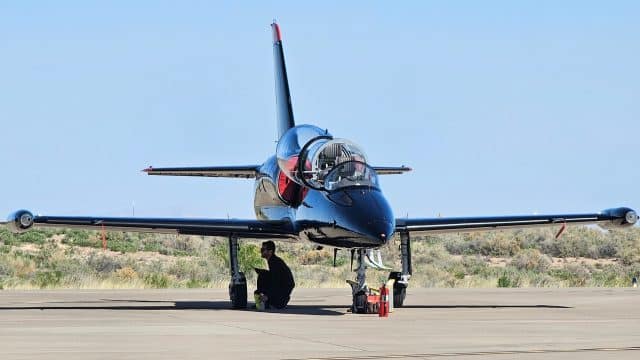
The grand finale belongs to the Patriots Jet Team, flying six Aero L-39 Albatros jet trainers.
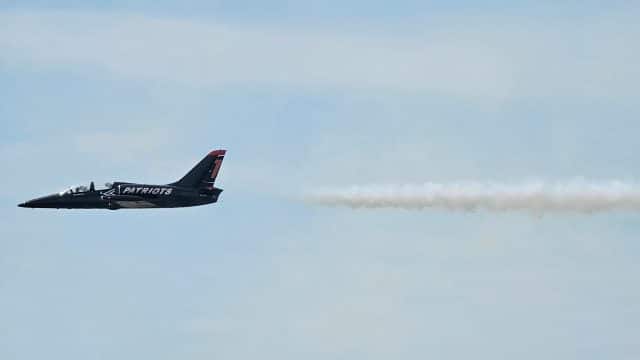
A new voice takes over the PA, her first time announcing for the Patriots, and she’s just nervous enough that the person behind me thinks she’s announcing while flying with the team, rather than on top of the air boss trailer with Kellie Hudson and Airshow Luke.
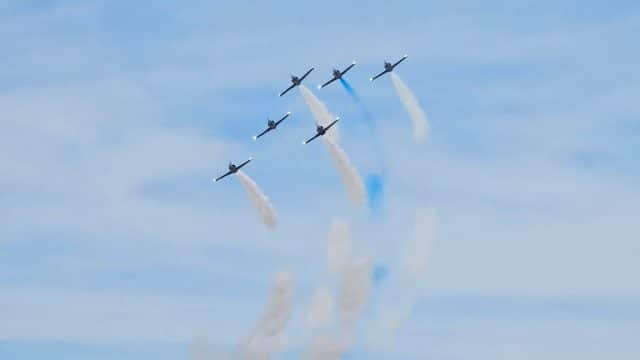
Composed of former military pilots from the Blue Angels and the Thunderbirds, the team has made a reputation for themselves with their meticulous formation flying. In close formation, the lead pilot carries the sole responsibility for navigating the aircraft through space. The other five pilots do not look at the horizon or their instruments; instead, they lock their eyes onto a single, specific rivet on the wing of the aircraft ahead of them, maintaining a precise, unshakable distance of just a few feet.
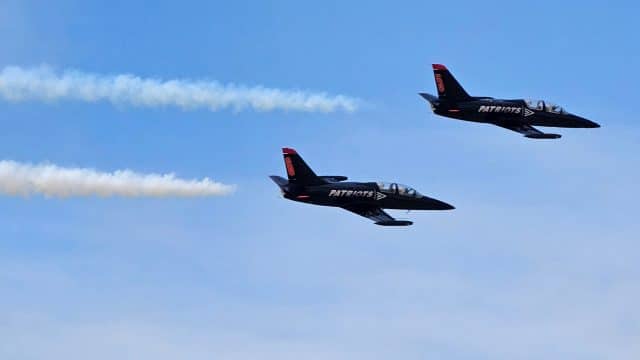
They draw a heart for the crowd. The crowd applaud. Then the L-39s start flying in at high speed from opposite directions, appearing to miss each other by a hand’s breadth.
The Patriots’ announcer explains to us that the Czech-built L-39 was critical for these close formations, both because of the aircraft’s wing shape and the 360° view from the canopy. She doesn’t wonder why we might see Eastern Bloc aircraft at an American airshow. Maybe because the L-39 was still being built a decade after the Cold War ended. Or maybe because, unlike the MiG, the L-39 never made it into Top Gun.
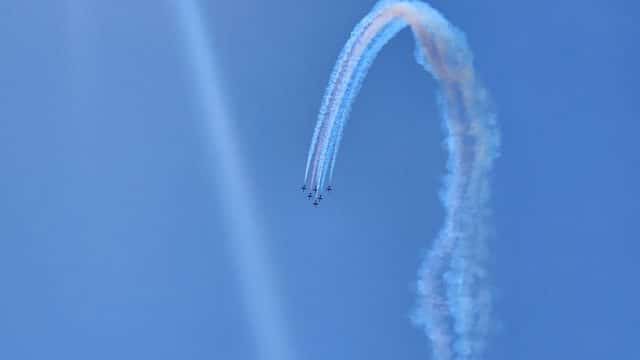
My uncharitable thoughts are interrupted when the six L-39s break away in a perfect, symmetrical “bomb burst” separation manoeuvre. They paint the desert sky in a spectacular fashion.
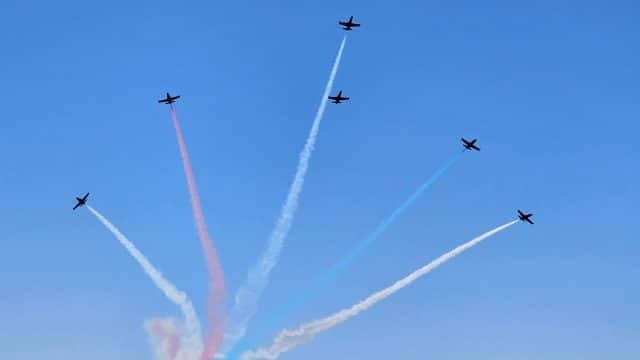
The sky still holds the red white and blue smoke trails of the L-39s as Airshow Luke tells us that the airshow is over.
As the engines cool and the dust begins to settle over runway 25, the crowd slowly begins the long walk back to their cars. Holloman’s Legacy of Liberty airshow has delivered everything it promised: a thrilling, sensory-rich day of high-speed manoeuvres, historical reverence, and a fascinating, highly immersive view of the sheer cultural weight of the US military.
As we leave the base, I’m thinking about F-35s, paratroopers, and L-39s drawing hearts in the sky.
(The following day, I will see it all again, but this time, with a thermos of coffee.)





Thanks for a wonderfully evocative description of the show. Almost felt like I saw it in person!
Well that’s what I was hoping for, so thank you!
You had my heartrate up – better than the gym!
Hmm, I wonder if I could treat airshows as a healthy exercise regime.
I love the picture of the person chilling in the shade under the fighter!
Thank you! I really like that one too!
….and the de Havilland Vampire fuselage is made of a plywood-balsa composite.