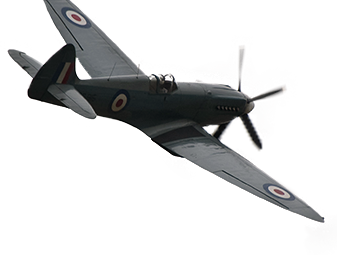
Fatal SR22 Stall on Final at Barwick LaFayette
On the 20th of March, 2025, a Cirrus SR22 crashed in LaFayette, Georgia during an instructional flight, killing both the pilot and the flight instructor.
It was a good flying day, good visibility, scattered clouds at 4,300 feet with light wind. Both the pilot and the flight instructor had a free day and agreed to go flying. The pilot had 379 hours, with 310 hours on the Cirrus SR22 and had received some instruction towards his Commercial Pilot Certificate. He’d previously trained with this flight instructor for the commercial certificate and previously for his instrument training. A friend commented that the purpose that day was just to fly together, though the friend also assumed instruction was involved, as the pilot would “not miss an opportunity to hone his skillset,” he said.
That afternoon, the pilot flew the Cirrus SR22, registered in the US as N969SS, to Barwick LaFayette Airport to pick up the flight instructor.

At 14:15, the weather observation showed the wind at 260° at 7 knots: for runway 20, this was a 3.5 kt headwind with a 6.1 kt crosswind component. They took off from runway 20 at 14:19 and started flying circuits, following a pattern to return to the runway for practice approaches and landings.
The on-board avionics data showed that they were practising 180° power-off accuracy approaches. For a power-off approach, the pilot cuts the power to idle and has to glide the plane down to land at a specific spot, gauging altitude, bank and airspeed to correct the approach without using the engine. The 180° power-off approach starts on the downwind leg, flying parallel to the landing runway. The pilot has to fly past the runway and turn 90° onto the base leg of the circuit and then another 90° turn for final approach, landing at a specific point of the runway.
This is a required skill test for the commercial certificate.
They completed two circuits over the course of ten minutes. During that time, the wind was changing. In the next observation, five minutes after the crash, the wind had shifted to 330° at 10 knots, now a 6.4 kt tailwind with a 7.7 kt crosswind. Not enough to cause a problem but unsettled enough to change the characteristics of the approaches between circuits, making the manoeuvre just that bit more difficult.
The aircraft avionics showed that the SR22’s pitch started increasing while they were in a steep left bank, turning onto final approach. The airspeed began to decrease.
A man working nearby was watching.
I stepped out the front door of our Wastewater Treatment Plant Office at 2:30pm on Thursday, 3/20/25 just as a small plane passed overhead. The plane was flying noticeably lower, and on a different trajectory toward our air strip than the planes I normally notice landing here. The airstrip runs North/South and is directly across Spring Creek in reference to our office building.
The plane was flying directly west as it flew over, and banked sharply to the south as it crossed the creek. It seemed that the nose was a little higher than the tail, and that it had gone past the west side of the strip. As I watched it trying to line up on the strip, I felt a noticeable gust of wind out of the east. As it moved on to the south, my view was blocked by the trees along the banks of Spring Creek, but just before I lost sight of it the wings seemed to dip sharply back in the other direction as though the wind pushed them that way. Immediately after that there was a large explosion and a fireball.
I was stunned for a few seconds, and then called 9-1-1.
Another witness also noticed that the nose of the SR22 was high in the left turn.
According to the Cirrus SR22 handbook, the stall speed with 50% flaps in a 45° bank is 78-80 knots. The onboard avionics showed that in the left turn, the SR22 was in a 48° left bank, travelling at 72 knots, with a pitch of 27.1° nose up.
One second later, as the speed had dropped even further to 69 knots, the aircraft rolled to the right into a 74.2° right bank, spinning into the ground. The SR22 crashed just short of the active runway, in the paved displaced threshold area, slid onto the grass and then burst into flames. If they hadn’t stalled, they would have landed.
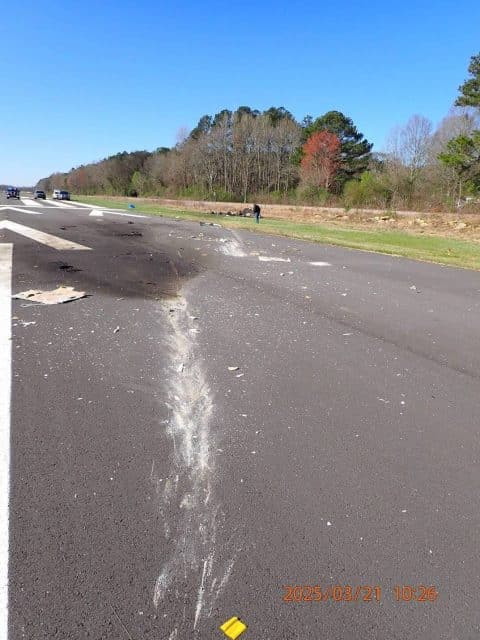
The NTSB report concluded that the pilot had misjudged the distance to the landing, resulting in an undershot approach. The nose was high in an attempt to stretch the glide, leading to the stall in the turn.
The pilot’s exceedance of the airplane’s critical angle of attack while landing and the flight instructor’s inadequate remedial action, which resulted in an aerodynamic stall/spin at an altitude too low for recovery.
This is a tragic crash but a stall on final is hardly unique. The report cites the exact scenario in Chapter Nine of the FAA Airplane Flying Handbook as one of the common errors made during power-off approaches. The correct response would be to accept the undershoot, landing earlier than the designated spot on the runway, or to put the power on and recover, accepting the failed manoeuvre.
However, this particular case is interesting for two reasons, both buried in the docket.
The report points out that the instructor should have noticed the developing stall early on and intervened. He should have called out the airspeed, put the power on, or even taken control of the aircraft before it ever got to that point. The report further notes that they were unable to confirm the recent flight experience of the instructor.
He had received his flight instructor certificate in January 2020, that was certain. He’d reported his flight experience as 1,645 hours in December 2024 and that he was employed by a corporate business jet operator. However his electronic log book showed just 382 hours, starting from May 2019 to March 2024, with 23.9 hours on the SR22. There were no further entries in the log book. They further report that he was hired by the corporate business jet operator in October 2024 but resigned in December, “before satisfactorily completing their training program”.
This implies a poor attention to detail, bad logging and walking away from a job before engaging properly. But the correspondence from the bizjet operator tells a somewhat different story. When the NTSB first contacted the company to ask if the instructor was still employed by them, they got a stilted response that he had been hired as a First Officer in October 2024 but resigned in December 2024. “With the short tenure, he did not fly with [us].”
The NTSB issued a subpoena to see the flight instructor’s training records. The audit of his training shows he completed a number of training modules in October 2024 including Stall Prevention and Recovery and, bewilderingly, Nespresso Vertuo Coffee Machine. However, in November, things take a darker turn. The flight instructor had attended six simulator sessions in the second week of the month and then failed three in a row on three consecutive days. They did not specify the reasons for the failures. There are no further simulator sessions noted.
Three weeks after the failed simulator sessions, he reported 1,645 flight hours and employment at the bizjet operator for his medical examination.
The second unexpected detail is a hidden risk of the Cirrus Airframe Parachute System, which was highlighted by the NTSB in a guide for first responders. The airframe parachute is launched using a ballistic parachute recovery system (BPRS): in case of a flight emergency, a rocket is activated which extracts the parachute very quickly.
This dashcam video after the crash very clearly shows the hazard that this system can pose on the ground.
We can hear the rocket activating while the first responders are still attending to the scene. The hard impact and post-crash fire meant that there was no chance of survival but if there had been a rescue attempt, it could have injured any survivors and those trying to save them.
The guidance from the NTSB warns first responders to look for the triangular warning label on the fuselage that indicates where the rocket would leave the aircraft and to use caution to avoid accidentally activating the rocket when in the cabin or cutting through fuselage.
Be aware that due to damage sustained during the accident sequence, the activation cable running along the fuselage of a BPRS-equipped airplane may be under tension and near its breaking point, which could activate the rocket at any time.
The alert cites two other near misses, although this is the only NTSB case where the rocket actually activated in a dangerous way after the crash.
None of this changes the tragic events of the day. Two men went flying because they both had the day off, and everything that determined how that day ended was already on paper. But I am increasingly intrigued by the difference between the report and the docket in NTSB investigations (other aviation bodies do not release the docket other than by specific request).
The report tells us what happened. Sometimes, the docket tells us what it was like.





The coffee machine certification is the most important; have you seen how coffee pilots go through?
More seriously, this illustrates that just because someone has an instructor’s certification doesn’t mean they should be training people. And the evasion by the former employer looks like them covering themselves over a possible lawsuit rather than
I hear that’s the standard in the US now, not a specific evasion; a former employer will acknowledge that someone worked for them but not say anything about why they aren’t there any longer, to avoid (as you say) legal issues.
I mean, I’m not unhappy that they should wait for legal process before handing over personnel files. But somehow the phrasing on this struck me (wanting to make it absolutely clear that he hadn’t flown for the airline).
Good point on pilots and coffee!
This reminded me of your recent blog, “The Man in the Right Seat at Prestwick”, which was about another “instructor” who shouldn’t have been instructing.
And it explains why the NTSB recently released a video on “On-Scene Hazards of Ballistic Parachute Recovery Systems”, https://www.youtube.com/watch?v=XeJBjn0fYuE . You can also find it via the NTSB’s Safety Alert 102, which Sylvia linked in her blog.
It’s all about the instructors at the moment! But yes, I thought of the same case, where intent and communication are not clear.