You are browsing category: Miscellaneous
24 December 2010

Merry Christmas!

05 November 2010

Qantas flight QF32 Airbus A380

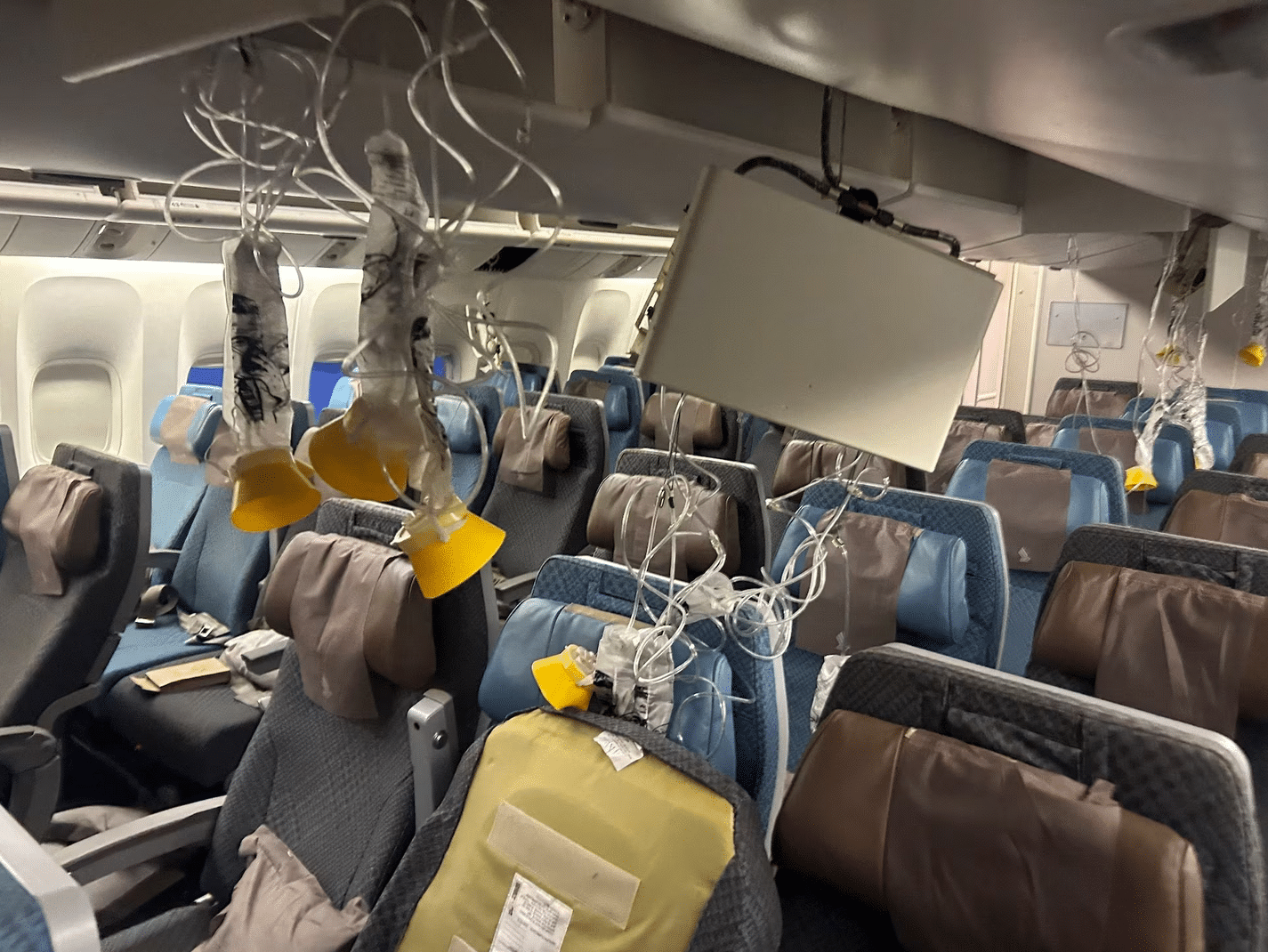
Qantas Airways flight QF32 made an emergency landing in Singapore yesterday after what was initially described as an “engine explosion”. The Airbus A380 was carrying 440 passengers and 26 crew to Sydney via Singapore. A few minutes after take-off, the No 2 engine showed “abnormal engine indications” and was shut down. The flight continued for a further forty minutes to reduce fuel and then landed at Singapore. A passenger described it as two explosions followed by the cabin rattling and another stated that he could see where the engine had come away and torn through the wing.

Pieces of fibre debris up to one metre dropped onto a densely populated area on Batam Island. After landing, a further engine failed to shut down, the cause of which is being investigated.

Qantas, who reportedly has a further 20 A380s on order from Airbus, suspended all A380 flights “until sufficient information has been obtained about what occurred on the QF32 aircraft”.

The Airbus 380 is the largest passenger jet and can carry up to 800 passengers.

The Australian Transport Safety Bureau is leading the investigation and have stated that a preliminary factual report will be available by the 3rd of December.

Updates are being posted here: Investigation: AO-2010-089 – Qantas Airbus A380 – Inflight engine failure, Indonesia

One of the passengers, Ulf Waschbusch, posted to his blog with a set of photographs from the incident: I’m safe | blog.ulfw.com

The China Post has reported that Qantas believes the cause of the incident was a design flaw in the Rolls Royce engine and that maintenance was not a significant factor. Qantas have stated that they expect A380 flights to resume in 24-48 hours after they have completed safety checks. Singapore Air, who have 11 A380 aircraft using the same engine, also suspended their A380 flights but have announced that they are now resuming all flights.

Perth Now has a slide-show of high quality photographs of the A380 in-flight and the detail of the wing.

Coincidentally, a Qantas 747 also made an emergency landing this week in Singapore, also as a result of engine issues shortly after take-off. Flight QF6 returned to Singapore without incident and the flight will depart later today using the same plane. The BBC News – Factfile: Airbus A380 contrasts the Airbus A380 to the Boeing 747.

13 August 2010

Airbus 319 with nose-gear collapsed

Last week, an Azerbaijan Airlines Airbus 319 collapsed at the end of the runway at Atatürk International Airport in Istanbul. The nose-gear and fuselage appear to be severely damaged. There were no injuries.

Azerbaijan Airlines is the state-owned airline of the Republic of Azerbaijan, an independent Turkic state. The flight from their base in Baku, Azerbaijan to Istanbul was uneventful … until after touchdown.

These photographs appeared on Turkish site Airkule.com with the headline KAZADAN FOTOĞRAFLAR yesterday.

(Click through to Airkule for the full set of 19 photographs)

Flightglobal reports:
Azerbaijan Airlines A319 damaged in Istanbul incident

Images from the scene show that the twin-engined aircraft appears to have suffered the loss of its nose-gear in the event. It has come to rest near a fence, with its forward fuselage in contact with the ground.

The images also show that the nose of the jet carries the name ‘Guba’, identifying it as serial number 2588, registered 4K-AZ04.

Flightglobal’s ACAS database shows that this A319 is a five-year old airframe fitted with CFM International CFM56 engines.

Circumstances of the event are unclear.

Turkish media state that the aircraft was operating as flight J2075, from Baku, and was transporting 121 passengers and seven crew. No injuries are reported.

The plane appears to have touched down without incident but then came off the runway as the plane was taxiing to the final exit. Airkule state that the aircraft was travelling too quickly to make the turn and that initial findings imply that the accident was probably caused by pilot error.

18 June 2010

Boeing 777 Rolls Back, Loses Door

I spotted these photographs on the Star Telegram’s Sky Talk blog along with a few posts detailing how a Boeing 777 lost a door at Dallas/Fort Worth Airport.

The flight from Sao Paulo used the autopark system at Dallas/Fort Worth, which means that ground workers are not involved and thus it isn’t simply a case that chocks were not used. At the moment, it is still unclear what caused the accident. Gate D33 has a slight incline and the plane apparently rolled back 100 metres (over 300 feet) while the passengers were disembarking. The movement physically ripped the door off of the plane. Amazingly, no one was hurt.

Andrea Ahles spoke to American Airlines and received the following statement:

Flight 962 parked at the gate one (1) minute early Tuesday using our docking guidance system. Therefore, it was not appreciably early. Using the docking guidance system is completely normal at the airports where it is installed – DFW being one of them. We have them at all of our gates at DFW. Installing them was an American initiative, and they’re installed at other airports we serve, such as Miami, as well. Whether the plane had been docked with the guidance system or by our ramp personnel, the use of parking brakes or wheel chocks are part of procedures that occur after the plane has stopped at the gate. Again, American has yet to determine the cause of the incident, and nobody should speculate publicly about the cause until all the facts are gathered and interpreted.

No speculation? What fun is that?

In a further statement to the press, a spokesperson for American Airlines stated that it was unclear whether the crew had failed to set the brakes properly or if there was a physical failure.

Meanwhile, there are a few comments from people supposedly in the know.

An anonymous poster on the Dallas AIRLINE BIZ Blog stated that it was a pressure failure:

When the Captain attempted to set the brakes, the system lost all pressure and the aircraft began rolling backwards. He twisted the tiller that controls the nosewheel steering and eventually slowed and stopped the aircraft. A valve in the hydraulic braking system had failed and has since been replaced – along with the door.

Meanwhile, on the PPRuNe thread, Plane to jetway: Can I have my door back? it was stated that the parking brake valve malfunctioned which fits in with the description of losing pressure.

This further image was posted on Bizzarre AA 777 incident at gate — door ripped off plane – FlyerTalk Forums with the classic comment, “I did this to my car’s side-view mirror once, backing out of the driveway.”

I know, I shouldn’t laugh.

I couldn’t find anything on the American Airline site although they’ve clearly released a statement that’s being quoted all over the local news. Still the reporters seem to be focusing on the lack of chocks although the statement is very clear that the lack of chocks was not seen as a contributing factor. However, it wouldn’t surprise me if the NTSB end up offering a recommendation to use chocks as a back-up measure on any gates with an incline.

15 April 2010

Seat Selection

I saw this on xkcd and laughed out loud.

Why did I never think of that?

12 March 2010

Sky Dance

Unfortunately I am somewhat under the weather so no post today. And although I’ve got a great YouTube clip for you, I strongly suspect that I am the last person left on earth who hasn’t already seen this video.

But gorgeous views like these are worth watching more than once, aren’t they?

This is apparently a clip from Sky Dance, a 1980′s IMAX documentary film about aerobatic flying.

Amazon.com: Sky Dance Product Review

Ultimate G’s puts the viewer in the front seat of the Extra 300 aerobatic monoplane. You’ll feel the thrill of flying in a world-class aerobatic competition aircraft through the Grand Canyon! Pilots from the Air Combat Canada show team and world aerobatics champions engage in solo flights, dogfights, formations and aerobatic flying. Originally released in IMAX theaters, this movie is hightly recommended not only for it’s visual effects, but also its delightfully entertaining story about a young boy who dreams of becoming a pilot despite all odds.

I can’t wait to get my hands on a copy.

So, is it true? Did all of you already know about this film and neglect to tell me?

22 January 2010

Ditching in the Irish Sea

Kate Burrows was flying from Guernsey back home to the Isle of Man in her PA30, a Comanche Twin, when she noticed problems with her right engine. She shut down the engine and, as she was still some 38 miles from the Isle of Man, she decided to divert to Blackpool. A few minutes later, her left engine lost power. She contacted the distress centre and they recommended she continue to Blackpool but she realised she wasn’t going to make it.

Another pilot heard the conversation and reported it on PPRuNe.
GA Aircraft Ditching Irish Sea

Heard this unfold on D&D when overflying – Female pilot reporting double engine failure and unable to make destination at that time reported to be 18 miles away. She sound relatively calm and composed under the circumstances, reporting that she was visual with some oil rigs and would circle around them…….and “possibly land on one”!! However I am delighted that she made it, job well done – even if it wasn’t the planned outcome!

Kate Burrows signed up to the forums as ManxLadyBird and gave a first hand account of her experience:

I did indeed ditch in the Irish sea. I was about 38 miles from IOM when my right prop had a runaway, it was overspeeding in excess of 2800 rpm and I could not stabilise it. The MP was low as well so I did not have much to play with. I felt it was uncontrollable and shut it down.

The PA30 can fly perfectly well on one engine so I descended to 4000 ft to get out of the cloud layers and diverted to Blackpool. About 6 minutes into my diversion my left engine lost power. My MP was down to 17 inches. I did all the checks changed fuel tanks, cross feed, electrics, boost pumps etc. No go.

D & D wanted me to try for Blackpool 18 miles away but I would not have reached there. I was near the oil rigs so elected to land in the vicinity. I spotted the support ship and ditched near it. I got out and had to hold onto the life raft. There were no steps on the life raft and no way to pull myself in.

The oil rig helicopter was hovering nearby to spot me whilst the support vessel rescue craft picked me up. Once on the ship I was checked out and the RAF Seaking from RAF Valley winched me up and took me to Blackpool. I was checked out at the Hospital there and ok to fly home on Manx2.com’s aircraft. All the emergency services and the police were fantastic and couldn’t have been more helpful.

Lots of things were in my favour. In my training as a commercial pilot it was instilled ‘fly the aircraft’. Sort out the problem and then make a decision and stick to it. This is what I did. My husband insisted on me flying in an immersion suit. Thanks to him, it helped. The weather was benign but cold. The sea had slight swell. If the wind had been greater than the 15 or so knots the waves would have been bigger and it might have been different. The ship was there and were alerted so I was only in the water for about 5 minutes.

Was there anything I would have done differently , no I don’t think so. I did everything I could think of the get my engines back but once I had made the decision I followed it through. Even having 2 engines doesn’t always guarantee getting there but someone was looking over my shoulder on Wednesday and I am here to have Christmas with my family.

M-ALAN on the Manx register

The PA30 hit the water at approximately 90mpg. The pilot’s description of the final moments of the flight were published in the Isle of Man Today:

‘I opened the door of the cockpit prior to touching down. I didn’t really have time to think about it — I just got into emergency mode. I said a few Anglo Saxon words to the effect “oh dear, I’m going to get wet”.

‘I landed tail heavy so it took all the force of the approach. The tail took the brunt, the cockpit bellyflopped and the door flew open. An oil rig helicopter hovered about 100ft away.

‘I climbed on to the wing and made for my life raft but I couldn’t get in it — I was hanging on to the side. The tail of the aircraft was at 90 degrees to the fuselage.

‘I was only in the water for four to five minutes when the fast response craft from the support vessel came to pick me up.’

She rang and told her husband: ‘I’ve broken the aeroplane and my finger nail.

He replied: ‘Why can’t you just break cars like other people!’

Meanwhile, back at the PPRuNe forums, ManxLadyBird gave a detailed description of how she felt as this was happening.

GA Aircraft Ditching Irish Sea:

If you remember back to your very first landing you did as a student pilot, not even a solo, but your first. You thought you were going far too fast and ooooh ‘eck its gonna hurt, but you flared and the wheels touch down and all was calm…. well the first part is true and the second part isn’t.

I was lucky because I had my undercarriage folded away so I had a relatively smooth underside. But you feel you are coming in far too fast, but you cannot slow down, certainly in a Comanche as if you go much below 80 knots she will fall out of the sky, so you come in fast, the lower to the water you get you tend to lose a bit of elevator authority or so it felt, you feel like you want to stretch the glide but that won’t work either.

At the last couple of feet you haul on the elevator and touch down tail hard so it takes all the force of the landing and bleeds the speed off. It makes a hell of a bang, and if I knew what hitting a brick wall was like I would say it was like hitting a brick wall. It was hard.

The main fuselage then belly flops on the water. You should already have opened the door and latched it open on the way down so when the frame distorts your door is already open. On the way down you have opened the door, you should then tighten your straps and put your feet on the floor. If they are on the pedals they could slip past and get trapped. What are you going to do with the pedals anyway? I also held onto the controls as a way of bracing myself.

I think because of hitting the tail hard and my bracing I prevented myself taking the full force of the ditching and therefore prevented whiplash. I had also made sure my props were feathered so the water did not catch them and help water loop me.

All my safety equipment was in easy grab reach. I told the D&D people exactly where I was ( but they knew that) and what I was going to do and they worked the rescue round me. They wanted me to glide 18 miles but I knew I had about 10 miles glide so I had to make the plan and execute it.

The other thing to remember is that your time frames all go to pot. What you think is 5 minutes could be 30 seconds or 10 minutes. I do know however that I ditched at 1223, like a good pilot I looked at my watch on landing!!

It’s always good to reflect on accidents with a positive outcome.

I found it fascinating to read a first-hand account of the sequence of events and how Kate Burrows dealt with the situation.

I can only hope that I am as level-headed and organised if I end up in a distress situation.

15 January 2010

Haitian Relief Efforts

In lieu of a post today, here are some links regarding the situation in Haiti, with a focus on aviation.

These photographs are not easy to look at but helped me to understand the scale of the devastation.
Earthquake in Haiti – The Big Picture – Boston.com

Tuesday afternoon, January 12th, the worst earthquake in 200 years – 7.0 in magnitude – struck less than ten miles from the Caribbean city of Port-au-Prince, Haiti. The initial quake was later followed by twelve aftershocks greater than magnitude 5.0. Structures of all kinds were damaged or collapsed, from shantytown homes to national landmarks. It is still very early in the recovery effort, but millions are likely displaced, and thousands are feared dead as rescue teams from all over the world are now descending on Haiti to help where they are able. As this is a developing subject, I will be adding photos to this entry over the next few days, but at the moment, here is a collection of photos from Haiti over the past 24 hours.

U.S. Provides ATC Support To Haiti | AVIATION WEEK

A member of the U.S. State Dept. Haiti Task Force said the U.S. Coast Guard was operating flights into the airport that were controlled from a USCG cutter operating in the bay outside the city.

Haiti Airport The Beachhead And Bottleneck For Aid

January 14, United States Air Force Special Tactics personnel were on the ground controlling airport operations at Toussaint L’Ouverture International, Haiti, but the ramp area was already saturated with 44 aircraft, forcing a temporary closure. The airport operates a control tower, two fuel trucks and one 9,974-foot runway. The control tower was rendered useless by the January 12 earthquake. Initial aid flights arrived using the UNICOM frequency to organize themselves, then by a U.S. Coast Guard Cutter off the coast. But two days later, the airspace was closed, turning away 11 aircraft that had been waiting for other flights to depart so they could land. Among those turned away was a C-130 from the 15th Special Operations Squadron at Hurlburt Field, Fla.. With ground damage hindering the expedient dispersion of supplies, and physical space preventing further arrivals, departures were at the same time beginning to be challenged by a dwindling fuel supply. The American aircraft carrier USS Carl Vinson had by Thursday been dispatched to the region, primarily looking at providing increased helicopter capacity in the afflicted area.

The January 12 earthquake that struck near Port-au-Prince, Haiti, leveled much of of the capital city and crippled the country’s infrastructure, including water pipelines. With the Haitian airport operating at capacity, the USS Carl Vinson will be able to provide helicopters for aid distribution and emergency air lift operations, including moving construction equipment to areas unreachable by now destroyed roads. First estimates from the American Red Cross listed the potential dead tally at 45,000-50,000.

Air Care Alliance has a Listing of Organizations with volunteers flying to help others.

Although Operation Teacup is not in this list (and I don’t know them personally), their website struck me as up-to-the-minute and with a clear plan.

Operation Teacup organises volunteer efforts for pilots and aircraft owners. They are concentrating their efforts on relief flights to the Eluthera, Bahamas staging area for ferry flights to Haiti. At the moment they are trying to collect 400 pilot / aircraft owners to volunteer to help with transport.

Single engine airplanes are useful for transporting supplies into Governor’s Harbour Airport in the Bahamas from Venice, Florida. For flights to Haiti, multi-engine airplanes are required.

If you want to offer transportation and/or flying skills, you can volunteer directly with your details and home airfield. Aircraft owners should include plane registration, pilot certificate number, useful load and runway needed for take-off at gross weight.

You can find details of the route planning on the Haiti information page on the Operation Teacup site.

Note that Craig Fuller from the Aircraft Owners and Pilots Association recommends donating the cost of a flight in wake of Haiti earthquake.

Alternatively, we encourage pilots to consider donating the cost of a flight to Haiti in their GA aircraft to an established organization that is helping with the relief efforts. To help you determine the cost, we’ve calculated the flight time from Florida’s Miami International to Port-au-Prince for various GA aircraft. For aircraft with cruise speeds of 110 knots, the flight would take 5.5 hours; 140-knot cruise speed, 4.5 hours; and 160-knot cruise speed, 4 hours. The average price of avgas this week is $4.61 a gallon.

03 January 2010

Odds of Airborne Terror (Gizmodo)

FiveThirtyEight: Politics Done Right: The Odds of Airborne Terror has done some interesting research:

Over the past decade, there have been, by my count, six attempted terrorist incidents on board a commercial airliner than landed in or departed from the United States: the four planes that were hijacked on 9/11, the shoe bomber incident in December 2001, and the NWA flight 253 incident on Christmas.

Leading to this detailed Gizmodo image of the data:

500x_odds-of-airborne-terror2

More surprisingly, both FiveThirtyEight and Gizmodo have managed to maintain sensible discussion within the comments (for the most part). One worrying aspect of the conversation from my point of view is how many people have stated that they avoid flying whenever possible – not due to fear of terrorism but to avoid the queues and hassle of going through security checks.

I’ve posted that when I’m travelling between Malaga and London, the 7-hour flight in the Saratoga is less stressful than flying commercially and with delays being common, it often takes the same amount of time or less. I used to joke that I’d prefer flying British Airways so that I could drink a gin and tonic but these days I’d rather have the option of leaving my shoes and belt on in public. It just seems as if the terrorists are managing to disrupt so many lives all over the world – isn’t the situation somewhat of a Pyrrhic victory on our part?

Anyway – head on over for more detail: The True Odds of Airborne Terror Chart – Odds of Airborne Attacks – Gizmodo with stats from FiveThirtyEight: Politics Done Right: The Odds of Airborne Terror.

(via The Wings Stayed On!)

01 January 2010

Best of 2009

I’m not sure how 2009 managed to disappear quite so quickly! But it’s gone and I’m quite happy to be able to talk about my plans for twentyten like I’m from some sort of futuristic sci-fi film.

Before I start investigating what I need to get a space licence, I thought I’d take a final look backwards and see what posts you all seemed to enjoy most over the past year.

Here is the top ten for 2009:

Ten

Have You Seen These?

A selection of aviation articles and images that I found intriguing.

Nine

Sex and the Long Haul Pilot

I have quite a few friends who are pilots so I started to write up a quick questionnaire. Have you ever slept with a crew member? Did a layover ever turn into a hotbed of passion? Give me the real scoop!

Eight

Pitch vs. Power: Landing Better

Like most PPLs, I was taught to use attitude to control airspeed and power to control height. However, the inertia of the Saratoga and its tendency to sink like a stone at low speed, combined with my inability to nudge the power gently enough to keep my pitch steady, can make this difficult. A bad approach can feel like a ship in heavy weather as I adjust the power back and forth to try to keep my perspective of the runway correct.

Seven

Brookman’s Park VOR (BPK)

I shouldn’t have hopped the fence.

It was shut with a big padlock and surrounded by barbed wire so I can’t exactly claim that I hadn’t noticed it.

Six

Military Jet Buzzing Santa Monica Pier

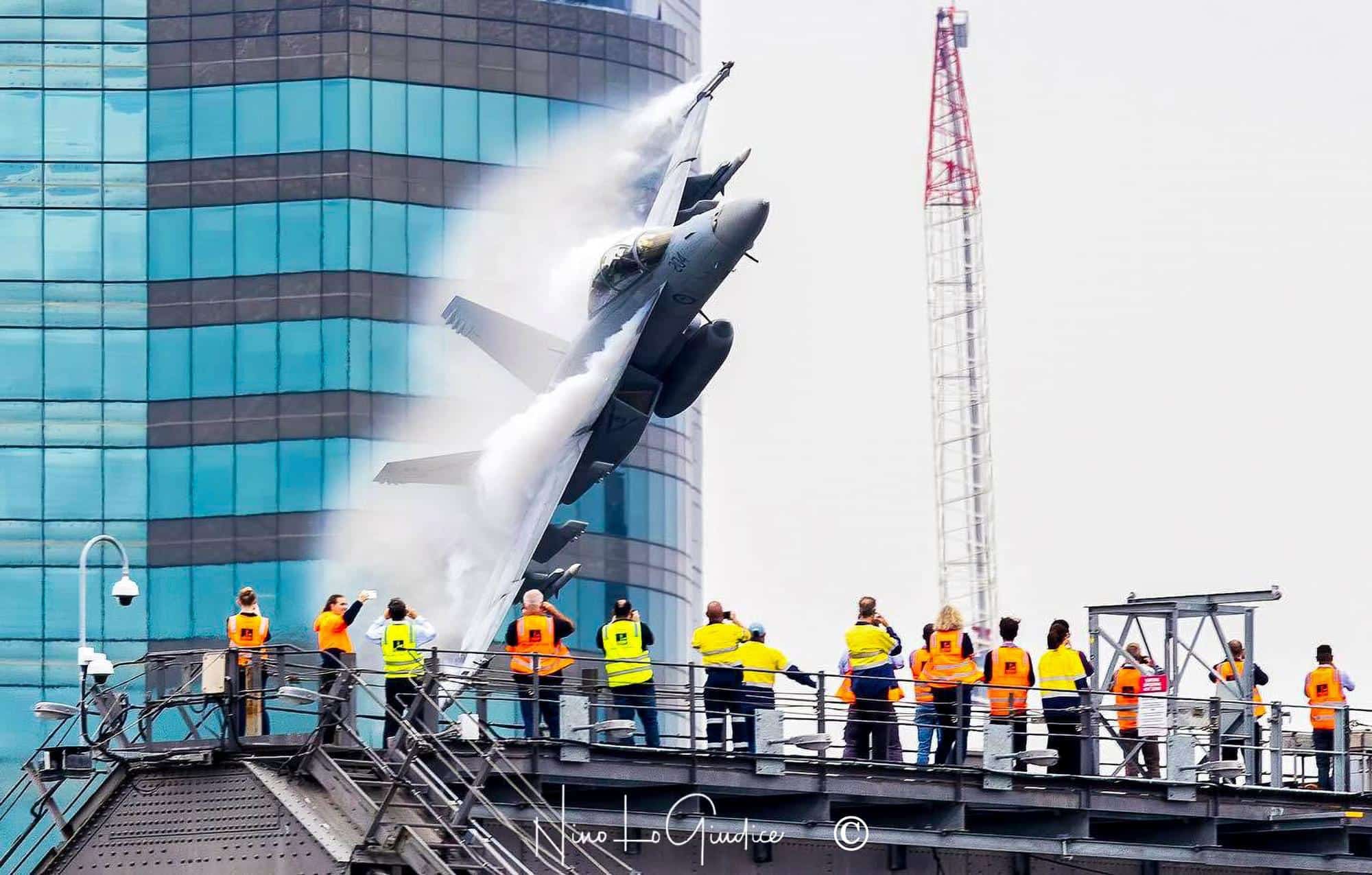
Last November, two high-performance military jets departed Van Nuys airport in California as a formation flight to gather footage for a film in production called Kerosene Cowboys. The plan was for the jets to do four passes off of the coast of the Santa Monica pier, west of a banner tow aircraft towing a banner for the film. The first passes went as planned and then one of the pilots broke away and flew low over the beach area for multiple passes in excess of 250 knots (two of the passes were below 500 feet) and then pulled into a steep climb just before the pier.

Five

Just Like A Woman

I was no stranger to the attitude that women shouldn’t fly. I did my PPL training in southern Spain which was a unique introduction to Mediterranean machismo.

Four

All I Need is the Air that I Breathe

A tragic VFR case in 2003 involved a PA-28 flying over the Rockies. You can read the full accident report from the NTSB – again a number of issues came into play. The pilot was delayed due to bad weather and changed her planned routing to avoid further weather. She requested an altitude of 15,500 feet. The PA-28 was unpressurised and did not carry supplementary oxygen. Radar data indicates that the pilot flew above 12,500 feet for 2 hours, 17 minutes, above 14,000 feet for 1 hour, 49 minutes, and at approximately 16,000 feet for an estimated 45 minutes.

Three

A Mexican Adventure

Joe is a pilot, sailor, former Marine (sniper) and an excellent story teller. He is 83 now and still going strong. He has neuropathy in his hands which means he can no longer use a typewriter normally. He doesn’t let that stop him, slowly typing out emails with two pencils so that he can tell friends about his adventures. I asked for his permission to share one with you.

Two

Drunk steals plane at airshow

The pilot is Kyle Franklin from Franklin’s Flying Circus & Airshow. He is married to the beautiful Amanda Younkin, who manages Franklin’s Flying Circus and Younkin Airshows. Kyle and Bobby Younkin are the pilots – although Amanda can fly as well. When she was featured in the 2010 Bombshell calendar, she was the only babe to fly the planes as well as pose in front of them.

One

FAA Approved?

So, the story goes that the Alaskan pilot had 2 new tires, three cases of speed tape and several rolls of cellophane delivered to the site and promptly repaired his plane so that he could fly it home.

If I was hoping for a specific direction to go in, well, this has proved that my own personal eclectic tastes are shared by a good many of you. A good mix of topics and approaches seems to have worked so far!

I’ve very much enjoyed the online community that is growing around General Aviation and the conversations I’ve been able to take part in, both here and on your blogs.

I’m looking forward to 2010 and more of the same!