Social Media Influencers Weigh Down Aircraft
The fatal crash at Scottsdale Arizona took place directly after take-off. The passengers were a self-proclaimed crowd of social media influencers. The jet-setting influencer who had organised the flight, had an audience of 12,000 followers who followed his exciting lifestyle on Instagram. He had been dating the same woman for six months. “It was a big deal,” his roommate said to Fox News. His friends were even more famous. He had invited another avid traveller who, according to his brother, enjoyed being an influencer on Instagram where he had almost 44,000 followers. A further passenger was a pretty blonde who had left high school to become a model, with 28,000 followers for her Instagram: glamour shots of lounging by the pool under the hashtag BikiniLife. Her last post was a video of the aircraft with the allcaps caption OFF TO VEGAS.
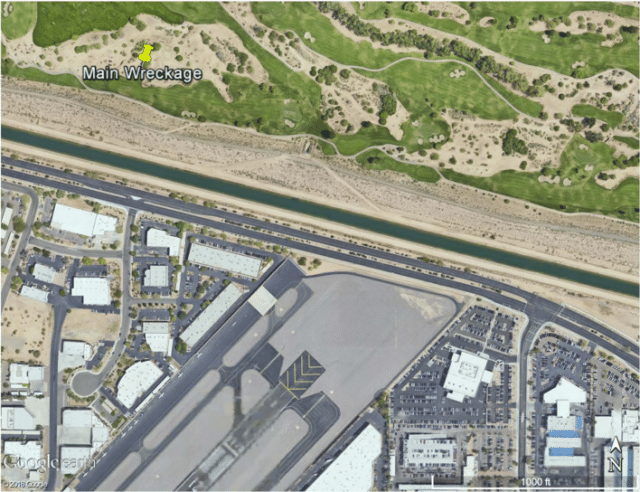
The aircraft was a Piper Comanche, a single-engine light propeller plane which usually has four seats but can be extended to six, as this one had. The Comanche was owned by a company which was run and managed by a single person. A second company held a one-sixth share of the first company and thus, indirectly, of the aircraft. There were two shareholders in the second company. One of them, a professional airline pilot, had only ever flown the Comanche once. He had planned to use it for his private transportation, but then decided that the travel benefits he received through his work meant that he didn’t need the small plane.
He was friends with the jet-setting Instagrammer and sold him his share in the partnership and helped him to organise flight instructions in the Comanche so he could learn to fly.
The jet-setting Instagrammer took a few lessons from his flight instructor, although it’s not clear how many hours of instruction he had received. He had not yet organised his medical certificate, which is required before students can be authorised for the first solo.
He had flown in the Comanche with his new partner in the shareholding company a fortnight before the crash. It was a warm day with four people on board and a hundred pounds of luggage. The partner said that under the circumstances he was surprised by how well the Comanche performed, maintaining a climb rate of 700 feet per minute.
The Instagrammer told his friend, the one from whom he’d bought a share of the aircraft, that he wanted to fly a group of friends from Scottsdale, Arizona to Las Vegas, Nevada, but his flight instructor had backed out of the flight. The friend put him in touch with a qualified pilot who could take the role of Pilot In Command for the flight.
This qualified pilot agreed to pick up the Comanche in Las Vegas and fly to Scottsdale, where he would pick up the jet-setting Instagrammer and his friends and fly them back to Las Vegas. However, he said, this could not be considered an instructional flight, as he hadn’t done any ground work with the student.
That evening, the friend got concerned when the Instagrammer told him that the Comanche was full of fuel and that there would be six people in total on board. He asked the student about the total weight.
A pilot should calculate the weight and balance for every flight. You start with the empty weight of the aircraft, in this case, 2,007 pounds. Then you total the weight that you are adding: the people on board and any cargo, of course, as well as the total weight of the fuel. You may not need full fuel for the flight, for example, so with a full aircraft, you may wish to save weight by only filling the tanks halfway.
You add all of the weights to find the gross weight. You also need to work out the “total moment” which you use to work out your center of gravity (CG), effectively, the point that your aircraft balances on. This point will move forward or backward depending on how the aircraft is loaded.
If the centre of gravity is outside of the acceptable range then the aircraft’s lift and performance is affected. For example, if the centre of gravity is too far back (aft), then the nose will be high. This can cause the aircraft to lift off from the runway early, before the aircraft has enough speed to fly. This is why the weight and balance must always be checked that it is within the safe envelope for operating the aircraft.
The truth is that in General Aviation, people often take short cuts. Having worked out the weight and balance for a specific configuration, they often will do a quick calculation based on approximate weights. There’s always a risk involved, however, and one should be relatively confident about what the aircraft can take and where it needs to be placed in order to do this.
The friend sent a text message: Make sure you guys aren’t over weight or anything. [Pilot] is by the book.
Instagrammer: How do I do that?
Friend: Do you have five people going?
Instagrammer: 3 small girls 2 medium guys. 6 total.
Friend: What about luggage?
Instagrammer: Small stuff that’s light and will be on their laps.
It’s noticeable that the Instagrammer owns shares in the aircraft and is confident enough to organise the trip but does not seem to have any real understanding about the weight and balance of the aircraft .
Friend: What’s the max gross weight of that plane?
Instagrammer: 1,200
Friend: Yeah, you’re good. Just go over it with [Pilot] when you add fuel.
Spoiler: he was not actually good.
Now, to be fair, I would expect the qualified pilot, who has agreed to fly the plane, to insist on checking the weight and balance. Apparently he was not quite as “by the book” as the friend thought he was, however, because he appears to have simply taken the Instagrammer’s word for the fact that the aircraft could handle six occupants with some luggage on full fuel. The Comanche is actually designed as a four-seater; although it can take six occupants, the pilot will need to be strict on luggage and avoid filling the tanks full of fuel. The friend, in fact, has assumed that the Instagrammer and the pilot will take this into consideration when they add fuel. He had clearly missed or forgotten that the Instagrammer told him that the tanks were already full.
Meanwhile, the Instagrammer appeared to have been reassured by this conversation that he’d done his due diligence and all was well.
That day, our qualified pilot arrived at North Las Vegas Airport to pick up the Comanche. It was the first time the manager had met him and he knew nothing about the planned night flight. He said later that he considered not letting him take the aircraft. The qualified pilot explained that he had been hired to pick up the Instagrammer in Scottsdale and bring him back to Las Vegas.
The manager was already nervous about the flight without knowing that the fully-fueled plane was going to pick up another five people. But as far he knew, the pilot was only picking up the Instagrammer and to be fair, the Instagrammer was taking lessons and had a share in the aircraft. The manager checked that the pilot had the relevant experience, including 200 hours flying the same type of aircraft, and decided to let him take the Comanche.
Back in Scottsdale, the group travelled to the airport. A man working at the front desk of a company offering general aviation services said that about quarter past eight, a tattooed man came in from the street to ask if this was Signature FBO. The man explained that it was not and gave instructions to get to Signature FBO, another company offering services at Scottsdale. Then he phoned Signature to tell them that they may wish to send a car over, as some of their customers were in the wrong place.
The tattooed man was the Instagrammer. He left and came back a short while later, accompanied by three women and another man. He told the man at the front desk that he’d spoken to the pilot and told him where to pick them up, so they no longer needed to go to Signature.
Then the group sat down at a table in the main lobby and spread out take-away food that they had brought with them. The man at the front desk said that they were well-mannered and in good spirits, not commenting on the fact that they were not actually customers and had simply parked themselves in his lobby.
He heard the Instagrammer tell the others that he was learning to fly and soon would be able to fly solo. One of the group then came to the desk to ask where the aircraft was.
The man knew nothing about the flight and couldn’t find any details about the inbound aircraft. However, it wasn’t long before the qualified pilot arrived. The group finished their meal and walked out to the ramp to board their aircraft. The man looked out and saw the Comanche. He said later that he was surprised to realise that the entire group was planning to fly in the small plane. The pilot walked into the lobby and appeared flustered but didn’t speak to anyone.
The group took photographs and videos of the aircraft and uploaded them to social media sites, bragging about the flight to come. The Instagrammer took the front left seat, traditionally the seat of the Pilot In Command, and the qualified pilot took the right-hand seat. Now to be fair, this is a typical seating arrangement for a student and instructor, even though it is the instructor who is considered the Pilot in Command of the flight. But we should remember that this was not meant to be an instructional flight and the qualified pilot should not have been ceding any control to the Instagrammer. Although the Instagrammer owned a share in the aircraft and had taken a few lessons, he was in no way experienced enough to make any decisions about the Comanche. The qualified pilot had not instructed him and he alone, as Pilot in Command, carried the responsibility for the aircraft and the flight.
A woman working the ramp noticed that it took a few tries to start the engine, which was odd as it was still warmed up from the inbound flight. She asked a co-worker if that was normal but didn’t receive a response. The engine started on the next try and she watched the Comanche taxi to the runway, noticing that all of the passengers were staring at their phones.
The Air Traffic Controller in the tower saw the lights of the Comanche as it turned onto the runway.
The woman on the ramp heard the sounds of the power check and then the Comanche came back into view as it started its take-off roll. It looked to her like the aircraft was rolling from left to right. She then saw the nose begin to pitch up and down and she wondered if the pilot was playing around.
In the dark, the tower controller could only see the aircraft lights but he also noticed that the wing lights were moving up and down, as if the pilot was rocking his wings. By the time the Comanche passed the tower, the wings appeared stable but he noticed that the engine didn’t sound like it was producing enough power.
He contacted the flight and asked if they were experiencing any difficulty. A confident call came back, saying “We’re good. We’re just in training mode.”
The Instagrammer’s friend who had helped to arrange the flight said that the voice sounded like that of the qualified pilot; however, he couldn’t understand why he would refer to it as a training flight.
An airport operations technician who was setting up barricades had the tower radio playing through the overhead speakers. He heard the controller ask someone if they were experiencing any difficulty. He glanced at the runway and saw the Comanche coming towards him. He too noticed that the engine didn’t sound right.
The engine sounded as if it was not completely at full power as other planes have sounded before. I was not sure if it was struggling or if it was just that particular type of engine. It did not sputter or sound rough, nor were there visible smoke, fire or vapors. It was just producing a low tone as if it had lower RPMs.
The controller, the woman on the ramp and the technician all watched with concern. The oscillations seemed to have stopped as the Comanche began to pull away. It seemed to be struggling to climb and continued straight. The Comanche was about two hundred feet above the ground, the height of the buildings around it, when it began turning to the left. The woman on the ramp saw the nose drop as the aircraft disappeared from her sight. The man at the end of the runway said that the left turn started before the end of the runway, much earlier than a normal departure. He saw the Comanche continue turning and start to descend.
A man and his wife were driving past the airport when they saw the Comanche. “Look how low that plane is flying,” he said to his wife, who was driving. He kept turning to watch, horrified as he realised that the aircraft was turning too steeply to recover.
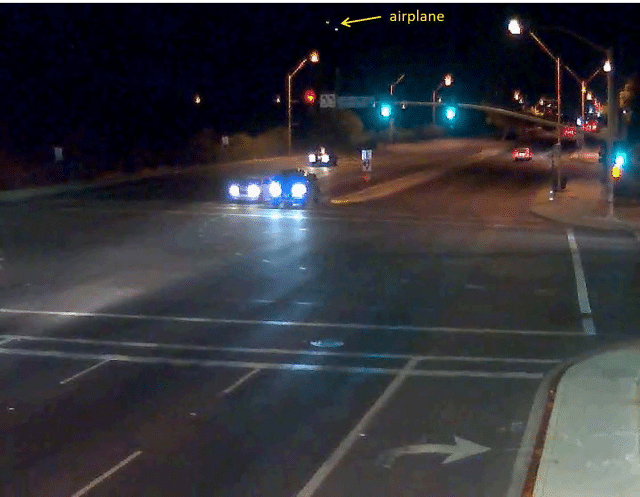
A traffic camera recorded the scene. The aircraft was in a left bank and the bank angle increased as the aircraft descended. The wings were almost vertical when the Comanche crashed into the ground and exploded into a fireball.
The couple in the car called 911 (US emergency services) who said that the control tower had already been in touch. The couple drove to the crash site in case there was something they could do but it was immediately clear that there were no survivors.
The aircraft had smashed into the ground. The seats had detached and one passenger was thrown clear of the wreckage. The right wing and auxiliary fuel tank were wrapped around the base of the tree. The left wing fragmented and the fuel exploded.
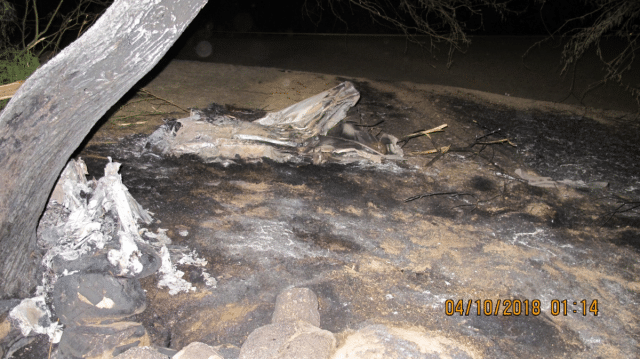
The two men were belted in but the four in the back had not fastened their seatbelts. This implies there was no safety briefing. In fact, it seems like at no point did any of the passengers have any idea what they were getting into.
The autopsy on the student included positive toxicology tests for MDMA (ecstasy) and cocaine metabolites at low concentration, indicating use in the past few days, although not considered a factor in the crash.
The investigation found that there was a fracture in the engine which would have reduced the available engine power. The fracture surfaces were fatigued; the break was not new. The reduction in power had not been noticed in previous flights but now the aircraft was full, it became critical.
The maximum gross weight for the Comanche was 3,200 pounds. As the plane itself weighed 2,007 pounds, the pilot could carry an additional load of up to 1,193 pounds. However, the weights of the aircraft, the passengers and the fuel totalled 3,335 pounds, putting them 135 pounds above the aircraft’s maximum gross weight.
The centre of gravity range for the Comanche was 80.5 to 93.0 inches aft of datum. The actual CG was 95.22 inches aft, which led to the aircraft pulling away from the runway before it had gathered enough speed to fly.
The result was an overloaded aircraft which was overbalanced to the rear, lumbering up into the air before it had gathered enough speed to fly. With a fully functioning engine, a good pilot might have been able to correct for this by maintaining level flight at full power. However, they did not have the additional power they needed. As they started the left turn, the aircraft fell out of the sky like a brick.
A friend of the Instagrammer told People Magazine, “I am sad that he is gone, but loved how he lived life to the fullest.” If a full life involves attempting to defy the rules of physics for a photo-op, then I guess I’m going to give that a pass.
This accident is one of the cases covered in Pilot Error, available in e-book and paperback.




https://www.linkedin.com/posts/clayton-p-henderson-mraes-05991b38_weve-published-a-new-leaflet-to-help-people-activity-7493795377175863297-vmx2
Presumably some fuel was burned off on the leg from Vegas to Scottsdale – or the plane was refueled in Arizona?
road distance is a little over 300 miles. Data from Wikipedia says the 3200# gross-weight Comanche was a 260C, which is spec’d to burn 12.5 gallons/hour at 163mph; it would have burned about 25 gallons at 6(6.5?)#/gallon, which is a little more than the excess weight — IFF the pilot didn’t refuel in Scottsdale. (Which I would have as W says the plane carried 60 gallons, leaving only 10 gallons reserve if there was any problem en route.) I’m not sure of those calculations as the 260C specs say it carried 1427# rather than 1193# (although they don’t talk about the weight of two added seats), but the total burn would have been similar for other models — lower speed, lower fuel consumption.
But all of that assumes the plane is flying to spec, which it clearly wasn’t — and probably wasn’t even before the engine started failing, as it had to have been more than 50 years old. (W says the production line was destroyed by Hurricane Agnes (1972) and not replaced — Piper starting selling the Arrow as the equivalent.) It also doesn’t allow for whether the performance would have been degraded by heat — the story doesn’t say whether this was summer or winter. At best, the plane was very close to the edge of the performance envelope.
And the rocking and rolling is alarming, especially with 5 induhviduals (sic) on board. I wonder whether the … person … in the left front seat did something stupid to push the plane into a difficult position. Normally I wouldn’t be caught dead quoting Jerry Pournelle, but ISTM that a key line from Oath of Fealty applies here; should these people be up for a Darwin Award?
It’s so odd to me when my worlds collide. Pournelle was extremely sarcastic at me (and other writers) who joined the SFWA in the early 2000s; we later laughed that offending him was a rite of passage for the modern speculative fiction writer.
And that just closes the loop, because I found out about this blog from Making Light, which was run by a couple of top SF editors (Patrick and Theresa Nielsen Hayden). Somehow I’d completely missed that you also wrote fiction….