You are browsing category: Accidents and Incidents
17 May 2013

Taking Control at 150 Feet

The Indonesian National Transportation Safety Committee have released a preliminary report regarding the PT Lion Mentari Airlines accident at Ngurah Rai International Airport on Bali on the 13th of April this year.

Here’s a summary what we know so far. All timestamps are in UTC: Java’s timezone is UTC+7 and Bali’s timezone is UTC+8.

05:45 Lion Air flight LNI 904 departs Husein Sastranegara International Airport, a scheduled passenger service from Bandung on Java to Bali.

On board the Boeing 737-800 were two flight crew, five flight attendants, ninety-five adult passengers, five children and an infant.

The Pilot in Command, the Captain, had 15,000 hours flying experience with 7,000 on type. His second-in-command had 1,200 hours, 923 on type.

The second-in-command was Pilot Flying and the Captain was Pilot Monitoring.

This was their last flight of the day: the final leg of a schedule that had them flying Palu-Balikpapan-Banjarmasin-Bandung-Bali. The flight was uneventful until the approach into Bali.

06:48 The flight crew contact Bali Approach and begin their descent.

06:59 The aircraft is vectored for a VOR/DME approach to runway 09 and cleared to continue the descent.

For a VOR/DME approach, you follow a specific route and descend based on your distance from the runway until you reach the minimum descent altitude (MDA) for that approach. As you approach the airfield, you should have the runway (and surrounding terrain) in sight.

Once you reach the minimum descent altitude, you must stop your descent unless you have the runway in sight and can continue the landing visually.

For a straight-in approach on Runway 09 at Ngurah Rai International, the minimum descent altitude is 470 feet.

If you do not have the runway in sight at the minimum descent altitude, you must stop your descent. You can continue your approach at that altitude until the missed approach point (MAP) which is a specific distance by DME from the runway. If you reach the missed approach point and still can’t see the runway, you must break off the approach and climb away.

07:04 The flight crew contact Ngurah Tower (Bali Control Tower).

It was raining and visibility was bad.

07:08 The aircraft is 1,600 feet above ground level. The controller at Ngurah Tower sees the aircraft on final approach and tells them they are clear to land.

07:08:56 At 900 feet above ground level, the Pilot Flying states that he does not have the runway in sight.

07:09:33 The Enhanced Ground Proximity Warning System sounds an alert: MINIMUM, MINIMUM. The Boeing is now about 550 feet above ground level.

The Pilot Flying disengaged the autopilot and the auto throttle and continued his descent. They continued to their minimum descent altitude of 470 feet.

The pilot of an aircraft five nautical miles behind the Lion Air flight stated later that the crew could not see the runway at the minimum descent altitude and decided to go around. On their second approach, they made a safe landing.

07:09:53 The Boeing is approximately 150 feet above the ground. The Captain takes control of the aircraft as the Pilot Flying says again that he can’t see the runway.

07:10:01 The EGPWS sounds “TWENTY”. The Captain commands a go-around – that is, to break off the approach.

He took the right decision but he made it much too late. He should have stopped the descent at the minimum descent altitude of 470 feet. He should have commanded a go-around when his first officer stated he still couldn’t see the runway. He should have done something before the situation became critical.

One second later, it was all over.

07:10:02 The aircraft impacts the water.

The Boeing 737-800 came to a stop 20 metres from the shore, approximately 300 metres southwest of the runway threshold.

The pilot of an aircraft holding short on runway 09 contacted Ngurah Tower to say the Lion Air flight had crashed into the sea. The Tower Controller looked over and saw the Boeing tail section through the airport fence.

07:11 The Tower controller presses the crash bell and contacts the Airport Rescue and Fire Fighting team.

07:15 The Rescue team arrives on the scene

The Boeing 737-800 was submerged in 2-5 metres of shallow water with all the doors open. The right engine and the main landing gear were ripped off.

07:55 All occupants are evacuated from the submerged Boeing 737-800. Four passengers suffered serious injury and were taken to hospital.

All of the observed damage was consistent with post-accident contact with the sea floor, coral reef and sea wall.

Now an interesting point here is that when the investigators examined the wreckage, they found the flap handle in the flaps 15 position. The approach configuration was flap 40 and the flaps appeared to still be in the flap 40 position. This means that twenty feet above the ground, the Captain called for a go-around and one of them raised the flaps. I can’t help thinking that such a manoeuvre would cause twenty feet of sink right there, although I guess they impacted before the flaps actually moved. To be fair, at 20 feet at flaps 40, getting back up into the air was always going to be a challenge.

This is only a preliminary report but immediate safety recommendations have been made.

You won’t be surprised to hear that they are all focused on the training, policy and procedures for pilots at Lion Air.

4 SAFETY RECOMMENDATIONS

As a result of the factual information and initial findings, the National Transportation
Safety Committee issued immediate safety recommendations to address safety issues
identified in this report.

4.1 PT. Lion Mentari Airlines

  • To emphasise to pilots the importance of complying with the descent minima of the published instrument approach procedure when the visual reference cannot be obtained at the minimum altitude.
  • To review the policy and procedures regarding the risk associated with
    changeover of control at critical altitudes or critical time.
  • To ensure the pilots are properly trained during the initial and recurrent training program with regard to changeover of control at critical altitudes and or critical time.

You can read the original report as a PDF document here: http://www.dephub.go.id/knkt/ntsc_aviation/baru/pre/Preliminary_Report_PK-LKS_Lion_Air.pdf

10 May 2013

Six Exclamations You Never Want to Hear in the Cockpit

6. We’ve lost the cabin!

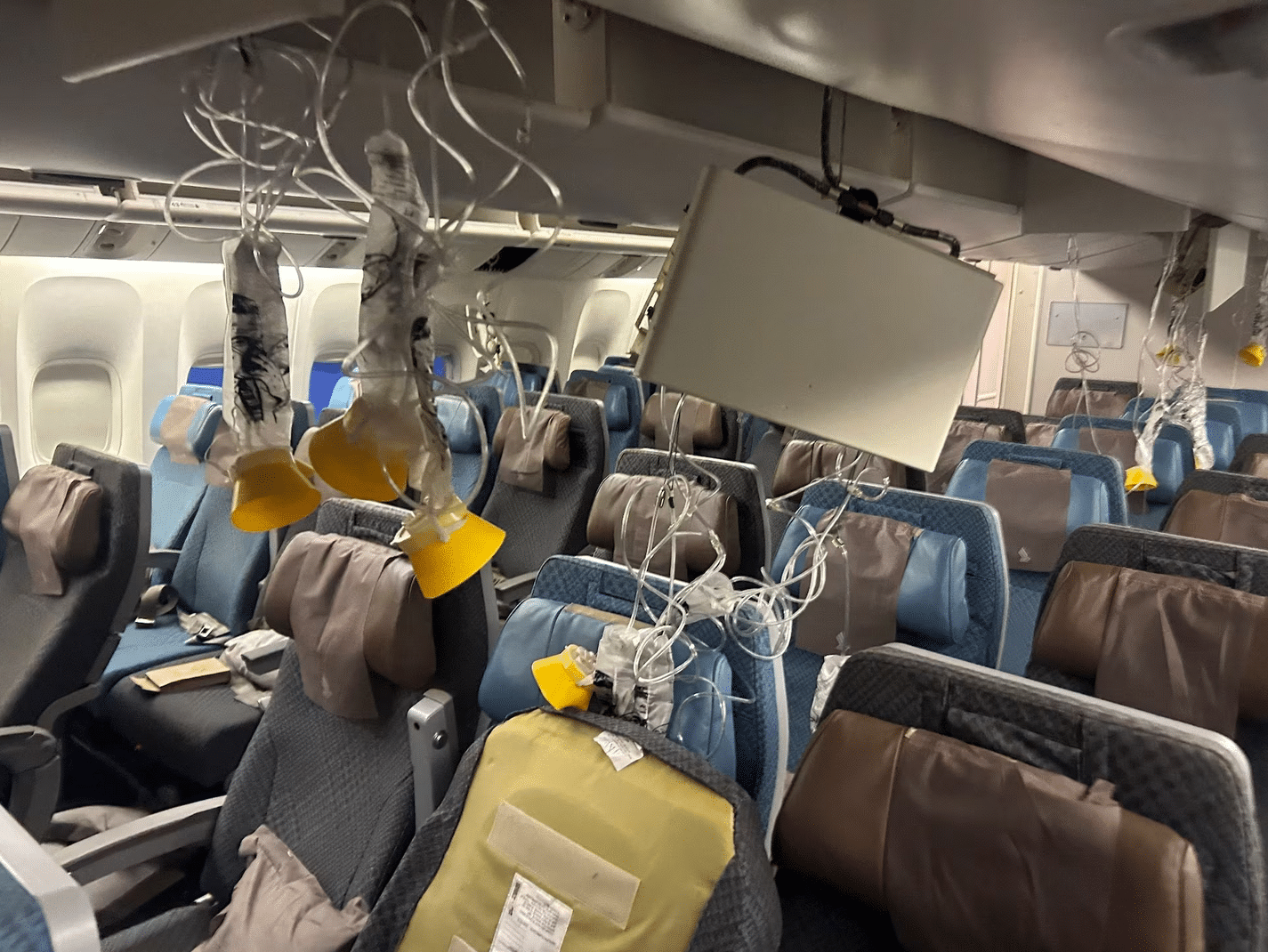
Southwest Flight 812 was climbing through 34,000 feet when there was the sound of an explosion and the oxygen masks dropped. The pilots, recognising a rapid decompression, immediately began a descent. A 5-foot by 1-foot (152cm by 30cm) tear in the fuselage skin opened the aircraft right up and the flight crew had no idea what was happening in the back. As they descended, they declared an emergency with the chilling words, “We’ve lost the cabin.”

The flight crew informed ATC that they were descending to ten thousand feet immediately and the controller correctly contacted the next sector on their behalf to pass on the situation.

5:58:35 R60: Yeah this is Sector uh sixty. Southwest eight twelve is a emergency decompression descent he’d like ten thousand feet. Can you approve that?
15:58:43 D31: Uh…
15:58:45 R60: He’s doin’ it anyway.
15:58:47 D31: Yes. Yes, approved.

I should bloody well hope so.

The final report has yet to be released but you can read my post written at the time here: We’ve Lost the Cabin: Southwest Flight 812. The preliminary report is here: Accident Investigations – NTSB – Rapid Decompression Due to Fuselage Rupture

5. Where’s that guy going?

To be fair, Dublin is a pretty confusing airport and it isn’t hard to get lost. The Monarch Airbus was running late and took a wrong turn. It might have been forgiven, if the flight crew hadn’t become completely disoriented and managed to blunder into the active runway. A Ryanair 737 had just commenced its take-off run when the Monarch flight began to cross on the far end.

EI-DYH

The recording on the Ryanair CVR is of everyone talking at once:

Captain/First Officer: Where’s that Monarch/Where’s that guy going
First Officer: He’s taxiing out in front of us
Captain/First Officer: Stop/Abandon!

The Ryanair Captain initiated a high speed rejected take-off at 124 knots. By the time the Air Traffic Controller realised what was happening and shouted at the Ryanair to stop, the First Officer responded, we’re stopped.

The Ryanair flight returned to the stand to have its brakes inspected. Meanwhile, the Monarch flight continued on its way, taking off three minutes later. That’s probably the first time ever I’ve felt sorry for a Ryanair flight for being late.

You can read the full analysis of the incident here: Runway Incursion at Dublin

4. Remember that crazy guy…?

The Gulfstream III was cleared for a visual approach into Aspen but it was getting late and the weather wasn’t all it could be. The Captain said they’d try one approach and if they didn’t nail it, they would divert. But the aircraft was a private hire and the client was not impressed that they might not make the destination. Under pressure, the Captain and First Officer said they’d do their best, even while they watched the aircraft in front call missed approaches because they couldn’t see the runway.

“Remember that crazy guy,” says the First Officer, “in that Lear[jet] when we were … on the ground in Aspen last time and he [stated that he could] see the airport but he couldn’t see it?”

We’ll never know if the Captain remembered that crazy guy or not but the Captain proceeded to do exactly the same thing, heading away from the airport, which he thought was on his right. 12 minutes later, less than 500 feet over the ground, the aircraft did a sudden steep left turn, the first sign that he’d actually seen the runway. It was too late. The aircraft hit the ground at a 40° bank and the engines on full power and crushed up like an accordion.

This accident is covered in detail in my book, Why Planes Crash: 2001.

3. We’re still at 2,000 feet, right?

In 1972, Eastern Air Lines Flight 401 crashed into the Florida Everglades on approach to Miami. When they lowered the landing gear, the indicator didn’t come on for the nose wheel. The flight crew investigated the problem as the jet circled west over the Everglades at 2,000 feet. The Captain, First Officer, and Second Officer all focused on the problem, and a maintenance engineer on the flight joined them – and not a single one was watching the flight instruments. The Captain accidentally leaned against the yoke and the aircraft entered a slow descent.

There was nothing wrong with the nose gear. A $12 lightbulb in the control panel had burnt out. The First Officer’s final words were, “We’re still at 2,000 feet, right?” as the left wing hit the ground.

You can read the details of the accident here: Eastern Air Lines Flight 401

2. [*sound of laughing*] This is &$%!ing great!

A ferry flight and the crew were bored. So for a laugh, the pilots decided to find out how high the CRJ-200 could go.

They had to force it to keep climbing and pulled back hard at full power, stressing the engines. The aircraft slowly lumbered up into the thin air to FL410 (41,000 feet).

After the pilots overrode the anti-stall devices for the fourth time to keep the aircraft up there, both engines flamed out and the aircraft stalled. They tried to jumpstart the engines as they called ATC, declaring initially a single engine failure. Eventually they realised they weren’t going to get the engines running and admitted both engines were out. The crew tried to glide it into Jefferson City airport but the CRJ-200, at that moment with the aerodynamics of a brick, crashed 2 1/2 miles short of the runway.

The full report is here: Accident Investigations – NTSB – Crash of Pinnacle Airlines Flight 3701 and I’ll be covering this incident in the fourth book of the Why Planes Crash series.

1. Have You Ever Done a Barrel Roll in the Dark?

The ferry pilots of a Cessna Citation private jet were also probably just bored. It was a routine ferry flight from the Czech Republic to Sweden. Eleven minutes into the night flight, the aircraft disappeared from radar. It was a mystery — until the investigators listened to the Cockpit Voice Recorder. The two pilots started talking about barrel rolls – turning the plane into a horizontal corkscrew – and discussed whether either had ever tried one at night. The last clear decision was to try it and see. What’s the worst that could happen? They lost control and the aircraft plunged 20,000 feet into the forest before either of them had the chance to say “That was a really stupid idea.”

There’s a full blog post about the accident and German preliminary report here: Can a Citation Do Belly Rolls in the Dark?

Top tip for pilots: When you are having a laugh in the cockpit, think about how it is going to sound in the accident report.


If you found this post interesting, you’ll probably like Why Planes Crash, available now for just $3.99

If you don’t have an e-book reader and would prefer the book in PDF format, just email me at sylvia@fearoflanding.com and we’ll work something out.

03 May 2013

Bagram Crash

This week the chilling dashcam video of a Boeing 747 crashing at Bagram airfield has spread across the Internet. I’m not sure there’s much to say about it at this stage but I can’t get it out of my head.

Here’s the details as I understand them.

Crash: National Air Cargo B744 at Bagram on Apr 29th 2013, lost height shortly after takeoff

A National Air Cargo Boeing 747-400 freighter on behalf of US Mobility Command, registration N949CA performing cargo flight N8-102 from Bagram (Afghanistan) to Dubai Al Maktoum (United Arab Emirates) with 7 crew and cargo consisting of 5 military vehicles, has crashed shortly after takeoff from Bagram Air Base’s runway 03 at 15:30L (11:00Z) and erupted into flames near the end of the runway within the perimeter of the Air Base. All 7 crew are reported perished in the crash.

National Air Cargo confirmed their aircraft N949CA with 7 crew, 4 pilots, 2 mechanics and a load master – initial information had been 8 crew -crashed at Bagram. The airline later added, that the aircraft had been loaded with all cargo in Camp Bastion (Afghanistan, about 300nm southwest of Bagram), the cargo had been inspected at Camp Bastion, the aircraft subsequently positioned to Bagram for a refuelling stop with no difficulty, no cargo was added or removed, however, the cargo was again inspected before the aircraft departed for the leg to Dubai Al Maktoum.

The NTSB reported the Boeing 747-400 was operated by National Air Cargo and destined for Dubai Al Maktoum when it crashed just after takeoff from Bagram and came to rest within the boundaries of the Air Base. All 7 occupants, all American citizens, were killed.


It’s been said that the aircraft was carrying four or five MRAPs (an armoured fighting vehicle) and that one of the flight crew reported “load shift” on the radio directly before the crash, but I’ve not been able to verify either of these statements.

The aircraft was a Boeing 747 registration N949CA. Here’s a video of it landing at Amsterdam from earlier in the year:

National Airlines Cargo Boeing 747-400F [N949CA] *SMOOTH* landing @ Amsterdam Airport Schiphol – YouTube


Afghanistan 747 crash additional angles (original footage + CGI) – YouTube

Two reconstructed angles of the National Air Cargo 747 that crashed in Afghanistan on April 29, 2013. Created by object-tracking the original footage to create a flightpath (Audio simulated).


Statement from National Air Cargo

National Air Cargo will not speculate as to the cause of the accident involving National Flight NCR102. With our full cooperation, an investigation by appropriate authorities is under way, and we encourage everyone to join us in respecting that process and allowing it to take its appropriate course.

Here are some facts regarding the aircraft and its movements prior to the accident:

  • National Flight NCR102 was en route to Dubai from Camp Bastian and had stopped to refuel at Bagram Air Base.
  • The cargo contained within the aircraft was properly loaded and secured, and had passed all necessary inspections prior to departing Camp Bastian.
  • The aircraft landed safely and uneventfully in Bagram.
  • No additional cargo or personnel was added during the stop in Bagram, and the aircraft’s cargo was again inspected prior to departure.

Please visit www.nationalaircargo.com for updates regarding this tragic accident. Media inquiries can be directed to publicrelations@nationalairlines.aero.

About National Airlines:
National Airlines is a wholly owned subsidiary of National Air Cargo Holdings. National Airlines, based in Orlando, FL operates scheduled and on-demand cargo service globally and charter passenger service in the Middle East.


It’s not quite clear to me why an aircraft travelling from Camp Bastion to Dubai would go to Bagram for refueling:


National Air Flight 102: A Preliminary Report from NYC Aviation

The fact that the gear was down indicates that the crew was experiencing problems immediately after takeoff that focused their attention elsewhere. From the video, you can see the aircraft’s speed was deteriorating. There is a transient smoke stream from the engines just before the stall, which is an indication of an acceleration of the engine core’s RPM – the crew were likely firewalling the throttles. There was a light dip of the left wing at the beginning of the stall. The pilot likely countered with right rudder, a correct but excessive input that caused the aircraft to enter a spin to the right. At this point, airspeed appears to be nearly undetectable but probably around 100 knots.

Swept wing aircraft, especially ones with high angles of sweep like the 747, pitch up at the last moment of a stall before the nose drops and airspeed is recovered. In the video, the nose does not drop until the aircraft is on its side and rapidly losing altitude. Once the aircraft is on a knife-edge, the airflow will cause the vertical stabilizer to weather vane. This brings the nose down. During this time, the right rotation also stops. If there had been an engine failure, the rotation would have continued in the direction of the failed engine. As the wings are brought level, the nose down attitude remains stable through impact. At this point, there are vapor trails from the horizontal stabilizers and wing. This indicates a high pressure differential which is clearly from the high angles of attack on the surfaces.

The crew had a controllability problem that was present from rotation. Pilot training and instinct is to lower the nose if the aircraft is pitching up. This wasn’t possible. To put this aircraft in the position it was would have required excessive nose up elevator or excessive rear Center of Gravity (CG). Since this was a routine flight and the aircraft had not likely had major maintenance causing a critical failure of the flight controls, a rear CG is the likely problem.

This is also indicated on the final moments prior to impact. Had the CG been in the proper location, the nose down pitch would have continued as the CG forward of the wing’s lift would have accelerated towards the earth from gravity while the wing resisted this acceleration due to airflow (drag) on the wing, even with a major failure of the trim or elevator. Just prior to impact, the pitch remains mostly stable, indicating the CG was between the wing and tail, and the weight on each was proportional to the lift being generated. The proportion of the surface area of the wing to tail surface would be equal and inversely proportion of the CG between them. IE: if the surface area was 70% wing and 30% tail, the CG would be 30% back from the wing, or 70% forward of the tail.

There are many other possibilities, example pilot error. Though this is unlikely, these must be considered until conclusively found otherwise.


The Ministry of Transportation and Commercial Aviation in Afghanistan is investigating, joined by the American NTSB.

A devastating accident and heartbreaking video. I wish there were some result that could make it less tragic.

26 April 2013

£3,400 fine for airspace infringement

This week, a 25-year old pilot was fined £3,400 for airspace infringement. The case was somewhat dramatically reported on in the Herts and Essex observer: Pilot fined after causing havoc over Stansted airport | Uttlesford village headlines

The Court Reporter has written up the case, including the claim that, “At one point, Marriott’s poorly-equipped Piper Super Cub was said to have been just 1,215 feet from a Ryanair Boeing 737.” I would have thought that if there was a real risk of collision, the pilot would have been charged with a lot more than “entering controlled airspace”. But the infringement did manage to cause a bit of havoc, to be sure.

On the 30th of September, the pilot flew the Piper Super Cub to the adorably named Cuckoo Tye Farm in Suffolk to visit a friend.

He said that he was returning to Tisted using the same route but the wind was strong and, although he was a confident navigator, he became lost.

The aircraft did not have GPS nor a mode-C transponder. He entered Stansted controlled airspace at 13:20.

You are required to have a transponder if you are flying in controlled airspace but, to be fair, he didn’t intend to fly into controlled airspace, he just got lost. He told the court that he recognised Stansted but misjudged the distance. He stated that he deliberately flew low level so that he would remain below commercial traffic.

However, that wasn’t very reassuring for the Air Traffic Controllers. They could see an unknown aircraft in their area but had no idea what height it was at – information which would have been passed on by the transponder. All departing flights were suspended while the Piper Super Cub “drifted” through Stansted and Luton airspace.

Infringements into control zones aren’t uncommon, especially in the southeast of England, where airspace is tight. I had an autopilot failure flying over White Waltham and I deviated slightly east while I tried to work out the problem – putting me just inside of Heathrow’s control zone. The friendly controller from Farnham, who was watching me on his radar, contacted me to ask if everything was OK (yes, sort of) before informing me what I’d done (Oh no!) and kindly offering me a heading to get the hell out before I caused chaos (Thank you, kind soul, whoever you are).

The key point though, is that the pilot needs to be talking to someone. I was lucky that the controller I was in contact with took the lead before I’d even realised I had gone astray. If he hadn’t, then the moment that I realised, it would have been my responsibility to tell someone.

I don’t have to know where I am to do this. A pan pan call can be used to declare any urgent problem. A pan pan call follows the same format as a Mayday call but tells the controller immediately that you are not in distress: that is there is no immediate danger to people or the aircraft. So a pilot would use a pan pan call for a fuel shortage, a navigational system failure or simply to let someone know as soon as possible that he is lost. In my case, I was already speaking to a controller who could see me on radar. Otherwise, I would have contacted the UK Distress and Diversion cell (D&D) on 121.5 (Civil Emergencies frequency).

A Piper Super Cub (not the aircraft involved in the incident) photographed by Geoff Collins and displayed under Creative Commons

So, the problem with this infringement into Stansted airspace is not that the pilot got lost. It’s that the pilot did not contact anyone in order to tell them that 1) he was lost, 2) he was flying at low level and 3) he would be happy with help to get back on track. The Magistrates chairman made this clear:

“You knew the airspace in this part of England is very congested and therefore the burden’s on you to be spot-on in your navigation.” He added that Marriott had recognised he was lost but repeatedly failed to contact air traffic control.

“While you knew what altitude you were at no-one else did, or what your intentions were. You felt safe but that’s not the point.”

The pilot, who pleaded guilty, argued that he was concentrating on his flying and navigation as per the golden rule of aviation: Aviate first, navigate second and communicate third. Clearly, his priority has to be to fly the plane: it would be ludicrous to try to speak to someone if the aircraft is not under control. But, by his own account, he was flying straight and level and at low altitude to avoid possible commercial traffic, so he was fine. Having screwed up on navigation, he needs to communicate that failure, rather than continue to bumble through, hoping that he will get it sorted.

After yesterday’s hearing, [the pilot] said he still had his licence and had not flown since although the ordeal had not put him off. “It was a frightening experience,” he said. “That’s why I deliberately didn’t contact anyone. I was still trying to work out where I was and where I was going.”

For eleven minutes, he caused a serious disruption across two major international airports who had no means of speaking to him. It was his job to communicate to someone what was happening, even if that is the uncomfortable admission that he had screwed up. He appears not to have grasped that although he felt safe, no one else knew that he was under the commercial traffic and out of the way.

He said he thought the CAA decision to prosecute was “incredibly harsh” over something he described as “one navigation error”.

Except that the problem was, it wasn’t just a navigation error. It was a continuing, eleven minute long, navigation error in which he entered Stansted and Luton’s airspace and did not contact anyone at that time to help them work around his error. In the end, he was fined £3,400 but kept his licence. To be honest, I think he was lucky that it wasn’t the other way around.

12 April 2013

Texting and Flying with no Fuel

The National Transportation Safety Board (NTSB) has announced that a pilot sending and receiving text messages was a self-induced distraction and considered a contributing factor in the crash.

From the accident report:

On August 26, 2011, at 1841 central daylight time (all times cdt), a Eurocopter AS-350-B2 helicopter, N352LN, sustained substantial damage when it impacted terrain during an autorotation following a loss of power near the Midwest National Air Center (KGPH), Mosby, Missouri. The pilot, flight nurse, flight paramedic, and patient received fatal injuries.

This was a Helicopter Emergency Medical Services (HEMS) flight in Missouri to transport the patient from Harrison County Community Hospital to Liberty Hospital.

The NTSB gave a presentation about the investigation at their Board meeting last Tuesday. You can read the remarks and see the slides here: Board Meeting: Aviation Accident Investigation. My breakdown of the events is based on these presentations and the abstract. The final report has not yet been released.

Chairman Deborah A.P. Hersman – Opening Remarks

HEMS is a specialized segment of aviation with one goal: saving lives. The flights are not scheduled. Nor are they routine. By definition, these flights involve emergencies and urgency – transporting individuals who are in critical condition or delivering donor organs. There is always pressure to accomplish the mission.

But, in other respects, as we’ll hear this morning, it was a classic aviation accident. That is because this fatal crash involved perhaps the most crucial and time-honored aspect of safe flight: aeronautical decision making.

Here’s what happened:

17:19 LifeNet receives the request for transport
17:20 The pilot is notified and makes immediate preparations to leave

The pilot slept 5 hours or less the previous night. He chose not to stay at the sleeping quarters at the pilot’s base (which were apparently comfortable and quiet) and said that he slept badly and felt tired. His cumulative duty time was over 12 hours.

As a part of his pre-flight checks, the pilot should have noticed the low fuel in the helicopter. The daily flight log wasn’t signed. The “Conform Your Aircraft” entries were not signed. No fuel samples were taken. And most importantly, there was only one hour of fuel on board.

There was not enough fuel for his planned routing.

17:30 The pilot reports that he has departed from the helicopter’s base at Rosecrans Memorial Airport with two hours of fuel and 3 persons on board.

His before-takeoff confirmation checklist was the second opportunity for the pilot to recognise the fuel situation. He didn’t appear to notice the issue.

Records show that the pilot was sending and receiving personal text messages during this first flight.

17:58 The helicopter lands at the helipad at Harrison County Community Hospital to pick up the patient.

18:00 Pilot contacts his HEMS communication center. He explains that he doesn’t have enough fuel to fly to Liberty Hospital and asks for help locating a nearby fuel option.

He never said how much fuel he had left. The communication specialist did not ask. Neither did the communication specialist contact the Operational Control Center (OCC) regarding the situation. The OOC is available 24 hours a day and staffed by a qualified pilot. It wasn’t a requirement to contact the OCC; however if they had, the OCC would have queried the situation more extensively and and almost certainly recommended aborting the mission.

Neither the pilot nor the communication specialist considered the possibility that they could cancel the flight and have fuel brought to the helicopter.

This self-induced pressure is common to all EMS pilots. Even though the pilot was isolated from the patient’s condition, he must know that an EMS helicopter isn’t requested unless the medical situation is urgent and that delays can be fatal.

The following is from a NASA publication in 1993 investigating the problem. The bolding is mine.
Emergency 911: EMS Helicopter Operations / Lifeguard & Priority Handling

During the years 1978-1986, this increased use of helicopters for emergency medical and air ambulance services came at a high price. In a study of 59 EMS accidents during this period, the NTSB found that the accident rates for EMS helicopter operations were approximately 3.5 times higher than for other non-scheduled Part 135 Air Taxi helicopter operations. Human error, directly or indirectly, was attributed as the cause of the majority of these accidents. To the credit of the EMS industry, these accident rates decreased significantly following the NTSB report and recommendations.

Time pressure was cited as an frequent contributor to incidents–the patient’s critical condition led to a sense of urgency about the flight, which often resulted in inadequate pre-flight planning. Reporters cited such oversights as not stopping for refueling; failure to obtain or review correct charts; overflying scheduled aircraft maintenance; inadequate or less-than-thorough weather briefings; and inadequate evaluation of weather briefings preceding the go/no-go decision. Patient criticality was reported as a major contributor to time pressure in 44 percent of the reports. Time pressure associated with the patient’s condition seemed to be present regardless of whether the patient was already on-board the aircraft or the pilot was enroute for patient pick-up.

There were no opportunities for refuelling close by. The pilot and the communication specialist discovered that the Midwest National Air Center (GPH) was the only airport with Jet-A fuel on the planned route.

The destination hospital was 62 nautical miles away. Midwest National Air Center was 58 nautical miles.

They agreed that the flight should proceed to Midwest National Air Center.

The pilot was sending and receiving text messages during the phone call.

18:11 The helicopter departs Harrison County Community Hospital.

The pilot reported 45 minutes of fuel and 4 persons on board. At that time, he actually had about 30 minutes of fuel on board.

Midwest National Air Center was 32 minutes away.

In order to continue the flight legally, he required at least 32 minutes plus 20 minutes reserve. This was his third chance to deal with the fuel situation.

In addition, the flight time to Midwest National Air Center was just two minutes shorter than the planned flight to Liberty Hospital. If the pilot did not have enough fuel to make it to the hospital, he wasn’t going to make it to Midwest National Air Center. If the operations personnel had been contacted, they would almost certainly asked for details regarding the fuel situation while he was still on the ground. With only 30 minutes fuel and no reserve, he should have aborted the mission and waited for fuel to be delivered.

He’d been up 13 hours after a bad night’s sleep. Fatigue increases attentional lapses and reaction time. Fatigued pilots persevere with ineffective solutions. He had the choice of cancelling the mission or attempting to refuel 32 minutes away with 30 minutes of fuel on board. Maybe he thought he’d get there on the fumes.

He chose to continue.

18:22 Pilot sends his last text.

There’s no evidence that he was distracted by texting at the time of the accident.

18:41 The helicopter runs out of fuel and the engine loses power. The pilot does not respond effectively to execute an autorotation and the helicopter crashes into the ground at a 40° nose-down attitude at a high rate of descent.

All four occupants of the helicopter were killed in the impact.

The NTSB identified four safety issues:

  • Distraction due to non-operational use of personal electronic devices during flight and ground operations.
  • They argue that the texting was a self-induced distraction and contributed to the bad decision making.

  • Lack of Air Methods Operational Control Center (OCC) involvement in decision-making.
  • There was no policy for the OCC to be notified of the situation. The NTSB believe that operationally qualified personnel would “likely have recognized the pilot’s decision to continue the mission as inappropriate.”

  • Inadequate guidance on autorotation entry procedures
  • The pilot should have simultaneously applied “aft cyclic and down collective in order to maintain rotor rpm and execute a successful autorotation”. However, the investigation discovered that the pilot’s autorotation training was done at lower airspeeds, where less aft cyclic is needed. The lack of training may have contributed to the pilot’s failure to react appropriately.

  • Lack of a flight recorder.
  • The helicopter did not have a flight recorder nor was it required to have one. However, if a flight recorder had been installed, we would know more about what happened after engine power was lost.

NATIONAL TRANSPORTATION SAFETY BOARD Public Meeting of April 9, 2013 (Information subject to editing)
Medical Helicopter Operated by LifeNet Crash near Midwest National Airport Mosby, Missouri

Probable Cause
The National Transportation Safety Board determines that the probable causes of this accident were the pilot’s failure to confirm that the helicopter had adequate fuel onboard to complete the mission before making the first departure, his improper decision to continue the mission and make a second departure after he became aware of a critically low fuel level, and his failure to successfully enter an autorotation when the engine lost power due to fuel exhaustion. Contributing to the accident were (1) the pilot’s distracted attention due to personal texting during safety – critical ground and flight operations, (2) his degraded performance due to fatigue, (3) the operator’s lack of a policy requiring that an operational control center specialist be notified of abnormal fuel situations, and (4) the lack of practice representative of an actual engine failure at cruise airspeed in the pilot’s autorotation training in the accident make and model helicopter.

We’ll never know what he was thinking but it’s not hard to imagine a scenario. Tired and distracted, he missed the fuel situation during his pre-flight checks. At the hospital he was aware of his error but there was no easy fix. Everyone was relying on him to transport a patient, probably critical, to the next hospital just 35 minutes away. Aborting the mission at that stage would have been difficult to bear. So I imagine he continued, hoping the fuel gauges weren’t all that exact, hoping that he could make it to the Midwest National Air Center on fumes.

05 April 2013

Severe Icing in Mountainous Terrain

This ATC recording with an MU-2 in severe icing is not new but it is new to me and it is incredible. I was on the edge of my seat.

The MU-2 is made by Mitsubishi. It is a Japanese high-wing, twin-engine turboprop. In the US they were assembled and sold by Mooney but they fell out of production in the mid-1980s.

The captain of the plane, Moray Isaac, posted details about the incident in the YouTube comments:

I was the Captain of that flight and would like to add some facts and clear up some misconceptions posted by some. Firstly, I am an ATR rated commercial pilot with 13000 PIC hours in turboprop, turbojet and turbofan aircraft not an owner/operator and had extensive training in the operation of the MU2.

The flight route had reported cloud tops at FL190 and we were cruising at FL230 that night, the aircraft did not have weather radar and we entered cloud, heavy ice and executed a 180 within two minutes of encountering. The anti-ice systems were on and operable according to cockpit indications. We had a tailwind of 70 plus kts and once the turn was initiated the A/C could not maintain altitude with full power, torque and temp limiters off.

We descended into the cloud layer we had been above which further exacerbated the icing problem. The critical problems occurred as the engines failed due to ice ingestion from the prop hubs as we descended into warmer air. The starboard engine failed and was feathered as per emergency checklist… while descending at 4000 feet per minute the port engine failed after and a restart was attempted, but unsuccessful due too severe first stage impeller damage from ice ingestion.

The starboard engine was them unfeathered and restarted, then I attempted a second time to restart the port engine, which was successful. Interestingly, post incident inspection showed cracked bleed lines running to the engine inlets, all cockpit indications showed green, valves open but bleed air was getting dumped overboard which resulted in ice build up on the engine inlets and reduced air intake performance.

Also and most importantly, this A/C did not have the optional pilot selectable ignition modification. It was the only A/C I have flown, and authorized by the MOT and the FAA at the time, to operate in icing conditions without it, if I had that option, the engines could have relit and the emergency would not have become so dire. The company retrofitted the A/C shortly after.

On another note, we descended to 3500 above SL, about 5 to 15 seconds from ground/lake impact and if not for the heroics of two IFR terminal controllers that night, Jim and his brother, who came over from a different sector and helped by transposing the radar image onto a topographical map and directing us over a valley, we would not be here, forever indebted, thanks guys. Also thanks to whoever posted this transcript, and all the encouraging posts from my fellow aviators.

Moray Isaac

My favourite moment is when the controller says they’re clear of terrain at 7 (thousand feet) and then just says “Wow.” He clearly can’t believe it.

Maybe I’m blind, but I can’t find any reference to the incident in the list of Transportation Safety Board of Canada – Aviation reports, despite the fact that it is a declared emergency. It would have been nice to see the details.

I tend to agree with the pilot, though, I think they might have had angels on board.

29 March 2013

Pilot Prosecution in New Zealand

I only just became aware of this court case which ended last week. Pacific Blue were a regional airline based in New Zealand. The airline is now Virgin Australia Airlines (NZ). The flight in question was departing from Queenstown, New Zealand for Sydney, Australia.

The incident happened on the 22nd of June in 2010.

Pacific Blue admits takeoff after deadline – National News | TVNZ

Pacific Blue admits one of its flights out of Queenstown took off four minutes after the shut-off point for departures in the evening.

The Civil Aviation Authority (CAA) is investigating the incident in which flight DJ 89 from Queenstown to Sydney on Tuesday, June 22, departed Queenstown Airport in darkness, potentially endangering the 140 passengers and crew aboard.

Pacific Blue said its internal procedure states aircraft at Queenstown should take off no later than 30 minutes before evening twilight.

It said on this occasion the plane took off about 26 minutes before twilight.

We have real video footage from the flight. The passengers on the plane included competitors and flight crew from The Amazing Race, a television reality show. The flight was filmed as a part of episode 7 and you can see them on the aircraft at around the 02:20 mark and the film shows some views at take-off between 02:52 and 03:12.

As far as I understand it, the curfew is in place to allow for a visual return to the airfield in case of an engine failure on take-off. The other issue is whether the pilot disregarded his airline’s 16-knot crosswind limit. The pilot stated that he disagreed with the control tower readings at the time and stated that the crosswind was well under 16 knots based on the windsock.

The pilot was charged in April 2011:

Pilot charged after ‘unsafe’ takeoff – travel | Stuff.co.nz

The Civil Aviation Authority has charged the pilot of a Pacific Blue passenger jet for allegedly compromising safety by taking off from Queenstown Airport last year after the deadline for departures.

It was reported at the time Flight DJ89 departed Queenstown for Sydney on June 22 in darkness, potentially endangering the 140 passengers and crew aboard.

CAA said today that two charges had been laid under the Civil Aviation Act following an extensive investigation into the departure of the B737-800 aircraft from Queenstown, in conditions of poor light and visibility.

“The investigation concluded that the airline’s procedures and operating conditions were breached in this take off…and that safety was compromised as a result.”

Director of Civil Aviation Steve Douglas said that the airline had not been charged.

The media frenzy was immediate. A Pilots Professional Rumour Network located in New Zealand posted to the message board to clarify key details:

Some Facts

Pacific Blue has a company requirement to depart Queenstown 30 prior to ECT. It is not an aerodrome requirement. Business jets and local operators often operate until ECT.

The aircraft was airborne at approximately 0525z. 20min before ECT. The pilot was actually ready for departure earlier but waited for a lull in the wind.

Previously a significant front of weather had passed through the field. This was the reason the flight was delayed. By the time of the departure there was only light rain. As is very common at Queenstown a low band of cloud had built up around the Frankton Arm/Township area, around 1000ft agl.

The controllers reported that this layer was more extensive, however the tower’s view of the departure area is obscured by Deer Park. The pilot stated that cloud in the area had dissipated and was suitable for departure. He was only now concerned with the crosswind. The pilot’s assessment of the cloud proved more accurate.

When the aircraft departed it levelled out under the layer of cloud in the Frankton Arm. (It did not descend as reported). Reaching Kelvin Heights golf course the aircraft resumed climbing and followed the published visual segment to Tollgate where it was still visual.

The reports made to the CAA were made by the general public. Neither the control tower nor Pacific Blue filed an incident report.

The case continued. In March 2012, the defence counsel told the Judge that his client was “probably the absolute top of the tree in terms of aircraft qualifications”. He had over 16,000 flying hours at the time of the incident.

Accused Pacific Blue pilot ‘is highly qualified, not careless’ – National – NZ Herald News

Yesterday defence counsel Matthew Muir, of Auckland, said there was a “significant danger” in elevating an alleged breach of Pacific Blue’s exposition to “criminality”. The flight was scheduled to depart at 4.30pm, but took off at 5.25pm, meeting the “basic daylight requirements” by taking off 20 minutes before the advised Evening Civil Twilight (ECT) time.

However, it was a potential breach of the company’s exposition, so it had to be proven “there was such a failure and the pilot decided in a manner that was not reasonable and prudent” to take off. Pacific Blue’s exposition required take-offs to occur “at least 30 minutes prior to Evening Civil Twilight to allow for visual manoeuvring”.

“The defendant will say given the range of exposition requirements, a breach of Pacific Blue’s exposition at the time … can’t in itself be equated with carelessness.”

He said the captain and first officer formed a departure plan “which did not involve a return to Queenstown” and the only visual manoeuvre required was between the airport and a reference point, which took about two minutes’ flight time to reach.

“It had completed, we say, all the visual manoeuvres it was going to do that day … still with 18 minutes running before Evening Civil Twilight.”

Further, a “return to land scenario” would not only represent “very poor professional judgement” but it was prohibited in Pacific Blue’s exposition, given there was an “alternate airport” available and suitable in terms of weather conditions.

“We are saying that the pilot was faced with conflicting messages in the Pacific Blue exposition,” Mr Muir said. The hearing continues.

A Captain brought in as expert witness defended the pilot:

Pilot competent: witness testimony | Otago Daily Times Online News : Otago, South Island, New Zealand & International News

Captain Stuart Julian, who has more than 13,000 hours’ flying experience, told the Queenstown District Court yesterday that despite confusion among the crew, weather conditions and cockpit warnings, the pilot passed a test used by air-pilot examiners – “Would I put my daughter on that flight? ” – a measure he said was used to assess whether a pilot was competent.

Prosecution lawyer Fletcher Pilditch, at the end of his cross-examination of Capt Julian, asked whether he would “still put your daughter on that flight”.

“Yes, I would,” Capt Julian replied.

Capt Julian spent the day in the witness stand, addressing issues about the crosswind, cockpit warnings and the figure-of-eight contingency plan chosen by the pilot, who faces charges dating back to June 22, 2010.

He told the court and Judge Kevin Phillips the crosswind limits set by an airline can be broken, contrary to evidence previously given during the case by the Pacific Blue pilot, who has name suppression.

Capt Julian was of the view the 16-knot wet-runway crosswind limit set by Pacific Blue was an expectation of pilots; it was a guide and had little to do with the safety of the flight in question.

The New Zealand press reported that Pacific Blue supported the pilot throughout the courtcase, apparently funding his legal fees. Certainly, Pacific Blue did not deal with the pilot at the time and they did not report the incident. Eye-witnesses on the ground reported the incident to the CAA.

‘Feared for passengers’ – flight witness – Queenstown News

Alan Kirker, giving evidence in Queenstown District Court today (Thursday) during the fourth day of a Pacific Blue pilot’s defended hearing, recalled watching it from his Larch Hill Place home: “My first thought was I was afraid a wing was going to clip a tree, that’s how low I thought it was.”

The Sydney-bound plane left Queenstown Airport towards Frankton Arm before it disappeared behind Deer Park Heights.

Kirker told the court: “It was flying level. I saw it flying at what appeared to be a constant height all the way through till it got to Kelvin Peninsula, then I saw it bank very heavily, probably at a 45-degree angle.

The same article shows the problem with reports from the ground, however:

Earlier today Skyline Gondola operator and eyewitness Malcolm Officer was grilled under cross-examination by defence lawyer Matthew Muir.

Officer, a prosecution witness, says he saw low-lying cloud that covered Deer Park Heights and maintained his certainty despite being shown CCTV footage from Queenstown Airport that indicated the hill was in full view at the time of take-off.

Officer says he saw the aircraft disappearing into cloud as it turned above Deer Park Heights.

Muir suggested Officer’s observations could be wrong after he was presented with official data that conflicted with his accounts.

The courtcase has been going on for over two years but the judge finally handed down his decision a few weeks ago:

Pacific Blue pilot found guilty – Yahoo! New Zealand

A pilot has been found guilty of careless operation of a passenger jet, following a takeoff incident in Queenstown in 2010.

Fairfax Media reports the decision was handed down in a written judgement on the charge that the 54-year-old pilot, who still has name suppression, operated a Pacific Blue Boeing 737 in a careless manner.

During a trial, the defence said the pilot’s actions were correct and any breach of requirements was “below the level of carelessness”.

However, Judge Kevin Phillips’ ruling today said safety margins at that time were “seriously impacted”.

“I am satisfied that no reasonable and prudent pilot … would have commenced the takeoff roll,” the judge said.

“I am satisfied the defendant was careless in his manner of operating the aircraft. The defendant ignored the mandatory requirements and, in their place, used his planning and self designed contingency.”

The pilot was sentenced this week:

Captain Roderick Gunn: Pilot Keeps Licence | Stuff.co.nz

The pilot sentenced yesterday for careless operation of a passenger jet with 64 passengers aboard was allowed to keep his airline licence but ordered to undergo extensive rehabilitative training.

Judge Phillips, who said the pilot’s actions had all the ingredients of an “absolute disaster”, did not disqualify Gunn but imposed conditions including undertaking ground-based training, a safety management course in the United States and not to act as pilot-in-command on any Queenstown flights for 12 months.

He was also fined $5100.

Prosecutor Fletcher Pilditch said in his closing submission the court was obliged to disqualify the pilot to denounce and deter the offending.

The court was presented with a case where the pilot elected to exercise his own policies and his actions lay somewhere between arrogant and cavalier.

“What the court is presented with is offending conduct which is not just mistakes but a product of deliberate decision-making and a wilful departure from the rules.”

Disqualification sent the correct message and it was difficult to assess any degree of remorse as there seemed to be an absence of contrition or accepted wrongdoing.

Defence lawyer Matthew Muir said the conviction itself was an exceptionally high deterrent and a lifelong commitment to aviation was imperiled if the court elected to disqualify his pilot’s licence.

His client’s mistakes were subject to the full glare of public scrutiny, he had lost face and was humiliated.

“He has made a 30-year investment in excellence in all facets of his career. He asks that he be left some foothold with which he can try to rebuild some future for himself and his family.”

The judge said the pilot’s references were excellent but on the day it was all thrown to the wind.


This really seems like a storm in a teacup, were it not that the Captain of that flight has had his entire career turned upside down over it.

I’m not a fan of litigation in these kinds of cases in the first place (it does little to promote safety) so maybe I’m biased.

NZ TV made a incredible sensationalist video. Warning: may cause head-desk moments!

Relive the infamous Pacific Blue flight out of Queenstown – Campbell Live – Video – 3 News

The more we learn about Pacific Blue flight DJ89 out of Queenstown, the more relieved we are we weren’t on it.

Well, I would have put my son or daughter on it. What do you think?

22 March 2013

Can a Citation Do Belly Rolls in the Dark?

On the 14th of February in 2010, a private jet disappeared from radar on a routine ferry flight from the Czech Republic to Sweden.

At 20:08, the twin-jet Cessna 550 B Citation Bravo departed Prague with a two-man crew. It was a ferry flight to Karlstad; there were no passengers nor cabin crew. The flight crew were well qualified and no previous issues with either pilot had been recorded. The night flight was planned for Karlstad in Sweden. The take-off was normal and there were no weather restrictions.

It should have been a routine flight. But eleven minutes later, the aircraft entered German airspace and then disappeared.

The Air Traffic Controller contacted the aircraft to state they were cleared to climb from FL260 to FL330 (26,000 feet to 33,000 feet). The flight crew never responded. Radar recordings showed that the Citation departed from its flight path with an abrupt 90° turn to the left. Then at 20:19, the radar signal disappeared.

The crash site was discovered that night near Reinhardtsdorf-Schöna, a small village in Saxony near the Czech border. The aircraft was completely destroyed. The mountainous terrain was densely covered with conifers and 30-40 cm (12-16 inches) of snow. The impact crater was 2 metres deep and covered an area of 16m by 16m (52 feet x 52 feet) with evidence of a post-impact fire. The debris from the crash was found spread as far as 120 m (400 feet). The snow at the crash site was covered in fuel.

The German Federal Bureau of Aircraft Accident Investigation (BFU) transported the wreckage to Brunswick for evaluation. They were able to recover the control and tail surfaces and determine that the important structural parts of the plane were complete. They also recovered the Cockpit Voice Recorder.

And that’s when the mystery was solved.

The recording from the cockpit was shocking: the flight crew discussed whether the other had ever done a barrel roll in the dark. They agreed to try one. They initiated the manoeuvre and swiftly lost control of the aircraft which plunged over 20,000 feet to crash into the forest.

Analysis of the Cockpit Voice Recorder showed evidence that shortly before the crash an aerobatics manoeuvre (barrel roll) was initiated.

The aircraft was neither designed nor approved for such manoeuvres.

The BFU issued the following Safety Recommendations:

Recommendation No.: 10/2010

The CAA-CZ responsible for air operators within the Czech Republic should arrange for an inspection of the involved air operator’s aircraft in regard to structural overload.

Recommendation No.: 11/2010

The CAA-CZ should determine actions for the improvement of the air operator’s Quality Management System and the Safety Culture

The investigation into the accident by the German Federal Bureau of Aircraft Accident Investigation (BFU) is still in progress.

The Citation may not be rated for barrel rolls but the Czech pilots certainly weren’t the first to try it:

The stresses on the aircraft during this kind of aerobatic maneouvres are considerable, which is why the first recommendation of the BFU was for the air operator to be forced to do an inspection of every aircraft to be sure that the they are still structurally sound.

The bizarre aspect for me is that both pilots felt this was a reasonable thing to do during an admittedly boring night flight to Sweden. That’s the point of the second recommendation: a hard look at the culture within which these pilots were employed.

I was suprised to recognise my personal bias about pilots when I read up on the flight crew. The Captain of the aircraft was a 27-year-old woman. Belly rolls in the dark seemed such a stupidly macho thing to do, I just presumed that the flight crew consisted of two young men.

You can read the special bulletin (in German only) on the BFU website: Bundesstelle für Flugunfalluntersuchung – Thema 1 – BFU Bulletin Februar 2010. The final report has not been released.

01 March 2013

Special Bulletin: Fatal Helicopter Crash over London

The AAIB has released a special bulletin regarding their field investigation of the helicopter which crashed into a crane at St George Wharf, Vauxhall, London on the 16th of January. The accident killed the pilot and a pedestrian. Additional people on the ground suffered serious injuries.

The special bulletin does not include any analysis. They’ve published the facts which have been determined up to now in a 10-page report which is available online: Special Bulletin S1/2013 – Agusta A109E, G-CRST.

The key information is the history of the flight and the transmissions from the pilot, which allow us to put together a picture of what happened that tragic morning.

Please remember that this is a special bulletin, not a final report, and details may end up being corrected or revised. Also, be aware that AAIB reports are to prevent future accidents, not to find someone to blame.

With that said, here’s what appears to have happened that morning in London, leading to the fatal crash at 07:59.

06:30 The helicopter pilot arrived at Redhill Aerodrome for a flight to Elstree, where he planned to pick up his client and another passenger and take them to the north of England. However, the local weather was not good.

He sent a text message to the client:

Weather ok up north but freezing fog at Elstree and Luton not clearing between 8 – 10am I’ve got same at Redhill keep you posted

He followed up with a text message to the Operator:

Freezing fog all london airports ok up north have text [client] clearing between 8 – 10

07:06 The pilot phoned another pilot (referred to in the report as Witness A) to say that the weather at Redhill was clear and he was going to collect his passenger from Elstree. He said that there was fog at Elstree but he was going to fly overhead to see for himself.

07:18 The client called the pilot to discuss the weather. The pilot said that he thought the weather might clear earlier than forecast. The client agreed to drive to Elstree and call the pilot from there.

07:29 The pilot sent a text to the client:

I’m coming anyway will land in a field if I have to

07:31 The client called the pilot to suggest that the pilot not take off until the client had reached Elstree and observed the weather there. The pilot replied that he was already starting his engines. It’s an odd turn-about of the standard pressure on a pilot that the only person putting off the flight is the client.

07:35 The helicopter, callsign Rocket 2, lifted off and departed to the north for Elstree, routing over London Heliport (near Battersea). He was cleared to transit the London Control Zone via Battersea under Special VFR clearance, not above 1,000 feet. The helicopter desciended to 1,000 feet before entering the London Control Zone.

07:42 The helicopter passed London Heliport at 1,100 feet. It crossed the River Thames and turned left towards Holland Park.

07:43 The pilot sent a text message to Witness A

Can’t see batts

07:45 Air Traffic Control amended the helicopter’s clearance to not above 2,000 feet and the helicopter climbed to 1,500 feet on track to Elstree.

07:47 The pilot sent another message to Witness A

VFR on top at 1,500 feet

07:48 The helicopter pased Elstree Aerodrome and descended to 1,000 feet. It then climbed and turn back towards central London.

Witness A sent a message back to ask if he could land and got the response:

No hole hdg back to red

07:50 The client phoned London Heliport near Battersea and was told that it was open.

07:51 Thames Radar broadcasted the London City Airport ATIS information. Visibility at London City was 700 m, with a Runway Visual Range (that is, visibility along the runway rather than from the air) of 900 m, with freezing fog and broken cloud with a base 100 feet above the airport.

The pilot requested a route back to Redhill via the London Eye, which was approved, “not above altitude 1,500 feet VFR if you can or Special VFR, QNH 1012″

VFR is visual flight rules, that is, he must be able to fly visually and not be in fog. Special VRF is a clearance which can be given in a control zone to allow exemptions from some specific flight rules.

In this instance, there is the Low Flying Rule, which states, among other things, that an aircraft flying over a congested area of a city, town or settlement shall not fly below a height of 1,000 feet above the highest fixed obstacle within a radius of 600 meters of the aircraft. However, an aircraft on a special VFR flight is exempt from the 1,000 feet rule.

Note that in the UK, a Special VFR flight should only apply to an aircraft which is clear of cloud and with the surface in sight.

07:53 The helicopter pilot climbed to 1,500 feet for the transit over London. He’s under the main approach path to Heathrow, so he has to stay low.

The controller checked visibility with the pilot. “Rocket 2, do you have VMC or would you like an IFR transit?”

The pilot responded, “I have good VMC on top here, that’s fine, Rocket 2.”

VMC on top means that he’s flying above the cloud in visual conditions. He should be in sight of the surface, but from his previous text messages about not being able to see Battersea or find a hole, he wasn’t on the inbound leg. At this point, it’s possible that he was VMC on top over broken cloud and still able to see the terrain.

The pilot messaged the client:

Over Elstree no holes I’m afraid hdg back to Redhill least we tried chat in 10

and a second message to the operator:

Can’t get in Elstree hdg back assume clear still.

The client responded at 07:55 with:

Battersea is open

The client could drive from Elstree to Battersea and get there for 10, unless the traffic is particularly bad.

07:56 The pilot contacted ATC to ask if Battersea is open. They confirm that London Heliport is open. The pilot responds with “If I could head to Battersea, that would be very useful.”

The controller replied, “I’ll just have a chat with them, see what their cloud is looking like.”

07:57 The helicopter passed the London eye and the pilot contacted ATC. “Rocket 2, I can actually see Vauxhall, if I could maybe head down to H3…H4, sorry.”

H4 is a helicopter route which runs along the River Thames. He misspoke when he said H3, which is not surprising under the circumstances. A last minute diversion like this is a heavy workload. Note that if he can see the surface, then he can descend.

The ATC controller replied, “Rocket 2, you can hold on the river for the minute between Vauxhall and Westminster Bridges and I’ll call you back.”

The helicopter was flying south parallel to the river and began to descend after it passed Westminster Bridge. Quite frankly, I am not sure how a helicopter should hold over a river but this positioning seems a bit odd to me.

07:58 The controller contacted the pilot to say “Rocket 2, Battersea are just trying to find out if they can accept the diversion.” After the pilot acknowledged, the controller said, “And you can make it quite a wide hold, you can go as far as London Bridge.”

I’d have expected him to stay in a tight circle but then the controller seems happy for him to have a “wide hold” so maybe not. Helicopters confuse me.

The pilot flew along the river while descending down as low as 570 feet, then began a gentle climb again as he approached Vauxhall Bridge.

07:59:10 The ATC controller said, “Rocket 2, yeah, Battersea diversion approved. You’re clear to Battersea.”

The pilot responded, “Lovely, Thanks. Rocket 2″ The ATC controller passed on the Battersea frequency and the exchange ended.

07:59:18 At this point, the helicopter was approximately 150 m south-west of Vauxhall Bridge. The helicopter began a right turn to go back towards Battersea. He never had a chance to make the next call.

07:59:25 The helicopter struck the crane on the south side of the river 275 m from the south-west end of Vauxhall Bridge.

St George Tower

In this image from constructionchest’s Photos on SmugMug, you can see the crane and just about make out the red lighting at the top. This light is meant for visibility at night and not specifically for adverse weather conditions. It’s also possible that the building itself was visible in light fog but the crane was obscured.

The crane was a part of the construction of a new high-rise building at St George Wharf. The total height to the top edge of the crane (the tip of the “luffing jib”) was 719 feet above ground level.

On the morning of the accident, the top of the crane and the top of the building were obscured by cloud. Based on the provisional wreckage analysis by the AAIB, the helicopter collided with the crane at 682 feet above ground level.

There was a Notice to Airmen (NOTAM) relating to the crane which the pilot should have been (and probably was) aware of. The report gives a “plain language translation” of the NOTAM:

‘In the London Flight Information Region an obstacle has been erected affecting both instrument and visual traffic. Aerodrome and en route traffic is affected. The obstacle is from the surface to 800 ft amsl and is positioned within a 1 nm radius of 51°29’ N 000° 07’W. The obstacle will be in place from 1700 hrs on 7 Jan 2013 to 2359 hrs on 15 March 2013. It is a high rise jib crane (lit at night).’

You can see the area and the tower in context on this panorama of London taken last year:

BT Tower 360 Panorama of London

Face due south and you will see the tower and the crane on the left side of the screen.

The report also includes the full radar tracks for the helicopter that morning. Of particular interest is the final minutes of the flight.

Track over the Thames

You can see how the aircraft turns to descend down over the Thames and then starts a right turn back towards Battersea. The turn back took him over the river bank and into the crane.

The Special Bulletin includes full detail of the wreckage and damage done to the helicopter and to the crane. It also includes a few quotes from relevant aviation publications including:

‘Non-IFR flights in the London Control Zone are not to be operated unless helicopters can remain in a flight visibility of at least 1 km. Non-IFR helicopters must remain clear of cloud and in sight of the surface’

and

‘The pilot of an aircraft on a Special VFR flight is responsible for ensuring that his flight conditions enable him to remain clear of cloud, determine his flight path with reference to the surface and keep clear of obstructions.’

So what happens now?

The AAIB will conduct a detailed inspection of recovered wreckage and helicopter maintenance documents, and an analysis of weather conditions. The investigation will also examine the conduct of this flight, regulation of flights over London, planning guidance and regulations relevant to development around aerodromes, and the lighting of obstacles.

I expect we’ll see more analysis of the weather and the heavy workload that the pilot was under (diverting, changing frequencies and turning) at the moment of the crash. A critical question will be whether his turn radius took him into the cloud. I won’t be surprised to see a fuss made over the text messages, there were a total of ten sent/received while he was in transit. However, the last text message was received by the pilot (and not marked as read) four minutes before the accident, so it does not appear to be related to the actual crash.

22 February 2013

Controlled Flight into Terrain

Crossair Flight 3597 was an AVRO 146-RJ100, a regional airliner manufactured in the UK by British Aerospace. This aircraft type is popular at small, city-based airports because it is very quiet.

Flight 3597 was a scheduled flight from Berlin-Tegel in Germany to Zurich in Switzerland. On the 24th of November in 2001, 28 passengers, 3 flight attendants and 2 flight crew were on board. The passengers included a German family with two small children, pop singer Melanie Thornton and three members of the band Passion Fruit with their manager.

23 November

05:00 The commander of Flight CRX 3597 starts his flying day at the Horizon Swiss Flight Academy, meeting a student pilot at Zurich for a training flight. After the training flight, he flies four scheduled flights for Crossair, round trips to Tirana and Milan-Malpensa.

11:50 The first officer of Flight CRX 3597 makes four scheduled flights for Crossair: round trips to Budapest and Dusseldorf.

20:31 The commander leaves Zurich airfield after a total duty time of 15 hours and 31 minutes.

22:05 The first officer leaves Zurich after a flight duty time of 10 hours and 15 minutes. He comments to his spouse that the working day had been very stressful and that he felt exhausted.

24 November

07:30 The commander starts his flying day at the flying school. The IFR training flights finish at 13:30.

16:20 The first officer starts his flying day at 16:20.

17:20 Crossair Flight scheduled departure for Berlin-Tegel is delayed. The flight eventually departs at 17:54 and arrives at Berlin-Tegel at 19:25.

20:01 Flight CRX 3597 departs Berlin-Tegel airport on time for its scheduled flight to Zurich. The commander is the Pilot Flying (PF) and the first officer is in a support role: monitoring and handling radio communications. The flight towards Zurich is uneventful.

20:40 Aircraft is cleared to descend to flight level 240. The commander gives the approach briefing, expecting an instrument approach on the ILS to runway 14.

20:43:44 The first officer draws the commander’s attention to their speed, which was “going into the red.” The commander reduces speed and leaves the first officer to handle the navigation set up.

Commander: “Denn, äh, s’NAV setting isch up to you. Final NAV setting wär zwei Mal d’ILS” Then, er, the NAV setting is up to you. Final NAV setting should be twice the ILS.

The pilots are speaking English for all radio work and Swiss-German interspersed with English aviation phrases to each other. There’s no evidence that there was ever any comprehension issues although the transcript makes for interesting (by which I mean somewhat bizarre) reading.

20:47:56 The crew change frequency to Zurich Arrival East Sector and report that they’ve received the recorded airport information referenced as KILO. The recorded information confirms the Captain’s prediction of an instrument approach to runway 14.

The controller doesn’t mention that the recorded information has updated from KILO to LIMA to MIKE, which means that the the flight crew are working from old information. The controller does inform the flight crew that, contrary to the recorded message, they should expect a standard VOR/DME approach for runway 28.

The flight crew were expecting a precision approach to Runway 14 which involves following a pre-defined glideslope defined by the radio-navigation signals of the Instrument Landing System (ILS).

Runway 28 doesn’t have an ILS so now they have to plan a new and more complicated approach.

Commander: “Oh sh**, that as well? Fine, OK.”

20:50:00 The recorded airport information receives an update to NOVEMBER, as the cloud ceiling has dropped to 5-7/8 (broken clouds) at 1,500 feet above the airfield. The controller does not communicate this change to Flight CRX 3597. The flight crew have no reason to realise that their weather information is out of date.

20:51:56 The commander gives a new approach briefing for the standard VOR/DME approach for runway 28.

A VOR/DME approach is a non-precision approach. Rather than simply following a glide slope, you need to track a specific radial towards or away from a VOR station. After you pass the final approach fix, you reduce your altitude at specific intervals (called step downs) which are defined for each runway approach. As you approach the airfield, you should have the runway (and surrounding terrain) in sight and be able to finish your approach visually.

As you descend, the VOR gives you positional guidance, that is, you are tracking your position laterally using the VOR. The DME tells you your distance from the runway.

The “step downs” are staggered descents based on your DME distance, ensuring that you remain at a safe altitude as you approach the runway.

As you calibrate your height to your distance, you continue your descent to the minimum decision altitude for the non-precision approach. Once you reach this altitude, you must stop your descent unless you have the runway in sight and can continue the landing visually. You can continue your approach at (but not below) the minimum decision altitude until you reach the missed approach point, which is a specific distance, by DME, from the runway. If you cannot see the runway once you have reached the missed approach point, you must break off the approach and climb away.

At Zurich, Runways 14 and 16 are equipped with a minimum safe altitude warning system (MSAW). This triggers a visual and acoustic warning in the control tower if the pre-defined minimum altitudes are infringed. Runway 28 is not equipped with this safety system.

20:58:50 Zurich Arrival clears Flight CRX 3597 for the VOR/DME approach to runway 28 and instructs the crew to reduce speed to 180 knots.

21:03:01 Zurich Arrival hands over the flight to Zurich Aerodome Control 1, Zurich Tower.

There should be four working positions at the control tower at this time, however, the supervisor reduced the crew to two and then left the tower. As the approach for Runway 28 is a VOR/DME approach done under the aircraft’s own navigation, no radar vectors are given by ATC.

The aircraft is descending through 5,000 feet above mean sea level and turning right to fly onto the final approach track of 275°. They are approximately 11 nautical miles east of Zurich. During the right turn, the commander mentions to the first officer that he has visual ground contact. The minimum descent altitude is 2,400 feet.

21:03:29 The flight ahead of them is the first to execute the changed approach that evening into runway 28. They inform the control tower that the weather is uncomfortably close to the minimums. This means that they were not visual with the runway until the very last minute.

This is important information for the remaining traffic, who need to be aware that visibility is poor and they may not be able to land under the current circumstances. The current visibility doesn’t correspond with the recorded airport information and quite frankly, does not appear to good enough for non-precision approaches into runway 28.

Flight CRX 3597 is the next in line for landing.

21:04:36 They descend to 4,000 feet above mean sea level. The aircraft is travelling at 160 knots with a descent rate of 1,000 feet per minute, which later increased to 1,200 feet per minute. This is not in line with the step downs: the flight is deviating from the approach path it should be taking.

This rate of descent continued until just before the collision.

21:05:21 Flight CRX 3597 reports to ADC Tower 1 as established.

The flight crew complete the final checks.

The air traffic controller stated that he noticed on radar that the plane was at approximately 3,600 feet when the aircraft was still six nautical miles out. That is to say, it is too low for the DME distance and not following the step-downs. It is not “established”. As the aircraft is under its own navigation, the controller doesn’t keep an eye on the aircraft’s altitude.

21:05:55 The commander claims that he has visual ground contact.

At that altitude, in that visibility, it is not possible that the commander could see the airfield. He only has sporadic contact with the hilly terrain that they were directly over. His statement is, at best, overly optimistic.

It is the first officer’s role to call when the approach lights or runway are clearly in sight. Nothing is in sight. The first officer should have argued but simply said, “Yes.”

They continued the descent.

Commander: Someone said he saw the runway late here …approaching minimum descent altitude…here we’ve got some ground contact.

21:06:10 The aircraft passes straight through the minimum descent altitude at 2,400 feet.

Commander: -..two four (2,400), the minimum. I have ground contact. We’re continuing at the moment. It appears, we have ground contact, we’re continuing on.”

The first officer quietly says “Two four” under his breath.

What exactly could they see?

These images were created with a simulator as a part of the investigation, looking at similar conditions to the incoming flight.

Runway 28 as seen from the VDP at 2,390 feet with a visibility of more than 10km

Runway 28 as above with a visibility of 5km

On that cloudy night, the flight crew are flying in visibility of around 2km. The approach lights at this distance can be detected at the earliest at 2.3 nautical miles. The flight coming in previous stated that they became visual at 2.2 nautical miles.

If Flight CRX 3597 were to attempt a final approach from the minimum descent altitude at this distance, they would need to descend at an angle of 6° towards the runway threshold, too steep for a stabilised approach.

At the point at which Flight CRX 3597 descends below minimum descent altitude, the aircraft is much further from the threshold than it should be for the glide slope: they are still 4.8 nautical miles away. There’s no way they can see anything. The commander can’t possibly have visual contact to the approach lights and the runway.

To be fair, it’s a two-person crew. It is the job of the Pilot Not Flying, the first officer, to monitor the approach and act as look out. He’s expected to call attention to deviations from procedure and watch both for the decision height and the minimum descent altitude. It is his job to call when the approach lights or runway is clearly in sight.

The first officer, in his supporting role as Pilot Not Flying, says nothing.

21:06:22 The Ground Proximity Warning System (GPWS) announces the radio altimeter reading 500 feet above ground. The flat land here is at 1,500 feet above sea level, with hills rising to 2,000 feet. The aircraft is below the minimum descent altitude and still descending. The commander vents his frustration.

Commander: “Sh**, two miles, he said, he saw the runway.”

This is a reference to the previous flight inbound to Zurich who stated that the weather for runway 28 was “pretty minimum” and that they had the runway in sight at about 2.2 nautical miles away.

Flight CRX3597 isn’t two miles out, though. The aircraft is four miles out and descending fast. The captain clearly does not have the runway in sight, despite deliberately continuing past the minimum descent altitude.

21:06:31 The commander notes that they are at 2,000 feet but appears not to be taking any note of their distance from the runway. No one is watching the DME and its likely that the commander is completely focused on looking out the window. He makes no further mention of having the runway – or anything – in sight. The main cloud base is between 2,400 and 2,700 feet. Over the hilly slope, low banks of cloud are forming between 1,800 and 2,000 feet.

21:06:32 The GPWS sounds: MINIMUMS, MIMIMUMS. They are now 300 feet above the ground. The Tower controller, without realising that they are miles away and low, clears Flight CRX 3597 to land.

First Officer: …do a go around?

At this moment, they still could have saved themselves. If the first officer had initiated a go around immediately, it might still have been possible. But instead, he asks hesitantly whether they should.

21:06:34 The commander calls for a go around and the auto-pilot is switched off, possibly as a reaction to seeing the trees in the landing lights.

The First Officer says, “Go around!” The power levers are pushed towards the take-off thrust position and the engine’s RPM increases. But it’s too late.

One second later, the Cockpit Voice Recorder records the sounds of an impact as the aircraft hit the trees.

21:06:35 The aircraft collides with treetops and bursts into flame. It travels another 50 metres before crashing into the ground. The Cockpit Voice Recorder stops recording.

A survivor who was seated in 14B described the scene: “…..suddenly a loud crashing noise could be heard and the aircraft shook violently. I immediately looked forward and saw through the open cockpit door and the cockpit windscreens that outside the aircraft a real shower of sparks was rising. Next moment there was a massive impact…”.

21:22 The first vehicles from the Zurich airport fire brigade arrive at the site. White-yellow flames burn and there are several small explosions.

Twenty-one passengers and three crew members died from their injuries at the site of the accident. Seven passengers and two cabin crew members have survived. The impact and immediate fire destroyed the cockpit, the front part of the fuselage, the central part of the fuselage and large sections of both wings.

When the BFU (the Swiss Aircraft Accident Investigation Bureau) investigated, they found a disturbing background.

There were numerous previous incidents where the commander did not follow procedure and did not use his checklists effectively. Also, they discovered that he’d struggled in the past with conversion courses to the MD-80: “it became apparently that the commander was having major problems with the MD-80′s digital guidance system.” No further performance checks or detailed examination as to the reasons for his repeated failures were undertaken.

Then, the investigation uncovered a similar incident from six years previous.

According to the statement of the copilot involved, in December 1995 the commander was carrying out an approach to Lugano airport as pilot flying, at night and under instrument flight conditions. Shortly before the Saab 340 reached the PINIK waypoint at an altitude of 7000 ft QNH, the aircraft was configured for the landing, i.e. the landing gear was lowered and a landing flap setting of 35° was selected. For the descent, the commander used the autopilot’s vertical speed mode and selected a rate of descent of 4000 ft/min.

Since rates of descent of less than 2000 ft/min are usually used for this approach, the co-pilot asked for the reason for the increased rate of descent. The commander explained that one could implement the procedure in this way. During the descent, which continued unchanged to a radar altitude of300 ft RA above the lake, the speed of the aircraft increased from 135 to more than 200 KIAS. When the aircraft changed over to horizontal flight at 300 ft RA, part of the lake shore and the mountainside could be seen. The aircraft then flew at this altitude in the direction of Lugano aerodrome until the runway finally came into view and the aircraft was able to land.

The overspeed warning and the ground proximity warning system (GPWS) had been deactivated before the descent.

The commander believed it was reasonable to descend below the minimum descent height, even at night and in instrument conditions. That successful procedure at Lugano reinforced his bad habits.

In addition, in 1999, the commander became lost during a sight-seeing trip with 30 passengers above the Savoy Alps. Eventually he realised that he’d gone past his planned flight time to Sion.

He immediately initiated a descent in the direction of an aerodrome which he had in sight. This was Aosta (I) aerodrome, which is located approximately 50 km to the south of Sion in a valley which runs along the other side of the main ridge of the Alps. No discussion on the approach took place and the most important checklist points were covered intuitively and in an undefined order. The copilot tried several times to make contact again with Sion aerodrome control, which he was unable to do because of the topographical conditions.

The commander did not react to interventions from the copilot. Several descending turns were made above Aosta aerodrome and the approach was continued without radio contact. When the aircraft was making its final approach, the passengers could see from road signs that they were in Italy. The commander then initiated a go around and flew over the St. Bernhard pass into the Rhone valley, where the landing in Sion took place.

As there was no incident, this was not reported at the time. However, there were plenty of personnel notes to indicate that there was a potential issue.

The commander was described as defensive in relation to more complex technical systems and “frequently exhibited difficulty with their operation.” A number of pilots who had flown with the commander as first officers stated that he often did not integrate the co-pilots into the operating procedures and decision-making processes.

Unfortunately, the records for the First Officer were the worst possible contrast: his personnel reports showed that although he was well-qualified and his skill level was good, four separate recruitment officers all found that he had “a tendency to subordinate himself.” He was described as lively but not aggressive and his assessments stated that he needed to develop self-confidence and personal maturity.

Earlier in the accident flight, the commander had lectured the first officer about his interpretation of the runway report, which the first officer had just deciphered “more or less completely and competently” according to the report. Thus the commander, with forty times more flying experience than the first officer, underlined his position of authority. Small wonder that the first officer didn’t dare argue.

Causes

The accident is attributable to the fact that on the final approach, in own navigation, of the standard VOR/DME approach 28 the aircraft flew controlled into a wooded range of hills (controlled flight into terrain – CFIT), because the flight crew deliberately continued the descent under instrument flight conditions below the minimum altitude for the approach without having the necessary prerequisites. The flight crew initiated the go around too late.

The investigation has determined the following causal factors in relation to the accident:

  • The commander deliberately descended below the minimum descent altitude (MDA) of the standard VOR/DME approach 28 without having the required visual contact to the approach lights or the runway
  • The copilot made no attempt to prevent the continuation of the flight below the minimum descent altitude.

As always, the cause was not quite that simple and there were a number of secondary issues flagged by the investigation which could have limited the accident to a close call rather than a fatal crash.

The following factors contributed to the accident:

  • In the approach sector of runway 28 at Zurich airport there was no system available which triggers an alarm if a minimum safe altitude is violated (minimum safe altitude warning – MSAW).
  • Over a long period of time, the responsible persons of the airline did not make correct assessments of the commander’s flying performance. Where weaknesses were perceptible, they did not take appropriate measures.
  • The commander’s ability to concentrate and take appropriate decisions as well as his ability to analyse complex processes were adversely affected by fatigue.
  • Task-sharing between the flight crew during the approach was not appropriate and did not correspond to the required procedures by the airline.
  • The range of hills which the aircraft came into contact with was not marked on the approach chart used by the flight crew.
  • The means of determining the meteorological visibility at the airport was not representative for the approach sector runway 28, because it did not correspond to the actual visibility.
  • The valid visual minimums at the time of the accident were inappropriate for a decision to use the standard VOR/DME approach 28.

The primary issue that caused this fatal accident in the end was Cockpit Management Resources. Over time, we have learned that the interaction in the cockpit is vital to the safe management of critical phases of flight. The Pilot Not Flying, often the less experienced first pilot, must be confident enough to speak up and the Pilot Flying must be willing to accept his support.

The combination was fatal: a complicated approach in minimum conditions to be executed an authoritarian commander paired with a first officer who didn’t have the strength to argue.

The decision to continue the descent into foggy ground was possibly affected by the commander’s fatigue as well as his lack of technical prowess. He appears to have hoped desperately to make visual contact rather than to reference his instruments.

Throughout the dangerous final approach, the first officer said nothing and took no recorded actions from the time when the aircraft descended past the minimum descent altitude to his final hesitant question of whether they should go around. It appears that he recognised their descent without visual references as an error and yet was not able to take action. And in the end, they — and twenty-one innocent passengers and crew — paid the price.

References

All photographs are taken directly from the accident report.


Can I tell everyone yet? YES! I can!

Wheeeee! I’ve been waiting to tell you guys about this for ages!

Ahem.

If you found this analysis interesting, please keep an eye out for my book: Why Planes Crash: 2001, due for release the first week of May.

More details soon. :)