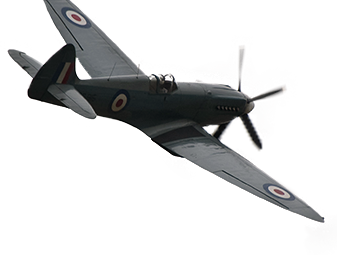
Another quick round of questions and answers
It’s time for another Questions and Answers session. I started this series a few years back, when a reader asked if there was a way to pose aviation questions outside of specific posts. I’d love for this to become a more regular feature but for that I need more questions!
The format is simple: post your question in the comments of any post. If you know the answer to someone else’s question, reply in the comment. You don’t need to be a pilot or work in aviation to answer but please stick to what you actually know rather than giving it a best guess.
We’ll start with me this week. In A Group of Pissed-Off Hornets I complained that the NTSB didn’t make any recommendations for flight schools to protect their students from bad instruction. On Bluesky, inclined2fly, who has worked for both the NTSB and the FAA, explained the situation to me.
That was the frustrating part of the NTSB. All I could do was write a report and a recommendation, neither of which would make a difference. General Aviation was not a priority.
Nothing the FAA can do unless it’s an approved school.
If the NTSB made a recommendation, the FAA couldn’t implement it without changing Part 61. At the FAA, I had no authority over Part 61 schools, only individual certificate holders. Part 141 is a different story. In my opinion, other countries do it better (EU, Canada, Australia are some).
In the US, a person can get a CFI cert and teach from day one with no supervision. They don’t have to be employed by a flight school. The only time the FAA would look at them is for a complaint, incident/accident. Part 141 schools have to be FAA approved, so there’s some oversight. Part 61 has none.
The end result is that the wrongful death suit is really the only way to affect meaningful change for these types of systemic issues at American flight schools. I had not understood the interactions (and I can believe that working at the NTSB might be extremely frustrating if you want to make meaningful change).
On the same article, Peter asked:
Did this instructor have a reasonable number of flying hours? To the non-flyer 447 and 20 doesn’t seem like very many hours of experience before then using that experience to teach others.
Based on the comments from inclined2fly, I think it makes sense to find out how many hours a flight instructor has before going out with him or her. Personally, I’d want someone who was patient and enjoyed instructing, rather than just trying to get hours in quickly so that they can move on to the next thing. But how much is enough?
AB has a question I’ve never really thought about.
Why would the fuselage of a B-52 be rippled, but not a commercial airliner?
He’s got a guess but I’d love to hear from one of you as to the logic behind this!

This one is from my mother and I was surprised that I didn’t know the answer:
Why do you say that a pilot who is a passenger is “deadheading” ?
Specifically, she’s interested in where the term came from.
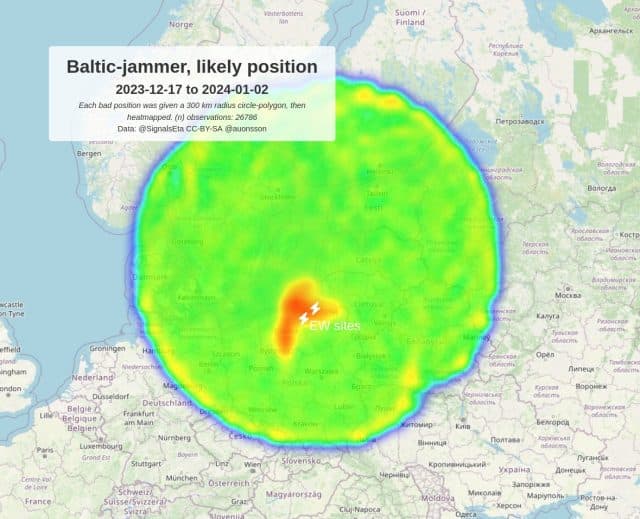
Georgina wants to know more about Russian GPS interference:
I’m curious about the GPS jamming happening at northern European airports. How does that actually work, and how do airports and airlines work around it?
And finally from JD:
Why do heavier aircraft have a higher airspeed limitations?
This is about manoeuvring speed, which one should not exceed because of the risk of damage to the aircraft structure. I didn’t know that heavier aircraft did allow for higher manoeuvring speeds and I’ve never been good at aerodynamics1, so I’m definitely not the person to answer this one.
[1] I no longer believe that planes are held aloft by faeries but when it comes to helicopters I’m still not sure.
Got an answer? Or another question? Please leave it in the comments!









Regarding the rippled B52 skin. The answer I got from Google AI was:-
“The rippled skin, or “oil canning” effect, on a B-52 bomber is a normal and expected result of its original lightweight and flexible structural design. It is not a sign of damage or age, but rather an engineering feature that allows the airframe to manage the significant stresses of flight”
“The B-52 was engineered in the 1950s to be as lightweight as possible for high-altitude, long-distance flights. This design deliberately allows the thin aluminum skin panels to flex and buckle slightly under various loads (compression, tension, and shear forces). This is a weight-saving measure compared to a more rigid design with thicker skin”
I imagine commercial passenger aircraft are designed to be less stressed and have thicker skins?
Indeed. Passenger aircraft are designed to put the stress on the passengers. ;-)
There’s a B-52 in B-52 park on the MCO (Orlando Int’l) airport grounds. It actually flew at MCO when it was McCoy Air Base. When I worked near there, I “had lunch with the B-52” quite a few times. You can get to it with a little Google Maps guidance.
Anyway, it’s very wrinkly and the plaque explains it did a lot of stressful low-level missions over Viet Nam.
Funny story: Chicago-O’Hare complained bitterly over the expense of expanding taxiways and other infrastructure to accommodate the A-380. Orlando just said “well WE used to be a B-52 base… we ain’t gotta do nothin’!”
Also, the B-52 is rather “slab sided” and airliners have circular fuselages. So airliners have relatively equal stress and B-52s do not. Most of the wrinkles are on the flat areas.
GPS jamming works by a transmitter sending out powerful radio signals on the same frequency as GPS satellites, which overwhelm and drown out the much weaker satellite signals, making it impossible for a GPS receiver to accurately calculate its position or time.
A bit like try to hear a conversation at a very loud party!
Not sure how it is worked around though!
I have to say a lot of these questions can be answered by searching the magic of the internet!
Hey, no question shaming. The point is to get sensible answers on a subject that you know nothing about, and internet searches are a struggle if you are starting from scratch. Thank you for taking the time to answer; I like the party analogy!
Agree with the broad description, but there are two interesting variants – GPS jamming and GPS spoofing.
The GPS signal is very weak, and transmitted using something called “spread spectrum”. This takes the core 1’s and 0’s sent from the satellites, and sends either a long pseudo random string, or the inverse of that string, according to the 1 or 0 to be transmitted. The string itself is called a gold code, and is unique to the satellite. This means all satellites in a constellation transmit simultaneously on the same frequency, and the receiver picks out each satellite by multiplying the received signal by the expected gold code.
During the initial “lock” phase, the receiver will try the code shifted by various timeshifts, until it gets a net positive signal out of the received signal when multiplied/mixed with the gold code for that satellite. With the right code and time shift, the received signal magically appears from below the noise floor!
The decoded signal effectively contains a transmission timestamp, which if the receiver knows the reception time allows it to work out the distance to each satellite (given the speed of light). 3 satellites give a 3D fix if you know the exact time already, but 4 are required to solve for both time and space.
The signal available to the general public is called the coarse acquisition code (C/A) and is not encrypted. A local “jammer” can either transmits random noise at high power at the relevant frequency (“jamming”), or can transmit gold code encoded signals (the code being public), from multiple physical locations, at much higher power than the satellite (“spoofing”). Done correctly spoofing can cause a target to calculate the wrong position.
The military has a second signal “precision” signal at a different frequency, which is encrypted with a key only known to the military, and which can be changed in the event of suspected leak. This prevents spoofing, and the different frequencies also allow compensation for variable atmospheric effects which impact the speed of signal propagation (hence “precision”). To lock on the encrypted signal historically required you to first sync the time using the C/A code, hence the name coarse acquisition.
GPS arose as the “opposite” of the Sputnik tracking.
With Sputnik, you had a knowledge of your location and the travel time of the signal, and you could calculate its orbit.
With GPS, you have a knowledge of the orbit (transmitted by the satellite and constantly updated by the Space Force) and the travel time of the signal, and you can calculate your position (actually the circle at a given distance from the satellite, and you intersect the circles from several satellites)
Also the gold codes for all the satellites are transmitted by every satellite, but this message (as well as the clock signal) takes a while to receive, thus the long “cold start” time we used to have to endure.
Current GPSes remember this info and your position between usages, and use it as a “first guess” to speed things up.
My first GPS was a shoe-sized (literally) Lowrance Eagle unit. All it did was output coordinates on a matchbook size LCD!! And there were NO commercial maps with coordinates available, except for aviation maps!! (early ’90s)
So I went flying in a friend’s Piper and we compared our position fixed by landmarks with the position from the GPS, and IT MATCHED! My pilot friend was very skeptical of this “magic box” and ended up being impressed.
Progress is amazing. I use GPS for very accurate time sources and surveying. My first board in the 90s was good for about 20ns dt, but 80m dx/dy when the US still had selective availability on. I now have a pair of survey units (one fixed, one mobile) that allows me to survey to better than 10mm dx/dy, and with dt << 1ns. Simply amazing kit.
Regarding Part 61 flight schools, the FAA does monitor flight instructors through pass/fail statistics of their students. These are tracked through knowledge and practical test statistics kept for all tests. They also respond to complaints from students and others. Such complaints might arise from dangerous flying or other activities not consistent with expected professionalism.
I am an active CFI with 54 years of aviation experience and still work part time for a Part 61 flight school. My boss monitors all of our training and would not stand for risk taking as occurred on that tragic flight. In our area of N. Calif, I have heard of occasions where FAA got involved and initiated 709 checks for CFIs who were not following basic safety standards.
The maneuvering speed is the stall speed at which the g-load of the aircraft is equal to the load where structural damage threatens. The g-load doesn’t change with weight, but the stall speed does: heavy aircraft stall more easily, and therefore their stall speed is higher. And that makes the maneuvering speed higher, too.
Think of it this way: you can more easily whip a light aircraft around without it stalling, and put a lot of load on the flight surfaces. The heavier aircraft flies at a higher AoA, and so it stalls when you attempt the same maneuver, protecting you from overloading your flight surfaces. So the “can’t break off the wings” speed is lower in lighter aircraft, because the heavier aircraft will stall at a speed where the wings break off on lighter aircraft.
This is also true for turbulence: a gust that stalls the wing can’t overload it, so your aircraft is safe and in one piece while it stalls. :-p
https://www.aopa.org/news-and-media/all-news/2020/may/flight-training-magazine/ol-maneuvering-speed explains this.
We say that because this passenger does not pay.
The expression predates aviation:
via https://www.oed.com/dictionary/deadheading_n1
“deadhead” has been linked to the term “dead weight” (and “dead wood”). It is a very common term in railroading, which I am sure is the origin of its aviation usage. commercial transport companies also refer to “dead mileage,” which describes non-revenue vehicular movements for logistical reasons (in aviation there are usually identified as “ferry flights). i did not know about its theatrical usage, which apparently predates its use in carriage services.
Held aloft by fairies? Piffle! All fixed-wing people knows helicopters stay aloft because they are so ugly that the Earth rejects them😆
Enjoying your content as always, thanks!