Angara Flight 2311: An-24 Disappears on Go-Around Near Tynda
On the 24th of July 2025, Angara Airlines flight 2311 from Blagoveshchensk to Tynda disappeared from radar during a go-around at Tynda Airport. The wreckage was discovered 15 kilometres from the airport. There were no survivors.
The tragic flight was a multi-stop service connecting Russia’s far eastern communities. The first flight departed Khabarovsk on time at 08:20 for the flight to Ignatyevo Airport in Blagoveshchensk. There, the aircraft refuelled and boarded 42 passengers, including five children. Angara flight 2311 was scheduled to depart at 09:10, but weather delays caused the flight to leave two hours late at 11:20 local time with 42 passengers and six crew onboard.
The captain was a graduate of the Talgat Bigeldinov Military Institute who had previously worked for IrAero before joining Angara Airlines. The first officer and the flight engineer joined him on the flight deck with another three crew members in the cabin. All six crew members were residents of Irkutsk Oblast.
The Antonov An-24V, registered in Russia as RA-47315, was manufactured by the Kyiv Aviation Plant in January 1976 and initially flew for Aeroflot. It operated for various carriers before joining Anara’s fleet in 2013.
Aviation Safety Network records show the aircraft has previously been involved in two incidents, including windscreen cracks causing an in-flight depressurisation event in 2017.
The An-24 held a valid airworthiness certificate extended until 2036, reflecting Russia’s policy of extending Soviet-era aircraft service life from 50 years to 60.
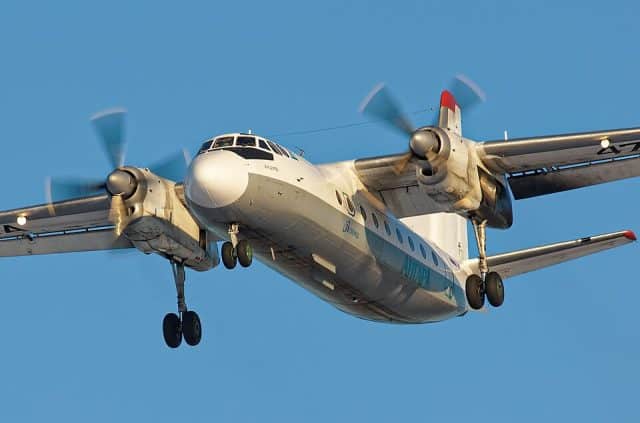
The AN-24 continued towards its final destination of Tynda, a remote railway junction town in Amur Oblast near the Chinese border. Tynda Sigita Airport is 16 km north of the town with a single concrete runway of 2,200 metres (7,220 feet) aligned 06/24.
Shortly before 13:00 local time, the aircraft approached Tynda Airport’s runway 06. The weather seems to have been benign, with scattered cloud at 210 metres (700 feet) and broken cloud at 600 metres (2,000 feet), light rain, wind at 7 km/h (under four knots) and visibility at or over 10 km.
It isn’t clear at the moment why the flight crew broke off their approach, choosing instead to go around. There was no distress call. At 12:58 local time, the aircraft lost contact with air traffic control and disappeared from radar screens.
A Rosaviatsiya Mi-8 search helicopter located the burning wreckage at 17:30, four and a half hours after contact was lost. The crash site’s remote location was not accessible to the helicopters. Over a hundred rescuers used chainsaws and heavy equipment to reach the wreckage, finally arriving at 23:00, ten hours after the crash.
Investigators recovered both flight recorders from the crash site the following day. The Interstate Aviation Committee, Russia’s aviation authority, reported that the flight data recorder’s magnetic tape media was destroyed in the fire; however, the cockpit voice recorder data had been preserved.
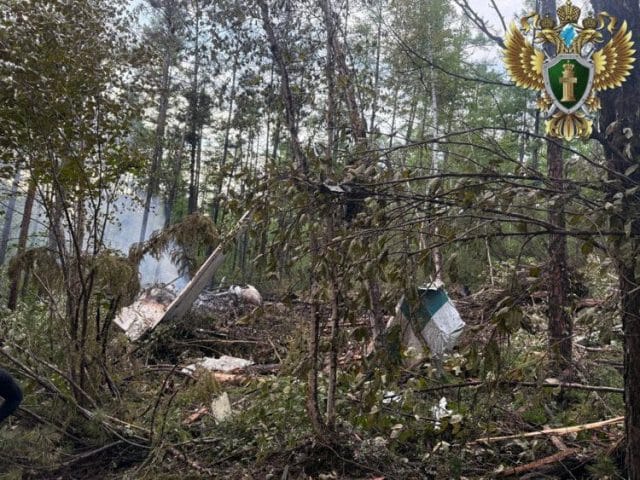
The loss of the FDR data means that we do not have any of the technical data about engines’ power, control surface positions or other flight parameters that might explain the sequence of events leading to an accident.
However, investigators have already stated that the aircraft systems don’t appear to have failed
Prior to the moment of the plane’s collision with the earth’s surface, preliminarily, no failures of the aircraft’s systems were recorded.
This implies that investigators will be focused on crew actions and external factors.
However, Angara Airlines seems to have had some real issues with maintenance.
Russian media reported that a June 2025 inspection of Angara Airlines by Russia’s transport supervisory agency revealed systematic violations: documentation showing aircraft serviced by staff who weren’t working on the relevant days, missing essential testing equipment, and personnel lacking required qualifications. Specific violations included maintenance being performed on two An-24RV aircraft without the special tools required for the inspections.
Rosaviatsia, the federal aviation regulator, has now revoked Angara Airlines’ maintenance certificate, meaning the carrier can no longer perform its own aircraft maintenance and must rely on third-party certified organisations. Eight of Angara’s aircraft were suspended from operation, and four engineering and technical personnel were suspended from maintenance duties.
Angara Airlines continues to offer flights under heightened scrutiny and regulatory oversight.
The government’s response to the tragedy has been swift. Russian media reports that families will receive 5.025 million rubles (63K USD, 47K GBP, 54K EUR) per victim from three sources: 2.025 million rubles from insurance companies, 2 million rubles from Angara Airlines and 1 million rubles from regional government assistance. Regional payments of 1 million rubles started arriving to families last week.
Angara Airlines is covering all transportation costs for victims’ bodies to burial sites, while five major Russian carriers – Aeroflot, Aurora, NordWind, NordStar, and S7 – offered free flights for families travelling to memorial services. Regional officials were assigned to each family to handle paperwork and funeral arrangements. In addition, negotiations are being held with credit institutions on the possible write-off of debts belonging to the dead citizens.
A spontaneous memorial appeared in Tynda.
The banner reads “Tynda 24.07.2025 we mourn” and shows an aircraft on approach. The photographs show residents bringing flowers, sweets and toys in remembrance. Five children were killed in the crash.
The loss of the An-24 highlights Russia’s deteriorating aviation infrastructure under Western sanctions. These sanctions have eliminated access to Boeing and Airbus parts and services, forcing airlines to operate ageing Soviet aircraft well beyond their intended service life. Domestic aircraft assembly costs have surged 45-70% between 2022 and 2024, while Russia imports over $1 billion in Western aviation components through third countries to maintain operations. Russian airlines retired 58 passenger aircraft in 2024 as the result of accidents and the inability to continue to perform maintenance.
In 2011, Russian President Dmitry Medvedev called for the accelerated decommissioning of An-24s, which were banned from scheduled flights within Russia. However, the ban was cancelled to mitigate the lack of viable aircraft. Ninety-three An-24 aircraft are in service worldwide, with about 50 of them operating in Russia. The TVRS-44 Ladoga, a twin-engine aircraft meant to succeed the An-24, is behind schedule and mass production is not expected until 2027 at the earliest.
In 2022, the FAA in the US downgraded Russia to “Category 2” status for non-compliance with ICAO standards. The EU has blacklisted 22 Russian airlines for serious safety deficiencies.
The formal investigation continues under the Interstate Aviation Committee, with criminal proceedings initiated under Article 263 of the Russian Criminal Code covering transportation safety violations resulting in multiple deaths. Investigators conducted searches at Angara Airlines’ offices, seizing flight operations and technical documentation.
Nothing about Flight 2311 lines up neatly yet: the weather was not rough, the crew never called anything wrong and all the aircraft systems seem to have been intact before the impact. The only thing we know right now is that the An-24 was flying under a system under strain, with ageing airframes, questionable maintenance and no room for error.





With all sympathy for the people killed, ISTM that blaming the boycott for Russian air fatalities seems a stretch; Wikipedia lists a number of civilian aircraft (turboprops similar to the AN-24, and jets similar to the BAC-111 and middle versions of the 737) made by China, which is still buying Russian oil in defiance of the boycott. (India is also a major customer.) This disaster is a direct result of Putin choosing guns over butter.
Fair point. I didn’t mean to blame to sanctions (which I am in favour of) but to show that over time, they are having a clear effect. To me, that casts some doubt on the fast announcement that there was nothing technically wrong with the aircraft or its systems.
It’s possible there was no single, obvious technical flaw, just an accumulation of small problems that piled up — a lesser example of http://holyjoe.org/poetry/holmes1.htm. But when lies are so much a part of the social/political structure, I’m also doubtful of the claim.