You are browsing category: Excerpts
12 December 2008

Fly By Night

Part One of Two – originally published in Piper Flyer

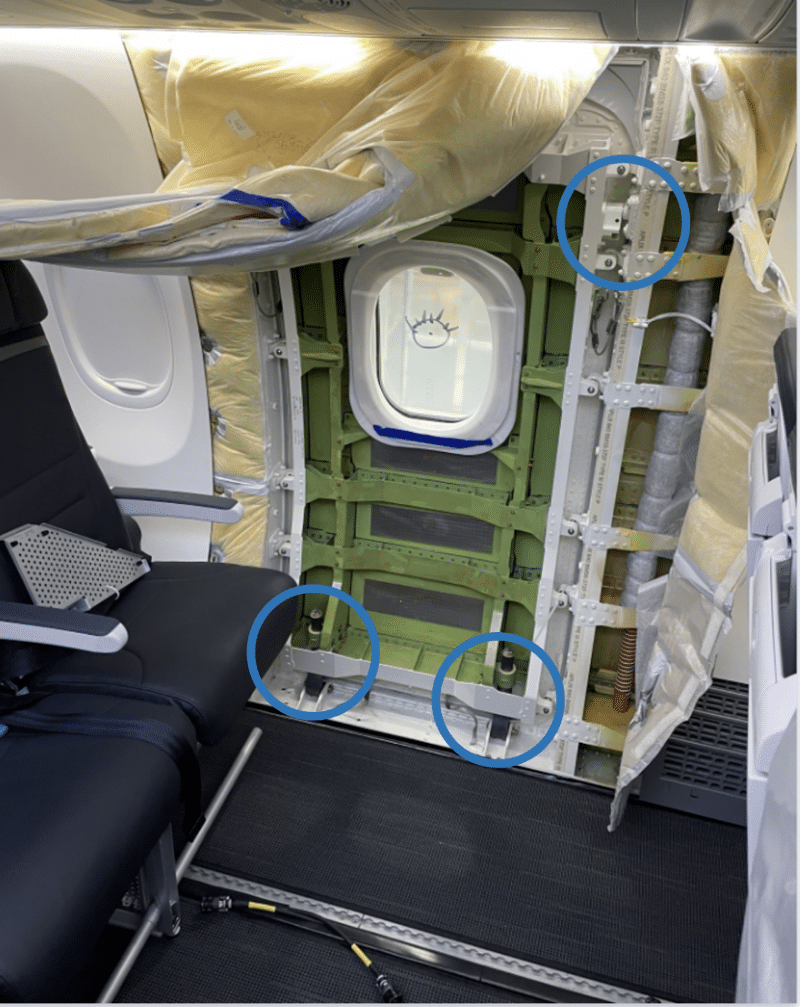
Flying feels different in the dark. Sitting in a commercial plane, looking at the black outside the window, the viewpoint strikes me as so completely different. This isn’t an issue during the day, I look out at cities and farmland and lakes and railway lines: they are real. At night it all changes: the twinkly lights that almost mirror a desert night sky have a sheen of unreality, an otherworldliness. It is harder to imagine the commuter and the tractor and the holiday makers and the train engineers when I look down at the lights below. The lit world of the jet is a distinct place, a separate world suspended between ground and sky. As I sip my gin and tonic, I imagine we are in orbit rather than just flying from Luton to Málaga on the late night flight.

Or perhaps I shouldn’t read science fiction novels while I wait for boarding to start.

The first time Cliff flew the Saratoga at night I was at home, pacing. I was a wreck. Would he find the airport? If he accidentally flew out to sea, how would he notice? What if he flew into a mountain? How can you tell the difference between the black of the mountain and the black of the sea, anyway? It seemed terribly dangerous, flying at night.

It wasn’t until he got his IFR licence that I relaxed … until the day came which my regular readers will already have anticipated: he asked me why I didn’t go and get my night rating as well.

In the UK, if you wish to fly at night you have to have a separate rating. Unlike the US, the training for the Private Pilot Licence carries no requirement at all for flying on instruments. You can’t complete a night rating as a part of your PPL: first you must have a minimum of 50 flying hours of which 20 hours must be as Pilot in Command and 10 of those hours must be post-qualification. It’s not a particularly onerous requirement but they do wish you to be comfortable with basic flying before learning a new viewpoint.

I had just reached 100 hours as Pilot of Command so this was hardly an issue. However, getting the night rating wasn’t a priority for me: my home airfield of Málaga doesn’t allow VFR at night. Most of my flying is in the summer and the UK is far enough north that even South East England has sunsets around 9pm, long after I’ve left the airfield and gone out for a beer.

I had considered doing some instrument training but at a very basic level, I didn’t want to do this. The amount of theory was intimidating and I didn’t like to think about trying to land with a hood on. Also, flying by instruments felt a bit like cheating, looking inside instead of out, relying on machines to tell me what to do. I was afraid it might be difficult to tell the difference between the cockpit and Microsoft Flight Simulator. Realistically I knew that anything with that much studying and testing and hours and exams couldn’t possibly be as simple as being told how to fly but I couldn’t help but be wary of the idea. If I knew the plane could fly better than me, then why was I flying at all? It seemed better to avoid the existential questions along with the instrument rating.

On the other hand, I had pushed a lot of limits recently and it seemed time to move onto the next step. The night rating doesn’t need a heavy time/training commitment and could come in useful at some point. Flying with an instructor again would also catch some of the lazy habits I had no doubt fallen into. I had recently been made uncomfortably aware of how difficult I found it to fly the plane without an auto-pilot, a refresher was definitely in order. I decided I would get the rating.

I did what preparation I could: I spent some time reading up on instrument flying and watched out the window on late-night British Airways flights to Málaga, trying to identify the runway from the distance. This isn’t particularly a challenge: the runway is perpendicular to the coast and all 10,500 metres of it is surrounded by bright lights. Honestly, if you can’t find Málaga airfield at night, you may as well throw in the towel right now. But it was interesting to think of it as a navigation exercise, trying to recognize the cities along the route that I knew from my own flying in the area, without the ridges and rivers and lakes that I was used to. A simple route that I flew often as a passenger and fairly regularly as a pilot already looked completely cold and foreign. My map felt useless – why don’t they do separate night maps, showing the clusters of city lighting and the blackouts of the uninhabited areas, like a light box toy or the maps of the heavens. Approximate blobs for concentrated lights and dotted lines for the highways with the blackest of blacks for the water would make navigation much easier.

Still, fear of the ground hadn’t stopped me yet, this was just ground that I couldn’t see. Perhaps better not to think about that.

[...]

Part 2

To make sure you don’t miss an instalment, subscribe by email and receive a notification for every post.

07 November 2008

Woman Drivers

Kidlington Airfield, now known as Oxford Airport, has been in use since the 1930s. Their training history began in World War II when it was used as a training centre for Royal Air Force pilots. Today, even with a downturn in new pilots, 73% of their traffic is training flights. Their circuit can get very full. I once ended up in the circuit with half a dozen planes of different speeds, desperately trying to stay ahead of the jet and not overtake the Cessnas. Regardless of the stresses, I’ve found that Oxford ATC remains consistently pleasant, helpful and actively on the look-out for problems so that they can help the pilots avoid them.

I know the airfield well because Oxford is where I did my conversion to complex, soon after completing my PPL. At the time, every circuit was a struggle as I tried to comprehend the speed and weight of the Saratoga after learning in Cessna 172s. But it was back on the ground where I had the most trouble.

After a few hours in the air, my instructor said he was happy for me to take the Saratoga up on my own after a break. Circuits still felt a rush, much like when I started flying, but I was starting to feel like it might be just about under control.

We stopped at the pumps to fill her up. The instructor had another student waiting, so was in a rush. “You can taxi it back OK, right?”

Having just agreed to take the beast out solo I could hardly claim that I needed help moving it from the fuel tanks to my parking spot. I gave him a brave grin. “I’ll be fine, you go!”

He bounded away while I glared at the plane, daring it to embarrass me in public. I went through the complete start-up checks, as if I were about to take it to Japan. Then I took a deep breath and started the engine. So far, so good. My transit across the airfield was approved and I drove at a slow speed, feeling in control for the first time that day.

Except that someone had parked next to my parking space. Not in it but next to it, in such a way that I had to navigate behind it, between the other plane’s tail and a large fence, to get to my spot.

I looked around hopefully: maybe that somebody was about to leave. No such luck, no pilot near. I had just about decided to swing around and park over by the flying school planes, when I noticed three young guys looking at my plane. Watching me, as I vacillated and blocked up the taxi way trying to work out what to do, no doubt wondering what such a little girl was doing in so much Saratoga.

I looked at my parking space again. It was totally accessible if I slipped in between the plane and the fence and then did a hard right; I couldn’t fault the pilot’s parking. I looked at the young guys again and felt an irrational surge of pride. I’ll swing it right in, park it perfectly, that’ll show them!

That’ll show them, indeed. I pulled around, keeping extra far from the other plane, worried about my low wing clipping his tail. Then I realised that I had overcompensated: the left wing was dangerously close to the corner of the fence. I pondered for a moment, should I just go for it and hope? Even I wasn’t that fool-hardy: I cut the engine and got out to look.

I couldn’t carry on: my left wing was clearly going to clip the fence. I needed to push back but I knew there was no chance I could budge it on my own: I’d taken the engine to over 2000 RPM just to get it to roll forward on the grass.

I glanced at the guys but they were now deep in conversation. Did they really not notice my problem? Or were they sniggering quietly? I looked around again in desperation. At that moment, a good looking, dark-haired man came towards me.

He called out. “Need me to move my plane?”

I waited until he reached me to shake my head, no. “That’s not going to help at this stage.”

He grinned. “No, it won’t. What are you going to do?”

Various pitiful answers went through my head but I simply said, “I’m going to have to push it back,” like this were within the realms of possibility.

He nodded; I felt like I’d passed some sort of test.

“I’ll help you,” he told me. We positioned ourselves either side of the propeller and I was about to push for all I was worth when he shouted at the young guys still standing in the car park.

“Hey, give us a hand here.”

They dashed over. “Anything for a damsel in distress,” said my new friend with a wink. With a single heave the plane rolled back. I was clear for another go.

“I’ll marshal you in,” he said as I climbed into the cockpit. The three guys smiled and waved and retreated back to the parking lot. I started up and he guided me straight through the gap and into my spot.

“Nice parking,” said my instructor as I walked into the school. He’d watched it all through the picture window.

“One word about women drivers and I’ll kill you,” I snapped, making a bee-line for the coffee machine. “I said I could do circuits solo, I never said a word about taxiing.”

An hour later, the guys were still in the car park, chatting away. Not a snigger in sight.

I climbed into the plane and wondered why I was so quick to sabotage myself. If I’d asked one of them to guide me in when I saw them glancing at the plane, it would have looked professional and competent – as opposed to having to push the plane by brute force.

I considered that maybe I was my own worst enemy and taxied away.

Of course these days, I don’t have that problem. I simply make a point of hanging out at airfields with bigger parking spaces:

19 September 2008

Just Being Helpful

Cliff taxied the plane over to the pumps and I hopped out to get us some fuel.

“I’ll get out in a moment,” Cliff said. “I just want to put our route into the GPS first.”

“No problem.”

I walked over to the tiny booth behind the pumps and tapped at the door. A pale round face peered out at me.

“Hi,” I grinned. “We radio’d to say we needed some fuel?”

He chewed his bottom lip and then nodded. “How are you going to pay?”

I paused for a quarter second and he started listing the payment methods they would accept.

“Credit card,” I interjected quickly.

“We only take VISA and Mastercard,” he said with a frown.

“VISA is fine.”

“OK,” he said and finally came out of the hut. “We don’t take American Express though.”

I presumed he’d had a bad experience with a previous client. I nodded in what I hoped was a reassuring manner.

He put on a large pair of goggles and walked over to the tanks. Then he stopped and stared at the plane. I scuttled over to him.

He nodded at Cliff. “The pilot will need to disembark,” he said, distaste dripping from every word. “I can not start until he exits the plane.”

I nodded and walked to the plane to tap in the window. Cliff climbed out of the plane and then watched as the man reset the pumps. He glanced around to make sure no one was near the plane and then hooked the earth wire to the front before wandering back to the pumps to pulling the hose out.

“Could have finished by now,” muttered Cliff.

One last look around to make sure everyone was in position and finally he was ready to offer us fuel.

He filled one side and called Cliff over. He handed him the cap to screw in and watched Cliff close the tank. “You should have checked it,” he said.

Cliff looked at him blankly.

“The fuel. You didn’t check the level before closing the tank.”

“I did,” growled Cliff. The man shrugged and moved over to the other wing. He then smiled at Cliff and held up the cap.

“Check the level and then close it!”

I sniggered as Cliff stalked over and closed the tank under the man’s watchful eyes. Once he was happy that Cliff had done his job correctly, he rolled up the hose, took off his goggles and asked us to follow him to the hut.

He smiled as the credit card transaction went through without a hitch. Another potential crisis averted through proper planning. Cliff signed and we turned to go back to the plane when the man put his hand on Cliff’s shoulder.

“Your safety stickers,” he said, shaking his head. “They are old.”

Surprised, we walked out to the plane to look at our decals. They seem fine: big print stating AVGAS ONLY, a picture of a pump and Grade 100LL written underneath. Everything you need to know to to ensure someone doesn’t fill the tanks full of jet fuel.

The man waved a sheet at us with two bright red squares saying AVGAS. “It says AVGAS on our stickers already,” complained Cliff.

“Yes, but they are getting dirty around the edges. These are new.” He pressed the stickers into my hand. “You can put them next to yours if you want but I think replacing them would be better.”

I searched for a response that would get us out of here. “I will,” I told him. “But the wings are so dirty now. I will go wash the wings and put the stickers on once they are clean.”

His chest swelled with satisfaction. He patted me on the arm. “That’s a good idea,” he said and retreated back to his hut.

10 March 2008

Early Morning Confusion

Cliff shoved my shoulder. “Wake up.”

I squinted and realised it was still dark. The shutters act as my alarm clock but they weren’t due to rise for another half an hour. I ignored him and rolled over.
“Get up,” he said. “It’s your birthday.”

I put the pillow over my head.

“Wake up! Come on, you have to get packed.”

“You aren’t really sending me away because I’m old, are you?”

“Yes,” he said and then grinned when my eyes opened. “It’s a do-it-yourself birthday present. Get packed.”

I admit I was relieved when I saw that he was packing a bag as well. Suddenly I understood why he’d turned down a drink the night before. I’ve been on a diet and he said to wait to have a drink until my birthday – but of course he knew he’d be flying. Still, he wouldn’t tell me where we were going.

“Take three days worth. Expect warm days and cool nights. Make sure you have walking shoes and evening wear.”

That didn’t narrow it down much. “Give me a hint?”

“It’s a single hop.”

That narrowed it down considerably. I drew a circle in my head. “Portugal, France, Northern Africa,” I said.

“All of Spain,” he added. “And Gibraltar.”

“You’d be bored to tears if we spent three days in Gibraltar. And I wouldn’t need evening dress.”

I packed for Paris. I didn’t like to tell him how obvious it was, so I pretended that I was still thinking about it. A weekend of good food and expensive wine sounded quite nice and I could catch up on anything I missed at the hotel.

I admitted I’d worked it out on the way to the airfield. “Oh no,” he told me. “Too cold.”

Oh. I considered the other half of the circle.

“Menorca?”

“Too windy.”

Suddenly it clicked. A place I’d said repeatedly I wanted to go to. The sights of the souks, the comfort of the riads, the taste of chicken with preserved lemons and olives followed by mint tea, the sounds of the mosques calling the Muslims to prayer. The land of the Arabs and the Berbers.

Marrakech Airport

Marrakesh.

I’ve talked about going there for years and even got so far as to investigate places to stay once, but something got in the way and Cliff was never that interested. Now I was finally going to go to this place I’d heard so much about. I was going to Marrakesh!

As we arrived at Málaga General Aviation, it dawned on me. “It’s a Muslim country. What about my birthday drink?”

“I suppose you’ll have to wait until next year.” He grinned as he got out of the car. “Happy Birthday!”

17 October 2007

The Night Before

I’m working on an article called Sylvia’s Mother at the moment (er, if you are my editor, read “working on” as “finishing off”. I swear you’ll have it by Friday) and wrote about my thoughts before taking my mom and my son up in the Saratoga.

This is from my initial draft. I can’t help but feel that the family flying magazine that the final article is aimed at would not appreciate this.

Every time I thought about it, I ended up with my heart in my throat. My mother and my son in the back of the light aircraft. If I mess up, it isn’t just me. They are trusting me to fly the plane – this plane that still scares the bejeebus out of me. What if I lose concentration and twiddle the vertical speed knob counter-clockwise instead of clockwise and the plane starts to dive dive dive down into the ground and we end up a fiery inferno on some Tuscan farm, last words of what-the-fuck?

I know this is ludicrous. I have, on one occasion, twiddled that very knob the wrong way. The moment the nose tilted down, I disengaged the auto-pilot and tilted it back up. No drama, we lost no more than fifty feet of height. I know the fear isn’t rational. But still. Are they out of their minds?!

So, it’s cut for now, although I might try to rewrite it in a more gentle fashion and re-insert it. First I need to go find out what a bejeebus actually is!

22 February 2007

I like foreign places (except when they’re foreign)

I made a mistake.

I pitched an aviation article which involves bitching about people not speaking English. Actually, it’s worse than that. This is about people in a foreign country who do speak English … and then there’s me, bitching that their English isn’t good enough.

Ugh.

Obviously, I didn’t realise that that’s what it boiled down to; I have many failings but xenophobia is not one of them. “Foreign” isn’t a bad word, nor something to be feared –foreign just means someplace I haven’t lived yet.

I could still do the article as it stands — just write 1500 words on how annoying it is that the world isn’t set up better for my convenience. Submit the piece, pick up my cash and move onto the next problem, without any real issues.

Other than sleeping at night.

So, back to the drawing board. The subject is problems with flying abroad and the real issue with the piece is that I have plenty to moan about but no solutions. And the biggest problem that I’ve confronted is language, or my lack of comprehension thereof.

If I knew how to fly across France without having to say “say again?” every other transmission, I wouldn’t try to shove that leg onto Cliff all the time.

To a great extent it’s experience — knowing what to expect in a standard conversation. When Cliff flies, he’s predicting the next conversation. The controller could speak Martian and Cliff would guess the question and give the right answer most of the time. None of this “I need to think this over” stuff.

And then there’s the language itself — he speaks French, he understands French, the French accent is on some level comprehensible to him. I have much less issue flying through Spanish airspace, because the rolling r’s and the short i’s and all those markers of a Spanish speaker are known to me and I can “translate” their words into something approaching RP English very quickly.

I can’t do that in French (and nor should I have to! whines the sulky part of my brain, the part of me who doesn’t think there’s anything wrong with this article and doesn’t understand why she’s not allowed to write it anymore) which means I’m not “correcting” the pronunciation to what I’m expecting. I have to parse every sentence twice which doesn’t sound like much but adds up fast, especially when it’s hectic. And then, often I am still not sure what the controller said. It doesn’t help that often their English is limited such that they literally say it again — word for word, unable to rephrase the way a fluent English speaker might.

It happens in reverse too, of course. My American accent in a sky filled with British pilots can be just enough to get those controllers saying “say again?” right back to me. This is exacerbated by my own language difficulties: I’m not fluent in Aviation English and I’m used to relying on the controllers’ fluency to get by. Once I get flustered and start forgetting those set phrases, we are in real trouble.

Say again?

There are other issues flying abroad, of course, most of them are on the ground. And don’t get me started on military airspace. I could tell you stories …

Ah, and so we get to a start point. Sometimes just having someone to bounce things off of makes all the difference.

OK, I’m off to write that article. Thanks for the help.

11 January 2007

Rousse Tower

We sat on the terrace of the Chalet, gazing out at the water and Sark in the distance, while Peter and Mary put up with a torrent of questions about the island and the must-see places.

“And while you are exploring the bays, you should go visit the towers, they’ve been put into quite good order, although I still wouldn’t want to be a soldier living in it during a winter gale! Just don’t believe anyone that tells you that the towers are all Martellos. Most of them are not.” Peter gave me a stern look.

“Not what?”

“Not a Martello tower,” Peter explained.

It seems that in 1794 during the Napoleonic Wars, the British responded to a plea from Corsica to help them fight off the French. The Royal Navy attacked and captured a large, round tower on Mortella Point but it took two days and they suffered unexpected casualties. When the British left Corsica, they decided to destroy the tower to keep it from being used by the French but even that proved more difficult than expected. The Royal Navy was impressed and made plans of the tower, apparently at this point getting the name wrong. The decision was made to create towers in the same style to defend the English Coast. In the early 1800s a hundred of these towers were built: chunky brick structures that were 30 foot tall and 13 foot thick on the seaward side. The towers became redundant when Napoleon defeated in 1815 and were never used in battle.

“We have 15 towers along the coast,” Peter told me, “but they pre-date the Martello towers, built in 1780. They are smaller and not as strong. Guernsey does have Martello towers: Fort Grey is one, they call it the cup and saucer. I think there are two others. But the locals will tell you they are all Martello towers. They aren’t.”

I nodded, impressed at the pitfalls involved in describing disused fortifications.

Much later, I had forgotten about the conversation when I saw grey brick looming up from a green field covered in buttercups. I realised that I had found one of the towers that Peter had been telling me about. I explored around it and its cannons. I laughed aloud when I found and read the plaque attached to it. The plaque is there to inform visitors that they have reached Tower No. 11, Rousse Tower, and that it is not a Martello tower.

05 October 2006

The Shipwreck of the Stella

The Casquets, the set of towers we’d seen on the flight in, is not surprisingly an important figure within the recent history of the island but the most interesting and tragic story is told at the Maritime Museum: the wreck of the Stella.

In the 1890s the competition between the ‘London and South Western’ and ‘the Great Western’ railway companies was heating up. The route across the Channel to the Channel Islands became the main battleground, with the ships openly racing each other to get their passengers ashore first. A number of issues were reported (with the Captains generally claiming they were “racing the tide”) but generally this competition was seen as exciting and a newspaper article in the Guernsey Star reports on a race between the Ibex (Great Western) and the Frederica (London and South Western) as if it were a sporting event. “The Frederica, skirting near the rocks and crossing the Ibex’s bows, beat the latter, after a grand race, by one minute and a half at the pier heads.”

The Stella was one of three steamers put into service in 1890 by London and South Western specifically for speed; the company’s advertising focused on best crossing times. By 1899, however,  there had been at least one accident due to the competition (the Ibex struck a ledge going full-speed 40 feet from the Frederica) which led to an inquiry and the Captains certificate being suspended for six months. A sensible concern regarding the racing is beginning to arise and the two railway companies were “making tentative efforts to call a halt”.

However, the ‘Easter run’, the first daylight runs of the season, whetted interest in the best crossing times and spirits were high with special low fares offered for the holiday.

The Stella departed on March 30th under the command of a seasoned Captain within this context: a priority of getting the ship and her passengers to the Channel Islands as quickly as possible.

The ship met rail passengers from Waterloo at Southampton and then began the trip to Guernsey and Jersey with 217 on board. The weather was sunny and clear when they departed Southampton and continued to be fine as they passed the Isle of Wight. Shortly after passing the Needles, a thick fog began to form. The captain slowed to half-speed until they cleared the fog and then resumed his initial speed of 18 knots.

Shortly thereafter the fog descended around the Stella again but the Captain kept the ship at 18 knots. The Captain and various crew members, including the first officer, remained on the bridge, with a seaman sounding the fog whistle. At this point, the Captain and crew seemed to believe they were still half an hour away from the Casquets: a dangerous reef with three lighthouses placed upon it which was used as a standard visual turning point for the route to Guernsey.

It is unclear how the Stella had managed to veer off her course but at this stage she is still travelling at 18 knots in heavy fog. ‘The Wreck of the Stella’ by John Ovendon and David Shayer gives the following chilling account of Captain Reeks final moments:

“At 4pm three things happened simultaneously. Reeks heard — and the sound must have made the hair stand on his neck — a fog-horn blast of immense power from directly above his head; Hartup in the bow yelled ‘Stop her’ and ran back along the deck covering his head with his forearm; and at the same moment the men on the bridge and a handful of passengers on the deck saw, ‘as though a door had suddenly opened’, an immense rock loom out of the fog 80 yards directly ahead, towering over the ship.”

The Captain tried evasive action but it was too late and the Stella was going too fast. The dangerous shoals of the Casquets tore out the bottom of her hull. The fog was such that the keepers of the lighthouse never saw a thing.

Within 8 minutes the ship had sunk. 105 passengers and crew died in the worst disaster in the history of the Channel Islands’ mail steamers.

03 October 2006

Early One Morning

I sat on the concrete, trying to apply mascara and lipstick without a mirror, surrounded by parked planes. What the hell was I doing here?

A few weeks ago, it had all seemed sensible and, dare I say it?